Red Light Therapy Before and After: What Real Results Actually Look Like
Key Insights
- Before/after photos in RLT marketing are almost universally useless as evidence. Lighting changes, camera angle, makeup, skin hydration, and posture shifts account for more visible “improvement” than most marketing before/afters show. Real results exist — but real results look more modest than curated Instagram shots, and they take longer than the 30-day claims that usually accompany them.
- The honest before/after timeline varies by goal — from days to months. Athletic recovery shows measurable improvement within 48–72 hours per session. Wound healing accelerates within the first week. Chronic pain conditions show meaningful change at 4–8 weeks. Skin and anti-aging results become visible and measurable at 8–12 weeks. These aren’t opinions — they’re what controlled studies with objective measurement actually found.
- What separates people who see dramatic results from those who see minimal change is almost never the device. Consistency over 8–12 weeks, session frequency, correct treatment distance, and whether the device delivers the right wavelength at therapeutic irradiance explain far more variance in outcomes than brand differences within the quality tier.
- Your brain is a terrible judge of your own gradual progress. You see your face every day. Skin improvements that happen over 10 weeks are essentially invisible to you without photographs. Before/after photos taken at baseline and then at week 8 and week 12 routinely show changes that people genuinely didn’t notice living through them. This is why the instruction to take baseline photos exists — it’s not vanity, it’s measurement.
- The honest context: Most people who try red light therapy and conclude “it didn’t work” gave up before the minimum timeline required for the goal they were treating, used a device with unverified specs, or didn’t have a measurable baseline to compare against. Most people who see genuine results did three things: took before photos, tracked sessions consistently, and made it to week 8–12. The biology works the same for both groups — the difference is protocol adherence.
Understanding Red Light Therapy in Practice
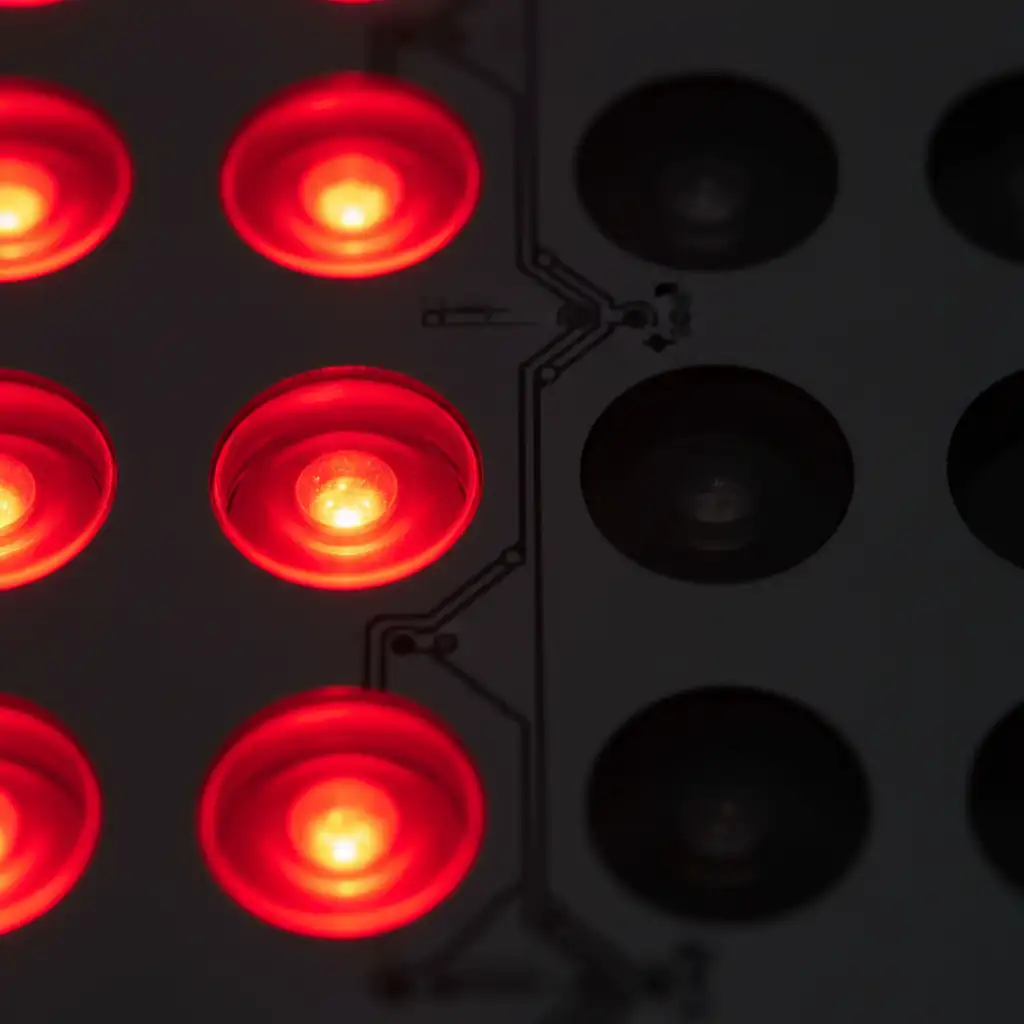
Red light therapy is often discussed in theory, but its real-world application depends on measurable parameters like wavelength and exposure. I tested multiple RLT setups using a professional spectrometer to better understand how the therapy works in practice.
What Realistic Before and After Results Actually Look Like (By Goal)
“Before and after” is a deceptively simple concept that collapses an enormous amount of variation into two images. What changes between those images — and how long it takes — depends almost entirely on what you’re treating.
Skin and Anti-Aging: What Actually Changes and When
What to expect in the photos: The clearest measurable changes in rigorous clinical before/after photography are skin texture (surface smoothness), fine line depth around the eyes and mouth, and overall tone evenness. What doesn’t change dramatically — even in successful cases — is deep wrinkles, structural volume loss, or pigmentation from long-standing sun damage. Managing expectations at this level of specificity prevents a lot of disappointment.
The timeline from controlled research: A landmark randomized controlled trial combining 633nm and 830nm wavelengths across 30 sessions over 15 weeks found a mean 29% increase in dermal collagen density measured by ultrasound, with 91% of participants showing improved skin complexion. The control group showed no significant change over the same period. The 29% figure is real, clinically significant, and — importantly — measured by ultrasound, not a researcher eyeballing a photo. But “29% increase in collagen density” translates to finer texture, somewhat reduced fine line depth, and better overall appearance — not a surgical result.
What the before/after photos of this actually look like: Skin looks more even in tone. Fine lines around the eyes are softer, particularly at rest. The skin surface appears smoother when viewed in even, indirect light. Pore appearance may be slightly reduced. Dramatic structural changes — hollowing, deep folds, severe sun damage — are not what this timeline addresses.
A common reason results look underwhelming in photos: Most people photograph themselves in variable lighting and different positions. Selfies are genuinely not controlled photography. Changes that show up clearly in consistent, same-lighting, same-angle documentation often don’t appear in casual daily selfies because the photo variables swamp the actual skin changes. If you’re evaluating your own results, photograph yourself in the same spot, same natural light, no makeup, same camera angle, every 4 weeks. This is the only way to actually see what’s happening.
For a deeper breakdown of the collagen mechanism, timeline by week, and what early signs look like before week 8 — see the anti-aging guide and the how long does RLT take to work page.
Acne: Before/After Over a Treatment Cours
What to expect in the photos: Reduced number of active inflammatory lesions (visible pimples and pustules), some reduction in post-inflammatory erythema (redness left after pimples clear), and potentially improved overall texture from the anti-inflammatory and collagen effects of red light alongside the acne-killing blue light mechanism.
What doesn’t change: Deep atrophic acne scarring (the depressed or pitted texture from past severe acne) is not what photobiomodulation reverses within a 7–12 week protocol. The 633nm + 850nm anti-aging wavelengths do support some texture improvement over time, but structural scar tissue of significant depth is a different intervention category.
The timeline from research: A 2025 open-label clinical study combining 415nm blue light and 633nm red light showed statistically significant lesion reduction beginning at week 4 of twice-weekly sessions, with continued improvement through week 7. A 12-week study with 30 moderate-to-severe acne patients found measurable reduction in both inflammatory and non-inflammatory lesion counts across the full course. The progression is gradual — week 4 looks different from baseline, week 8 looks meaningfully better than week 4.
The acne-specific before/after nuance: Because acne cycles naturally, “before/after” photos need to be interpreted carefully. A random good skin day at week 8 photographed next to a bad skin day at baseline would look dramatically different — but that’s measurement error, not treatment effect. Taking photos consistently every 4 weeks, regardless of your skin’s current state that day, is how you see the actual trend. See the best mask for acne guide for which devices are actually built for this goal.
Pain and Inflammation: Before/After in Function, Not Just Appearance
This is the one category where “before and after” doesn’t live in photos — it lives in pain scores, range of motion, and function. No one can look at someone and see that their back pain has reduced by 35% or that their knee flexion has improved by 15 degrees.
What the research shows: A 2025 systematic review of photobiomodulation for fibromyalgia found measurable improvements in pain scores, sleep, and physical function across 17 studies and 857 participants. Studies on knee osteoarthritis, tendinopathy, and chronic lower back pain consistently show 25–45% pain score reduction after 4–8 weeks of consistent treatment. This is real and meaningful — it’s just not visible in a photograph.
The measurement approach that works: Track pain on a 0–10 scale every day. Plot it over 8 weeks. The trend line matters more than any individual rating, because pain varies day-to-day for dozens of reasons that have nothing to do with RLT. What you’re looking for is a gradual downward shift in the average and a reduction in the severity of bad days. See the tendonitis page for the specific protocol and expected timeline for tendon applications specifically.
Athletic Recovery: Before/After Per Session
Recovery is the fastest-responding category and works differently from cumulative applications — the relevant “before/after” is per training session, not across 12 weeks.
What research shows: Meta-analyses on photobiomodulation for exercise recovery find 20–30% reduction in delayed onset muscle soreness (DOMS) and lower creatine kinase levels (a marker of muscle damage) within 24–72 hours when RLT is applied post-workout. The effect is session-by-session, not primarily cumulative — though some evidence suggests mitochondrial adaptations build over weeks of consistent use.
What this looks like in practice: You can train the same muscle group with slightly shorter rest between sessions. Soreness the day after heavy training is noticeably less severe. You feel ready to train again one day earlier than usual. These aren’t dramatic transformations — they’re marginal performance gains that compound over a training block. For athletes, that margin matters. See the athletes recovery guide for the protocol and timing (pre vs post workout) debate.
Sleep: Before/After Is Timing-Dependent
RLT’s sleep applications work through a different mechanism than the others — it’s about light environment, not cumulative biological building. Using red light in the evening instead of blue-light sources doesn’t suppress melatonin the way screens and overhead lights do, which supports natural sleep onset timing.
What changes: People report falling asleep more easily and waking feeling more rested, which tracks with the circadian biology. This isn’t a 12-week protocol result — it’s a same-night effect from improving your evening light environment. See the RLT and sleep guide for the mechanism and protocol.
One comprehensive table: what to expect, by when, with what level of evidence
| Goal | First Noticeable Change | Meaningful Results | Maximum Benefit | Evidence Level | What Actually Changes |
|---|---|---|---|---|---|
| Athletic recovery | 24–72 hrs post-session | 2–3 weeks consistent use | Ongoing per session | Strong (multiple RCTs) | DOMS severity, training readiness |
| Wound healing | 3–7 days | 2–4 weeks | 4–8 weeks | Strong (multiple controlled trials) | Healing rate, scar quality |
| Acne | Week 3–4 | Week 6–8 | Week 10–12 | Moderate-strong (RCTs, 2025 study) | Lesion count, inflammation |
| Joint/chronic pain | Week 3–4 | Week 6–8 | Week 8–12 | Moderate-strong (systematic reviews) | Pain score, range of motion |
| Rosacea | Week 4–6 | Week 8–10 | Week 12+ | Moderate | Redness, flushing frequency |
| Skin texture / anti-aging | Week 5–6 (subtle) | Week 8–10 | Week 12–16 | Strong (RCTs with objective measurement) | Collagen density, fine line depth, tone |
| Hair growth | Week 12–16 | Week 20–24 | 6+ months | Moderate (multiple studies, FDA cleared) | Hair count per cm², shaft diameter |
Evidence levels: “Strong” = multiple RCTs with objective outcomes. “Moderate-strong” = systematic reviews with consistent direction. “Moderate” = controlled studies with some heterogeneity.
What Separates People Who See Real Results From Those Who Don’t

This is the question most before/after content never answers directly — because the answer isn’t “buy the premium device.”
Factor 1: Making it to the minimum timeline
Most people who report “RLT doesn’t work” gave up somewhere between week 4 and week 8 — precisely the window when cellular changes are active but not yet visible. This is well-documented in adherence research generally, not just for RLT: people abandon interventions with delayed payoffs in the timeframe just before results would have appeared.
Skin applications require 8–12 weeks. If someone quits at week 6 and says “I saw nothing,” they stopped when the biology was starting to become visible. The clinical studies that show positive results ran 8–15 weeks of consistent treatment — not 4. Full timeline breakdown →
Factor 2: Session frequency and consistency
Clinical protocols showing results used 3–5 sessions per week, consistently, for the full treatment window. Someone doing one or two sporadic sessions per week never builds the cumulative signal the biology requires. Gene expression changes from each session fade without regular reinforcement — the threshold is roughly 3× per week for most goals. See the frequency guide for the evidence behind this.
Factor 3: Device delivering verified wavelength and irradiance
Wavelength and irradiance are the two variables that determine whether any biology happens at all. A device emitting light in the wrong range, or at insufficient intensity for the treatment distance used, produces no meaningful photobiomodulation regardless of how consistent the user is. The most common failure pattern: a user is perfectly consistent with a device that doesn’t meet the minimum therapeutic threshold. See the glossary for what irradiance (mW/cm²) actually means and why it matters. See the dosing guide for how to calculate whether your sessions are within therapeutic range.
Factor 4: Using the right wavelength for the goal
660nm red light targets surface skin and dermal fibroblasts — ideal for anti-aging. 850nm NIR penetrates deeper, reaching muscle, joints, and tendons — required for pain and recovery applications. A 660nm-only device won’t meaningfully treat a joint condition. An 850nm-dominant panel isn’t optimized for surface anti-aging. The 660nm vs 850nm guide covers this in detail.
Factor 5: Having a measurable baseline
People who take baseline photos, track pain daily, or measure some objective marker before starting are dramatically better at recognising their own results. The human brain adapts to gradual change — you stop seeing your own face accurately after looking at it daily for 10 weeks. Photos don’t adapt. A pain journal doesn’t adapt. The ones who say “nothing happened” are often the ones comparing a fuzzy memory of how they felt before to how they feel now — which is an unreliable comparison.
Why RLT Marketing Before/Afters Are Misleading (And What Real Ones Look Like)
Red light therapy marketing before/afters have a structural honesty problem that’s worth understanding if you’re using them to calibrate expectations.
Common confounding factors in uncontrolled before/afters:
- Lighting angle — overhead light vs diffused natural light makes skin texture dramatically different between shots
- Camera distance — closer shots emphasize texture; further shots flatten it
- Makeup/no makeup — self-explanatory but routinely inconsistent in uncontrolled comparisons
- Skin hydration — well-hydrated skin looks smoother; dehydrated skin shows lines more
- Posture and facial expression — tension vs relaxation changes every line on a face
- Time of day — skin is puffier in the morning and thinner-looking by evening
- Photo processing — even “unfiltered” phone photos apply automatic tone adjustments
A meaningfully controlled before/after requires: same camera, same distance, same lighting source, same time of day, same hydration state, same facial expression, no makeup, consistently across all time points. Almost no consumer-marketed before/after meets more than two or three of these criteria.
What rigorous clinical before/afters involve: Published dermatology studies use standardized photography systems in controlled lighting booths, often alongside objective measurement (ultrasound for collagen density, profilometry for wrinkle depth, chromametry for pigmentation). The 29% collagen density figure from the key RCT was measured by ultrasound — not by a researcher deciding a photo looked better.
What this means for your own documentation: The goal isn’t perfection — it’s consistency. Same spot in your home, same window light source, same time of day, same distance. Consistent conditions between time points matter more than having ideal conditions.
My personal protocol for documentation: Week 0 photos in three angles (front, left profile, right profile) in natural indirect window light, no makeup, no filters, same time of day. Same shots repeated at weeks 4, 8, and 12. I’ve done this for every protocol I’ve run and the pattern is always the same: week 4 shows nothing, week 8 shows something subtle I’d have missed otherwise, week 12 shows changes that are obvious comparing back to week 0.
The one thing I’d want people to understand: “Before and after” marketing implies a clean transformation. The real before and after for most people is a gradual, compounding improvement that becomes visible over months — more like the difference between two points on a trend line than a dramatic reveal. That’s not a flaw in the therapy; that’s how sustainable biology works. Overnight transformations either don’t last or involve interventions with much higher risk profiles. The slow version is the real version.
Frequently Asked Questions
How long until I see red light therapy results?
It depends on what you’re treating. Athletic recovery shows per-session effects within 24–72 hours. Wound healing accelerates within the first week. Chronic pain conditions show measurable improvement at 4–8 weeks of consistent use. Skin anti-aging results — the most common goal for LED face masks — become visible and measurable at 8–12 weeks. The full timeline guide breaks this down by goal with the underlying clinical evidence for each.
Why don’t I see results yet?
The most common reasons: you haven’t reached the minimum timeline for your goal (most people quit between weeks 4–8 for skin goals, which is before results become visible), you’re not using the device consistently enough (3× per week is the minimum for cumulative goals), your device may not be delivering therapeutic irradiance at your treatment distance, or you’re not using the right wavelength for your goal. The common mistakes guide covers each of these with specific troubleshooting steps.
Are red light therapy before and after photos real?
The underlying results they represent can be real — clinical studies with controlled photography and objective measurement (ultrasound collagen density, profilometry, lesion counts) consistently show real measurable improvement. The consumer marketing photos themselves are often not controlled enough to be meaningful evidence, because lighting, camera angle, hydration, and time of day differences between the two shots can produce apparent changes that have nothing to do with the treatment. Real results exist; the photos marketing teams select to represent them often overstate what you should expect.
How should I take my own before and after photos?
Same spot, same window light source, same time of day, same camera distance, same facial expression, no makeup. Take three angles: full face, left profile, right profile. Repeat at weeks 4, 8, and 12. This gives you a meaningful comparison even without laboratory equipment. The consistency of conditions between time points matters more than having ideal conditions at any one time.
Why do some people see better results than others?
Protocol adherence explains most of the variance — not device brand or individual biology. The biggest predictors of good results are making it to the minimum timeline (8–12 weeks for skin goals), maintaining 3–5 sessions per week consistently throughout, using a device with verified wavelengths and adequate irradiance for the treatment distance, and having taken a measurable baseline to compare against. Individual biological variation does exist, but it explains far less variance than protocol differences do.
Sources
Evidence-based consensus on the clinical application of photobiomodulation
A 7-Week, Open-Label Study Evaluating the Efficacy and Safety of 415-nm/633-nm Phototherapy for Acne
Effectiveness of Photobiomodulation Therapy in the Management of Fibromyalgia Syndrome
Photobiomodulation and Photodynamic Therapy Using Red LED Light in Dermatology: A Narrative Review
Mechanisms and applications of the anti-inflammatory effects of photobiomodulation