Best Red Light Therapy Mask for Acne in 2026
Key Insights
- Acne treatment requires a specific wavelength — 415nm blue light — that most “anti-aging” LED masks don’t include: Red and near-infrared light (630–850nm) are well-studied for collagen and anti-aging, but they don’t target acne-causing bacteria. That requires blue light specifically. A mask marketed for anti-aging without a blue light mode simply cannot treat active acne — this isn’t a minor spec difference, it’s a different mechanism entirely.
- The mechanism is bacterial, not just anti-inflammatory: 415nm blue light generates nitric oxide and reactive oxygen species that have a bactericidal effect on C. acnes (the bacteria associated with acne), while red light (633nm) works through a separate anti-inflammatory pathway and reduces oil production. A 2025 clinical study (Journal of Clinical and Aesthetic Dermatology) evaluating combined 415nm/633nm phototherapy over 7 weeks confirmed both efficacy and safety as a standalone home treatment.
- Combining blue and red light outperforms blue light alone. Multiple studies point the same direction: blue light alone reduces bacteria, but adding red light (633nm) addresses inflammation and oil production simultaneously — a 12-week clinical study combining both wavelengths found statistically significant lesion reduction starting at week 4 and continuing through week 12.
- Blue light carries one real caution: temporary hyperpigmentation risk on darker skin tones. This is consistently noted across clinical and manufacturer safety data — Fitzpatrick skin type III and darker may be more prone to temporary hyperpigmentation from blue light exposure specifically. This isn’t a reason to avoid blue light treatment, but it is a reason to monitor your skin’s response and discontinue if hyperpigmentation appears.
- The honest context: Not every popular LED face mask treats acne, even at a premium price point. CurrentBody’s flagship Series 2 mask, for example, has no blue light wavelength at all — it’s built specifically for anti-aging. If acne is part of your goal, wavelength selection matters more than brand reputation or price.
Why 415nm Blue Light Matters for Acne
Acne treatment with light therapy works through a mechanism distinct from anti-aging applications, which is the core reason device selection matters so much here.
Blue light (415nm) generates nitric oxide and reactive oxygen species when absorbed by porphyrins inside C. acnes bacteria — these compounds have a bactericidal effect, directly reducing the bacterial population associated with acne breakouts. This is a different mechanism from collagen stimulation; it’s targeting the bacterial driver of acne rather than the skin’s structural proteins.
Red light (633nm), used alongside blue light, works through a separate but complementary pathway — penetrating deeper to affect sebaceous glands, downregulating excess oil production, and reducing inflammation by altering cytokine release. Research has also found red light may have some direct effect on C. acnes as well, though its primary contribution in combination protocols is anti-inflammatory and oil-regulating rather than purely bactericidal.
The research consistently points toward combination therapy outperforming blue light alone. A clinical study combining 415nm and 633nm light across 30 patients with moderate-to-severe acne tracked lesion counts at 4, 8, and 12 weeks, finding statistically significant reductions in both inflammatory and non-inflammatory lesions, with improvement continuing through the full 12-week treatment period.
This is why a mask’s wavelength list matters more than its price or brand name for this specific use case — a $450 mask with red and near-infrared wavelengths but no blue light is optimized for an entirely different goal than acne treatment.
What the Clinical Research Actually Shows
A 2025 open-label clinical study published in the Journal of Clinical and Aesthetic Dermatology evaluated a combined 415nm/633nm LED mask as a stand-alone home treatment over 7 weeks in adolescents and adults with mild-to-moderate acne, confirming both efficacy and safety for unsupervised home use — an important distinction from in-office phototherapy, since it specifically validates the at-home device category rather than clinic-administered treatment.
This builds on an earlier body of research: blue light phototherapy for acne has been studied since at least the mid-2000s, with multiple controlled trials and a 2016 multicenter randomized, split-face clinical trial adding further support for blue light’s role in acne treatment specifically.
What’s notably not well-supported: very severe, cystic acne as a standalone light-therapy-only treatment. The clinical evidence base for LED phototherapy is strongest for mild-to-moderate inflammatory and non-inflammatory acne — for severe or cystic acne, light therapy is more reasonably understood as a supportive addition alongside dermatologist-directed treatment, not a replacement for it.
Top Pick: Valo Glow
For acne treatment specifically, the deciding factor is straightforward: does the device include 415nm blue light at all? Valo Glow does, alongside 630nm red light and 850nm near-infrared — meaning it addresses acne bacteria, inflammation, and oil regulation simultaneously, while also covering general anti-aging through the same red/NIR wavelengths.
This dual capability matters in practice: a lot of people dealing with acne also care about overall skin tone and fine lines, and buying two separate masks (one for acne, one for anti-aging) is a real and avoidable cost most people don’t need to take on.
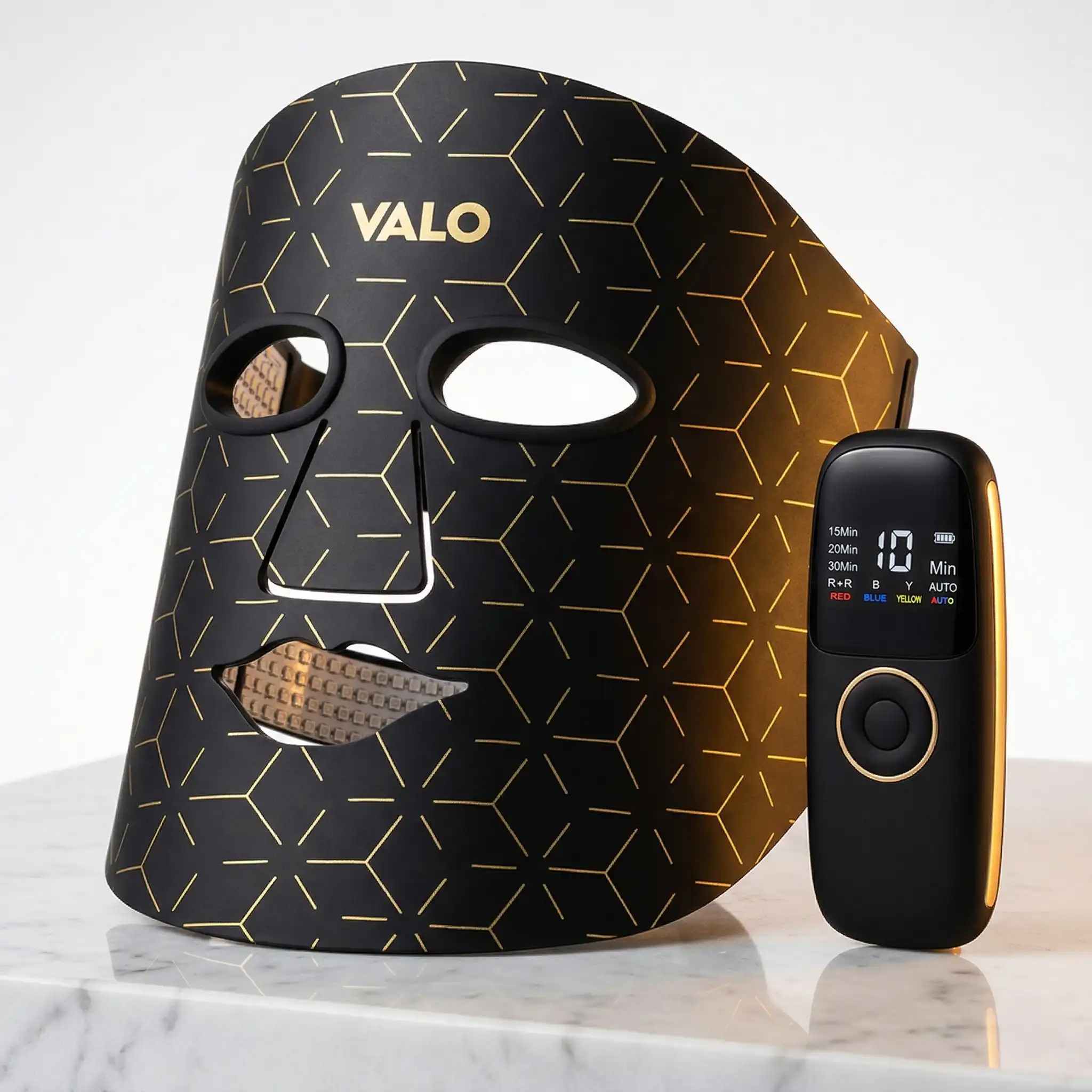
Valo Glow Face Mask
- 415nm blue light targets acne-causing bacteria — CurrentBody's mask has no acne wavelength at all
- 630nm red light addresses inflammation and oil production simultaneously
- Also covers anti-aging (630nm + 850nm) — no need for a second device
- Adjustable intensity — useful since acne-prone and sensitive skin may need different settings than anti-aging-only use
- Longest warranty in class: 3 years
- HSA/FSA eligible — pay pre-tax
- CurrentBody's 1072nm penetrates slightly deeper for pure anti-aging — if acne isn't a concern, that's CurrentBody's one edge
- No published raw irradiance (mW/cm²) spec
Why CurrentBody’s Mask Doesn’t Work for Acne
This is worth stating plainly rather than glossing over, because CurrentBody is a well-known, reputable brand and people reasonably assume their flagship mask covers acne too. It doesn’t — the CurrentBody LED Mask Series 2 uses 633nm, 830nm, and 1072nm wavelengths, all in the red/near-infrared range, with no blue light wavelength included at all. It’s built specifically for anti-aging, and it does that job well — but it has no mechanism for addressing acne-causing bacteria.
(CurrentBody does sell a separate, dedicated blue/red light acne mask as a different product — the point here is specifically about their popular Series 2 anti-aging mask, which is what most comparison content and “best mask” rankings default to recommending without flagging this limitation.)
If your goal includes acne, check specifically for a 415nm wavelength before buying any mask — wavelength count and price aren’t reliable proxies for whether a device can actually treat acne.
Comparison Table: Masks Ranked by Acne-Treatment Capability
| FEATURE | TOP PICK Valo Glow Best value | CurrentBody LED Mask Series 2 | Omnilux Clear | Dr. Dennis Gross SpectraLite FaceWare Pro |
|---|---|---|---|---|
| Acne Wavelength (415nm) |
✅ Yes |
❌ No |
✅ Yes |
✅ Yes |
| Other Wavelengths |
630nm, 850nm, yellow |
633nm, 830nm, 1072nm |
633nm |
Red light |
| Price |
$240 |
$469.99 |
Varies |
Varies |
| Acne-Ready |
✅ Yes |
❌ No |
✅ Yes (acne-only, dedicated device) |
✅ Yes |
Prices reflect availability at time of publication and may change. Always check the retailer for current pricing.
The honest distinction: Omnilux Clear is a dedicated acne-only device (no anti-aging wavelengths), while Valo Glow and Dr. Dennis Gross both combine acne and anti-aging capability in one mask. Between those two, Valo Glow adds near-infrared (850nm) for deeper anti-aging penetration that Dr. Dennis Gross’s red-light-only approach doesn’t include, at a lower price.
Protocol for Acne: Frequency and Combining with Skincare
Frequency: Most clinical protocols for combined blue/red light acne treatment use sessions several times per week, with visible improvement typically beginning around week 4 and continuing through week 12. This is slower than topical acne treatments in some cases, but it’s also generally gentler and better tolerated.
Session length: 10 minutes is standard across most clinically-studied protocols and most consumer devices.
Combining with skincare actives: This requires more caution than general anti-aging use. Avoid combining blue light sessions with photosensitizing topical treatments (certain retinoids, some prescription acne medications) without checking with a dermatologist first — some topical acne treatments do increase photosensitivity. Use on clean, product-free skin for the session itself, and apply other skincare afterward.
Monitoring for hyperpigmentation: Because blue light specifically carries a documented risk of temporary hyperpigmentation in darker skin tones (Fitzpatrick type III and above), it’s worth starting with shorter or less frequent sessions if you have a deeper skin tone and watching for any darkening before committing to a daily protocol. If hyperpigmentation appears, discontinuing blue light use typically resolves it, but it’s better to catch this early than after weeks of use.
What stands out: The hyperpigmentation caution for darker skin tones is something I see genuinely underreported in a lot of acne-mask marketing, even though it shows up consistently in clinical and manufacturer safety documentation. It’s not a reason to avoid blue light — it’s a reason to know your own skin’s response before committing to daily use.
The one thing I’d want to see more of: Larger trials specifically on at-home (not in-clinic) blue light devices for moderate-to-severe acne, tracked over 6+ months. Most current research, including the strongest 2025 study, covers 7–12 week windows — useful, but shorter than the timeline many people actually use these devices for.
Frequently Asked Questions
Sources
A 7-Week, Open-Label Study Evaluating the Efficacy and Safety of 415-nm/633-nm Phototherapy for Treating Mild-to-Moderate Acne
Combination Blue (415nm) and Red (633nm) LED Phototherapy in the Treatment of Mild to Severe Acne Vulgaris
A Multicenter, Randomized, Split-Face Clinical Trial Evaluating Blue Light Phototherapy for Acne
Evidence-based consensus on the clinical application of photobiomodulation