Red Light Therapy Contraindications: Who Should Avoid It (or Get Medical Clearance First)
 By Fred Guerra
Key Insights
- Is red light therapy dangerous for anyone?:For the vast majority of healthy adults, no — it’s non-ionizing light that cannot damage DNA, unlike UV or X-ray radiation. But a small number of situations are genuine contraindications: active cancer or suspicious lesions in the treatment area, photosensitive epilepsy, and certain photosensitizing medications. These aren’t “be cautious” situations — they’re “get clearance from a doctor before you start” situations.
- Absolute vs relative contraindications — the distinction that matters: An absolute contraindication means RLT should generally be avoided until a clinician has specifically reviewed your case. A relative contraindication means the decision should be individualized — RLT may still be appropriate with the right protocol and medical sign-off. Most situations in this guide are relative, not absolute.
- Medications are the most commonly missed contraindication: Over 300 medications are classified as photosensitizing — including common antibiotics, some blood pressure medications, and certain acne treatments. Most people don’t think to check their prescription label before starting RLT, but this is one of the few situations where device quality doesn’t matter — the interaction happens regardless of which panel you use.
- Pregnancy isn’t a blanket “no,” but it isn’t a blanket “yes” either: Current evidence doesn’t show red and near-infrared light causes harm during pregnancy, but data is limited, and the conservative approach most clinicians take is avoiding direct abdominal exposure while treating other areas (back, legs, shoulders) normally.
- The honest context: Red light therapy has an unusually strong overall safety record — across thousands of published studies, serious adverse events from properly used PBM devices are essentially absent. The contraindications below exist because specific populations have specific risks, not because RLT itself is risky for the general population. If none of these apply to you, the side effects guide covers what’s normal to expect (mild warmth, temporary redness) versus what isn’t.

Understanding Red Light Therapy in Practice
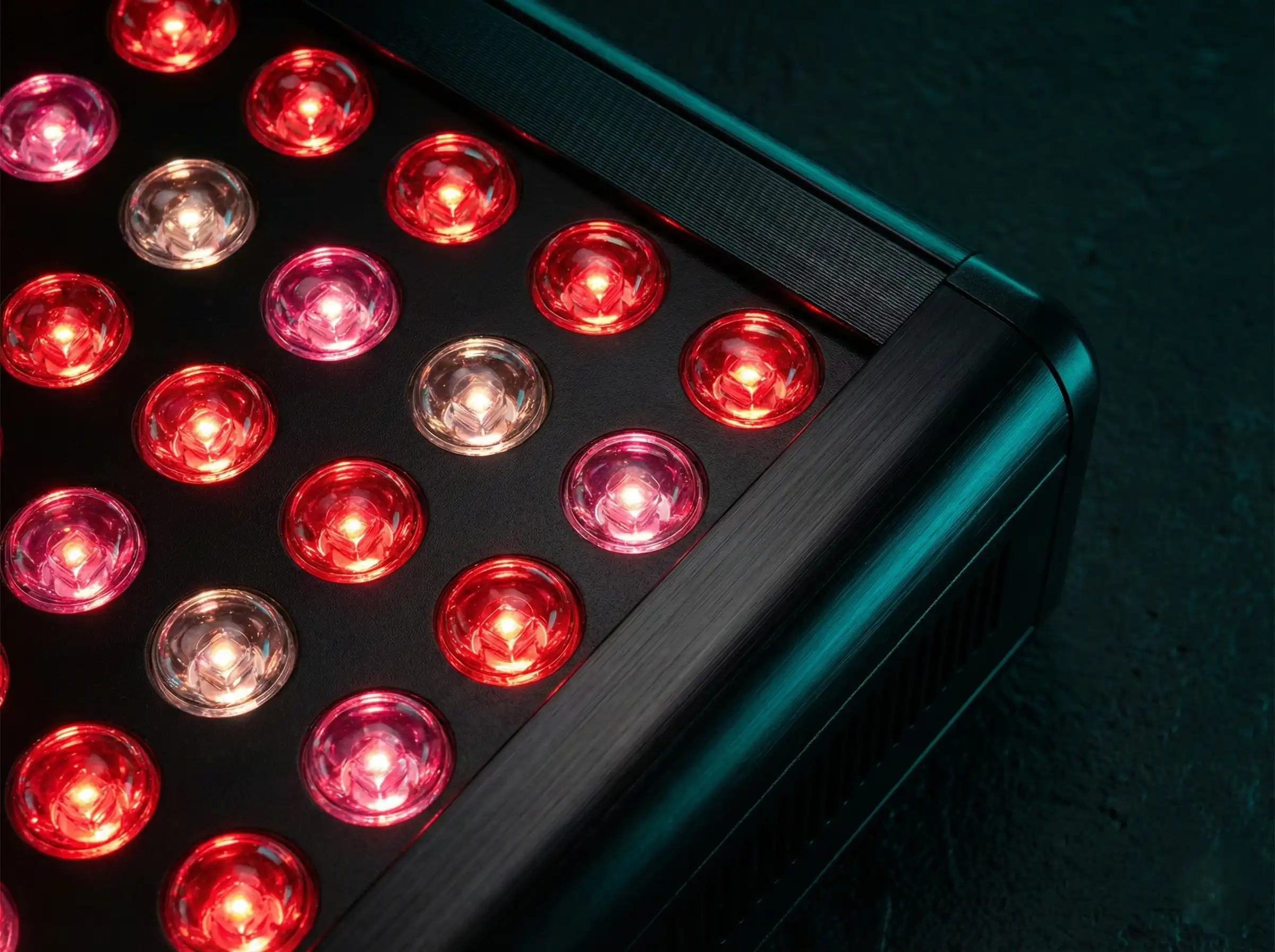
Red light therapy is often discussed in theory, but its real-world application depends on measurable parameters like wavelength and exposure. I tested multiple RLT setups using a professional spectrometer to better understand how the therapy works in practice.
Absolute Contraindications: When to Avoid RLT Until Cleared by a Doctor
These are the situations where red light therapy should generally not be used until a qualified clinician has specifically reviewed your case and given the go-ahead.
Active cancer or suspicious lesions in the treatment area
This is the most-cited contraindication in the photobiomodulation literature, and it’s worth understanding why rather than just accepting it as a blanket rule. Photobiomodulation works partly by stimulating cellular metabolism and proliferation — which is exactly the mechanism you don’t want active near a malignant or suspicious lesion. Laboratory research has found that PBM can stimulate the growth of cancer cells in cell culture studies, which is the basis for treating active cancer as an absolute contraindication for direct treatment over the affected area.
This doesn’t mean RLT is broadly unsafe for cancer patients in all contexts — a major 2022 position paper from the World Association for Laser Therapy actually supports photobiomodulation for managing certain side effects of cancer treatment, like oral mucositis from radiation therapy, under clinical supervision. The distinction is between clinically supervised PBM for treatment side effects (an active, growing area of research) and unsupervised at-home use directly over an active tumor or suspicious mole (avoid until evaluated).
If you have a history of cancer but are currently in remission with no active disease, this is a conversation to have with your oncologist — the systematic evidence on PBM and skin cancer recurrence specifically has found no clear pattern of increased risk in rejuvenation contexts, but “no clear pattern” in available studies isn’t the same as “cleared for your specific situation.”
Photosensitive epilepsy
If you have a diagnosed seizure disorder that’s triggered by light — particularly flashing or flickering light — red light therapy devices are generally listed as a contraindication. This is a precautionary classification based on the broader category of “photosensitivity disorders,” and it applies most directly to pulsed or flickering light settings rather than steady continuous output, but the safe default is to get clearance from a neurologist before using any LED device if you have this diagnosis.
Direct, unsupervised high-intensity eye exposure
This is less about RLT being inherently dangerous to eyes and more about a specific failure mode: staring directly into a high-irradiance panel at close range for extended periods, without eye protection. The eye safety guide covers this in detail — the short version is that RLT devices used as directed (not aimed directly into open eyes at close range) have an excellent safety record, but “directly into the eyes, unsupervised, at high intensity” is its own category that’s easy to avoid with basic precautions.
Relative Contraindications: When You Need Medical Clearance First
These situations don’t mean “never” — they mean “talk to your doctor before starting,” because the right answer depends on your specific condition, medications, and the body area you’re treating.
Photosensitizing medications
This is the contraindication most people miss entirely, because it has nothing to do with the device and everything to do with what’s already in your system. Photosensitizing medications (PSMs) are drugs that increase your skin’s sensitivity to light — and they’re far more common than most people realize. Research estimates that roughly 40% of people in some populations are taking at least one photosensitizing medication, and over 300 medications fall into this category — and if you’re also managing a skin condition like rosacea alongside medication, the rosacea protocol covers exactly how doxycycline and other common rosacea drugs interact with RLT sessions specifically.
Common categories include:
- Certain antibiotics (tetracyclines, fluoroquinolones)
- Some diuretics and blood pressure medications (thiazides, certain ACE inhibitors)
- Retinoid-based acne medications (isotretinoin and similar)
- Certain NSAIDs
- Some antifungal medications (voriconazole)
- Amiodarone and certain other cardiac medications
The mechanism is that these drugs can produce reactive compounds when exposed to light, which can affect skin cells more than they otherwise would. Most of the research on this interaction concerns UV exposure specifically — red and near-infrared wavelengths are a different part of the spectrum, and the overlap with visible-light photosensitizers is less established. But because the underlying mechanism (light exposure interacting with a photosensitizing compound) is the relevant variable, the conservative approach if you’re on any of these medications is checking with your prescribing doctor or pharmacist before adding regular RLT sessions — not because harm is established, but because it hasn’t been ruled out for your specific medication.
Pregnancy
Current research on red and near-infrared light during pregnancy is reassuring but limited. Red and near-infrared light (roughly 630–850nm) is non-ionizing — it’s in the same category of electromagnetic radiation as visible light and infrared heat, not the category that includes X-rays and UV-C, which are known to damage DNA and cause birth defects. Animal studies haven’t shown teratogenic effects from photobiomodulation, and low-level laser therapy has been used clinically during pregnancy for conditions like TMJ pain without reported adverse effects.
That said, “no evidence of harm” in a relatively small body of research is different from “proven safe in large trials,” and most clinicians take the conservative position of avoiding direct treatment over the abdomen during pregnancy while treating other areas — back, legs, shoulders — without special restriction. If you’re pregnant and want to continue using RLT for back pain or other non-abdominal areas, framing the conversation with your OB-GYN around the non-ionizing nature of the light (the same category as visible light, not X-rays) tends to be a productive starting point.
Autoimmune conditions (lupus, and similar photosensitive autoimmune disorders)
Some autoimmune conditions, particularly systemic lupus erythematosus, involve genuine photosensitivity as part of the disease itself — meaning light exposure (historically discussed in the context of UV) can trigger symptom flares in some patients. Because RLT involves regular, repeated light exposure to skin, this is listed as a situation requiring medical clearance rather than an outright avoidance — your rheumatologist will know whether your specific presentation includes photosensitivity and whether that extends meaningfully to red/NIR wavelengths.
Active infection, fever, or uncontrolled inflammation in the treatment area
This is less RLT-specific and more general medical common sense: applying any therapy that increases local blood flow and cellular activity to an area with active infection isn’t typically recommended until the infection is being appropriately treated. This is a “wait until the underlying issue is addressed” situation rather than a long-term restriction.
Thyroid conditions — direct neck treatment
If you have a thyroid condition (hyperthyroidism, Hashimoto’s, or similar) and are interested in using RLT for general purposes, this isn’t a reason to avoid RLT broadly — but direct, prolonged treatment of the neck/thyroid area specifically is one of the situations where checking with your endocrinologist first is the conservative move, particularly if your condition isn’t currently well-controlled.
Pacemakers, Implants, and Metal in the Treatment Area
A common question that doesn’t fit neatly into “absolute” or “relative” categories: does RLT interact with pacemakers, metal implants, or other hardware? Red and near-infrared light is non-ionizing and doesn’t carry an electromagnetic interference profile similar to MRI or strong electrical/magnetic devices — but some clinical trial exclusion criteria for photobiomodulation studies do list cardiac arrhythmias and pacemakers as exclusion factors out of general caution, alongside photosensitivity and pregnancy. If you have a pacemaker or other implanted cardiac device, this falls into “ask your cardiologist” territory — not because a specific mechanism of harm is well-documented, but because it’s a population that’s often excluded from research by default, meaning there’s less direct safety data to point to either way.
What This Means If None of the Above Applies to You
If you’ve read through this list and nothing applies — no active cancer in the treatment area, no photosensitive epilepsy, not on a photosensitizing medication, not pregnant (or treating non-abdominal areas), no relevant autoimmune photosensitivity — you’re in the population where red light therapy has an exceptionally strong safety record. Across the published research base, serious adverse events from properly used photobiomodulation devices are rare to the point of being notable by their absence.
“Properly used” is the operative phrase. Most of what people experience as negative reactions to RLT — mild warmth, temporary redness, eye strain from looking at the light — are normal and expected, not signs of an underlying contraindication. The side effects guide walks through what’s normal versus what’s a sign to pause, and the common mistakes guide covers the usage errors (wrong distance, no eye protection, overuse) that cause most of the issues people attribute to the device itself.
For a full overview of safety considerations beyond contraindications specifically — including eye protection, skin reactions, and device quality factors — see the main RLT safety guide.
Frequently Asked Questions
Can I use red light therapy if I’m on medication?
It depends on the medication. The relevant category is photosensitizing medications — over 300 drugs fall into this group, including certain antibiotics, some blood pressure medications, and retinoid-based acne treatments. If you’re on any prescription medication and want to start regular RLT use, checking with your prescribing doctor or pharmacist about photosensitivity is a quick conversation that removes the guesswork. If your medications aren’t photosensitizing, there’s no RLT-specific interaction to worry about.
Is red light therapy safe with autoimmune conditions?
For most autoimmune conditions, RLT doesn’t carry a specific contraindication — and photobiomodulation is actually an active area of research for its anti-inflammatory and immunomodulatory effects. The exception is autoimmune conditions with a genuine photosensitivity component, most notably lupus, where checking with your rheumatologist first is the conservative approach given that light exposure can be a symptom trigger for some patients.
Is red light therapy safe if I’ve had cancer in the past?
If you’re currently in remission with no active disease, this is worth a direct conversation with your oncologist rather than a generic answer. The available systematic evidence on PBM and skin cancer in rejuvenation contexts hasn’t found a clear pattern of increased recurrence risk, but “hasn’t found a clear pattern” in the existing studies isn’t the same as a guarantee for your specific cancer history and treatment. The clearer-cut contraindication is active cancer or suspicious lesions directly in the treatment area — that’s where caution is most warranted regardless of history.
Can pregnant women use LED face masks or red light panels?
Current evidence doesn’t show that red and near-infrared light — which is non-ionizing, unlike X-rays or UV — causes harm during pregnancy, and it’s been used clinically for conditions like TMJ pain without reported adverse effects. That said, the data is limited, and the conservative approach most clinicians recommend is avoiding direct treatment over the abdomen while continuing to use RLT normally on other areas like the back, shoulders, or legs. This is a conversation worth having with your OB-GYN, framed around the non-ionizing nature of the light.
What’s the difference between an absolute and a relative contraindication?
An absolute contraindication means the therapy should generally be avoided entirely until a clinician has specifically reviewed and approved your situation — examples here are active cancer in the treatment area and photosensitive epilepsy. A relative contraindication means the decision should be individualized: RLT may still be appropriate, but it’s worth getting medical input first because the right answer depends on your specific condition, medication, or circumstances. Most of the situations in this guide — photosensitizing medications, pregnancy, autoimmune conditions, thyroid issues — fall into the relative category.
Can I use red light therapy if I’m on blood pressure medication?
Depends on the specific drug. Thiazide diuretics (hydrochlorothiazide, chlorthalidone) and certain calcium channel blockers fall into the photosensitizing category — meaning they increase general light sensitivity, though most of the research on this interaction concerns UV exposure specifically. If you’re on a thiazide or any antihypertensive you’re uncertain about, a quick question to your pharmacist takes 2 minutes and removes the guesswork. Beta-blockers, ACE inhibitors without photosensitizing properties, and most other antihypertensives don’t carry this flag.
Is red light therapy safe for people with diabetes?
Generally yes, with one area of attention. For most people with Type 2 diabetes using RLT for pain, recovery, or skin applications, there’s no specific contraindication — and photobiomodulation’s anti-inflammatory effects are actually relevant to some of the metabolic dysfunction involved in diabetes. The one situation requiring care: if you have diabetic neuropathy with significantly reduced sensation in the treatment area, the normal feedback mechanism (mild warmth → you move back) is compromised. Use a timer rather than sensation as your guide for session length, and stay at the conservative end of the distance range.
Cleared to use RLT? Here's where to start
Sources
Mechanisms and applications of the anti-inflammatory effects of photobiomodulation
Photobiomodulation therapy in management of cancer therapy-induced side effects — WALT position paper
Photobiomodulation: a systematic review of the oncologic safety of low-level light therapy for aesthetic skin rejuvenation
Photobiomodulation in retina diseases — clinical contraindications overview