Red Light Therapy for Athletes: Recovery Protocol, Performance Evidence & How to Stack It (2026)
Key Insights
- Does red light therapy work for athletic recovery?: Yes — this is one of the most consistently supported applications in the photobiomodulation literature. Multiple RCTs confirm reduced DOMS, faster strength recovery, lower blood markers of muscle damage, and improved performance metrics when RLT is used consistently around training.
- Best wavelength: 850nm primary for deep muscle tissue recovery. 660nm secondary for surface inflammation, skin integrity, and tendon health. Dual-wavelength is the standard for serious athletic protocols.
- Protocol timing: Pre-workout for performance enhancement (ATP priming, reduced fatigue). Post-workout for recovery (inflammation management, cellular repair). Both have evidence — the right choice depends on your primary goal.
- What it won’t do: Replace training stimulus, compensate for inadequate sleep or nutrition, or produce performance gains without the work. Red light accelerates recovery and supports cellular repair — it amplifies the results of good training, it doesn’t substitute for it.
- Why athletes specifically benefit: High training loads create repeated cycles of muscle damage, inflammation, and repair. The rate-limiting step in athletic progress is often recovery speed — how quickly you can return to quality training after hard sessions. Anything that genuinely accelerates that cycle without compromising training adaptation has real performance relevance. Photobiomodulation does this through mechanisms that don’t blunt the adaptive response the way NSAIDs and ice potentially do.
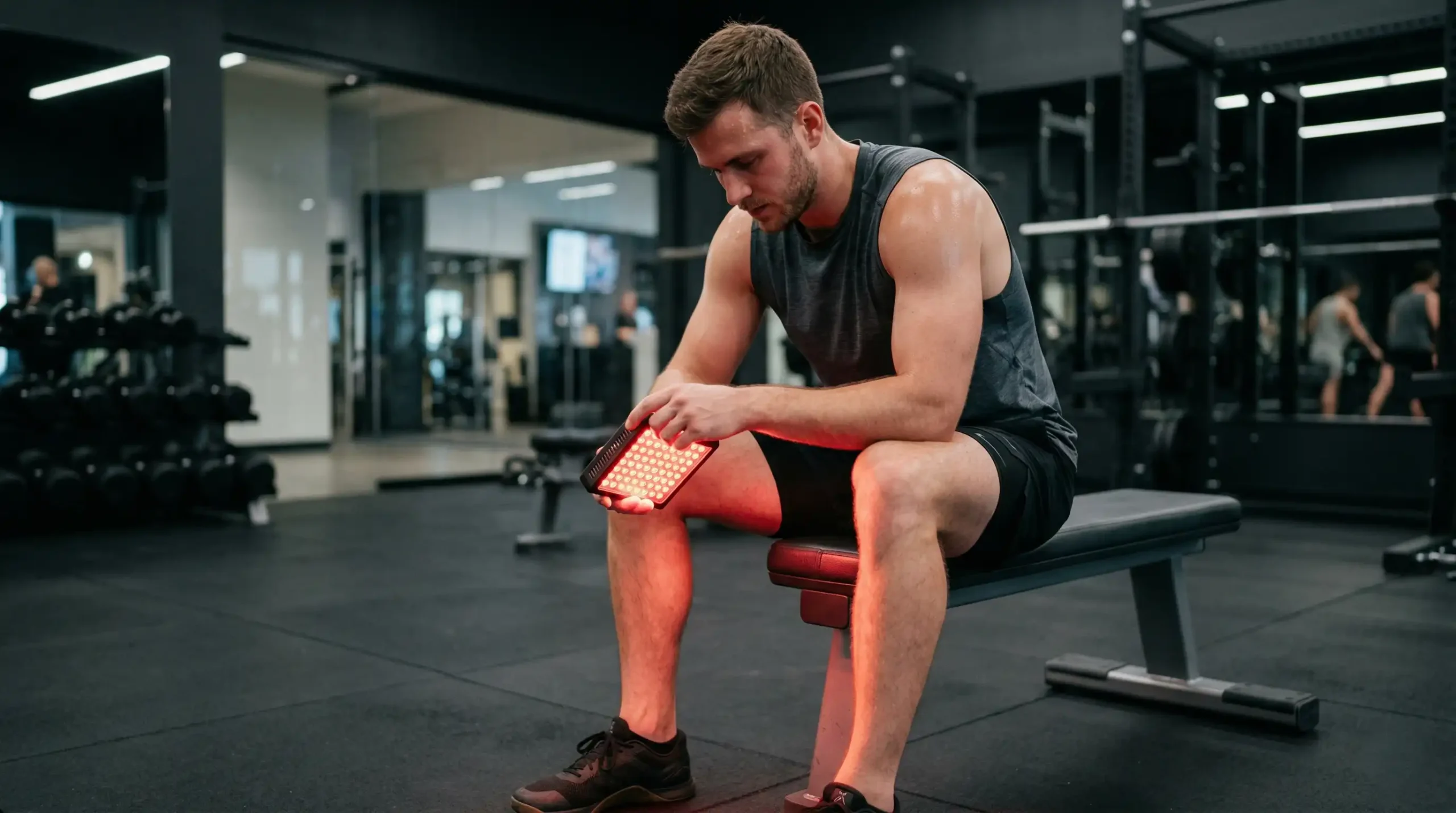
Understanding Red Light Therapy in Practice
Red light therapy is often discussed in theory, but its real-world application depends on measurable parameters like wavelength and exposure. I tested multiple RLT setups using a professional spectrometer to better understand how the therapy works in practice.
Why Athletic Recovery Is Different From Standard Pain Treatment
Most photobiomodulation applications address existing pathology — an injured tendon, chronic inflammation, damaged skin. Athletic recovery is different: you’re applying RLT to healthy tissue undergoing the controlled damage-and-repair cycle that is training itself.
This creates a specific question that doesn’t apply to injury treatment: does photobiomodulation accelerate recovery without blunting the adaptive response?
Training adaptation works through a specific sequence. Exercise creates micro-damage and metabolic stress. The inflammatory response to this damage triggers the repair cascade that builds stronger, more capable tissue. Interventions that suppress this response too aggressively — high-dose NSAIDs, excessive ice, complete rest — may reduce soreness in the short term while impairing the training adaptation you’re working toward.
Red light therapy operates differently. It doesn’t suppress inflammation globally the way NSAIDs do — it modulates the inflammatory signaling to reduce excessive and prolonged inflammation while preserving the acute phase that drives adaptation. The research on this distinction is one of the reasons sports scientists have become significantly more interested in photobiomodulation over the past decade.
A 2016 study in PLOS ONE (Leal-Junior et al.) directly tested this question in resistance-trained athletes. RLT post-workout group showed reduced DOMS, lower creatine kinase (muscle damage marker), and — critically — maintained or improved strength adaptations compared to control group over 12 weeks. The concern about blunting adaptation was not supported by the data.
The Mechanism: What’s Actually Happening in Recovering Muscle
Reduced creatine kinase (CK) and lactate dehydrogenase (LDH): These enzymes leak from damaged muscle cells into circulation — their blood levels are standard markers of exercise-induced muscle damage. Multiple RCTs show consistently lower CK and LDH levels 24–72 hours post-exercise in RLT-treated groups versus controls. Less enzyme leakage means less structural cell damage — the photobiomodulation is supporting cell membrane integrity and mitochondrial function during the stress of exercise.
Inflammatory cytokine modulation: Post-exercise inflammation follows the same cytokine pathways as injury-related inflammation. TNF-α, IL-1β, and IL-6 rise post-exercise and drive the soreness and performance impairment of DOMS. NIR reduces these without eliminating them — the result is shorter duration and lower peak inflammation rather than complete suppression.
ATP production support: Exercised muscle has transiently impaired mitochondrial function — the cellular energy crisis contributes to fatigue and performance decrement. 850nm photobiomodulation directly stimulates cytochrome c oxidase in muscle mitochondria, increasing ATP production in exactly the tissue that needs it most in the post-exercise window.
Satellite cell activation: Satellite cells are muscle stem cells responsible for the hypertrophic adaptation to resistance training. Emerging research suggests photobiomodulation may enhance satellite cell activation and differentiation — potentially contributing to improved training adaptation over time, not just faster recovery.
Microcirculation improvement: Nitric oxide release from NIR dilates capillaries and improves local circulation — accelerating clearance of metabolic waste products from exercised tissue and improving oxygen and nutrient delivery during the repair phase.
Pre-Workout vs Post-Workout: What the Evidence Says
This is the most practically important timing question for athletes. The before or after workout guide covers this in full, but here’s the athlete-specific summary:
Pre-Workout Application
Mechanism: Primes mitochondrial ATP production before exercise begins. Increases cellular energy availability in muscle tissue before the demand of training is placed on it. Potentially reduces the rate of fatigue development during high-intensity work.
Evidence: A 2011 study in Lasers in Medical Science (Leal-Junior et al.) applied 850nm RLT to quadriceps before isokinetic testing. Treated group showed significantly higher peak torque and reduced post-exercise CK levels — both performance and recovery benefits from pre-workout application.
A 2014 study in the Journal of Athletic Training tested pre-exercise NIR in trained cyclists. Treated group showed delayed onset of fatigue and improved time-to-exhaustion metrics.
Best for: Performance output — when the session quality matters more than immediate recovery. Strength training days, competition preparation, high-intensity intervals.
Timing: 10–20 minutes before training begins.
Post-Workout Application
Mechanism: Applied when muscle damage and inflammation are active. Reduces the inflammatory cascade, supports cellular repair, and improves circulation during the window when these effects have the most recovery impact.
Evidence: The 2016 PLOS ONE study mentioned above. Also, a comprehensive 2015 systematic review by Leal-Junior et al. in Lasers in Medical Science analyzed 21 RCTs on photobiomodulation for exercise recovery — conclusion: consistent evidence for reduced DOMS, lower muscle damage biomarkers, and faster functional recovery across multiple sport types and training modalities.
Best for: Recovery speed — when training volume is high and you need to return to quality work quickly. Multiple-session training days, in-season competitive periods, high-volume training blocks.
Timing: Within 30–60 minutes post-exercise for maximum effect. The repair cascade is most active in this window.
Can You Do Both?
Yes. Pre-workout for performance, post-workout for recovery — two separate sessions on training days. This is what high-performance athletes with access to RLT equipment typically do. Practically, it requires either two devices or enough time between sessions to use the same device. The combined approach shows additive benefit in the available evidence.
Sport-Specific Protocols
Strength and Resistance Training
Primary concern: muscle damage, DOMS, recovery between sessions.
Parameters
| Parameter | Pre-Workout | Post-Workout |
|---|---|---|
| Primary Wavelength | 850nm primary | 850nm primary + 660nm |
| Target zones | Primary muscle groups for that session | All trained muscle groups |
| Distance | 4–6 inches | 4–6 inches |
| Session time per zone | 8–10 min | 12–15 min |
| Timing | 15–20 min before training | Within 30–60 min post-training |
| Full body session | Impractical before training | Panel for large zones, handheld for targeted areas |
Zone priority for resistance training:
- Leg day: quads (anterior thigh), hamstrings (posterior thigh), glutes
- Push day: anterior deltoid, pectorals, triceps
- Pull day: latissimus (challenging to reach — mid-back panel positioning), biceps, posterior deltoid
- Full body: panel for largest muscle groups, accept that full coverage takes 40–50 minutes post-session
Endurance Sports (Running, Cycling, Swimming)
Primary concern: repetitive use inflammation, tendon health, cardiovascular recovery.
Key difference from strength training: Endurance sports produce less acute muscle damage per session but significantly more cumulative tendon and connective tissue stress. RLT protocol for endurance athletes should prioritize:
- Lower extremity tendons (Achilles, patellar, plantar fascia for runners)
- Hip flexors and IT band adjacent tissue for cyclists and runners
- Rotator cuff for swimmers
- General lower extremity circulation improvement
Post-workout timing is more important than pre-workout for endurance athletes because cumulative tendon load is the limiting factor, not acute session performance. See the tendonitis protocol for sport-specific tendon positioning.
Protocol Data
| Parameter | Endurance Protocol |
|---|---|
| Wavelength | 850nm + 660nm |
| Priority zones | Dominant tendons for sport + lower extremity muscles |
| Session time | 12–15 min per primary zone |
| Frequency | After every training session |
| Key addition | Tendon-specific positioning (see tendon guide) |
Team Sports and High-Intensity Interval Training
Primary concern: rapid recovery between sessions or competitions, reducing injury risk during fatigued states.
Team sport athletes and HIIT practitioners often face the most compressed recovery windows — less than 24 hours between sessions, sometimes multiple sessions per day. This is where RLT has the most acute practical value.
Protocol for compressed recovery windows (< 24 hours between sessions):
Immediate post-session: full body panel for 15–20 minutes covering major muscle groups trained.
3–4 hours later if possible: targeted handheld treatment of the most heavily loaded tissue zones — usually lower extremity for most team sports.
Pre-competition or next session: 10-minute pre-activation session on primary muscle groups 15–20 minutes before warmup.
Full Recovery Session: What It Actually Looks Like
A comprehensive post-workout RLT session for serious training takes 35–50 minutes depending on muscle groups trained. Here’s what a structured approach looks like for a lower body training session:
Full recovery session:
| Order | Zone | Time | Device |
|---|---|---|---|
| 1 | Anterior quads (both legs simultaneously if panel wide enough) | 15 min | Panel, 6 inches |
| 2 | Hamstrings (lying face down) | 15 min | Panel, 6 inches |
| 3 | Glutes | 10 min | Panel, 6 inches |
| 4 | Achilles and calves (if running involved) | 10 min | Handheld, 4–5 inches |
| Total | 50 min |
This is the comprehensive approach. The minimum effective version — quads and hamstrings only for a leg session — takes 30 minutes and covers the primary damage sites.
A large panel makes this practical. A handheld alone for a full lower body recovery session is technically possible but time-consuming. This is the clearest use case for investing in a panel if you’re training seriously. The panel vs handheld guide covers the format decision in full.
The Research: Key Studies
Research overview:
| Study | Sport/Population | Protocol | Key Finding |
|---|---|---|---|
| Leal-Junior et al., PLOS ONE (2016) | Resistance-trained athletes | 850nm pre and post-workout, 12 weeks | Reduced CK, reduced DOMS, maintained strength adaptations vs control |
| Leal-Junior et al., Lasers in Medical Science (2015) | Systematic review, 21 RCTs | Various NIR | Consistent DOMS reduction, lower muscle damage biomarkers, faster functional recovery |
| Ferraresi et al., Lasers in Medical Science (2011) | Cyclists | 808nm pre-exercise | Improved time-to-exhaustion, reduced post-exercise CK |
| Baroni et al., Journal of Athletic Training (2014) | Soccer players | 850nm post-exercise | Reduced peak CK at 24h and 48h, improved isokinetic strength recovery |
| Douris et al., Photomedicine and Laser Surgery (2006) | Resistance-trained men | 630nm + 850nm post-workout | Reduced DOMS scores at 24h and 48h, faster return to baseline strength |
The consistency across sports, training types, and research groups is what makes this evidence base compelling. It’s not one lab replicating its own findings — it’s multiple independent groups finding the same effect across different athletic populations.
Realistic Expectations for Athletes
DOMS reduction: This is the most consistent and fastest effect. Expect 30–50% reduction in post-exercise soreness 24–48 hours after hard sessions within 2–3 weeks of consistent protocol use. This is the most immediate feedback that the protocol is working.
Faster strength recovery: Return to pre-session strength levels — important for training frequency — measurably faster at 48–72 hours versus untreated. This shows up as the ability to train quality sessions more frequently without accumulating fatigue.
Reduced injury occurrence: Harder to quantify in short time periods but supported by the tendon health, inflammation management, and tissue repair mechanisms. Athletes who use RLT consistently report lower frequency of overuse injuries over 3–6 month training blocks. This is partly the cumulative anti-inflammatory effect and partly the direct tenocyte stimulation that maintains tendon structural integrity under repeated load.
Performance enhancement from pre-workout use: Acute performance metrics — peak power, time to exhaustion — show improvements in research settings with pre-workout protocols. Real-world performance gains are harder to isolate from training progression, but the mechanism is sound and the acute data is consistent.
Timeline for systemic benefits: The cumulative anti-inflammatory and mitochondrial function improvements from consistent daily RLT show up clearly in recovery metrics at 4–6 weeks. Athletes tracking HRV will often see improvement in baseline HRV trends at this point, indicating reduced systemic inflammatory load.
Common Mistakes Athletes Make With RLT
Using it only when injured. The athletes who benefit most from RLT use it consistently as part of their daily recovery protocol — not as a treatment for injuries when they occur. Like sleep and nutrition, it works through accumulation. An injury is the worst time to discover you haven’t built the protocol yet.
Treating only the most painful area. Muscle damage from training distributes across the full muscle belly, not just the sorest point. Treat full muscle groups, not trigger points. A quad recovery session that only treats the VMO because that’s where it’s sore misses the vastus lateralis and rectus femoris where the majority of total damage sits.
Skipping sessions when not sore. If RLT is working — less soreness, faster recovery — some athletes stop because they think they don’t need it anymore. The reduced soreness is the result of the protocol working. Stopping it removes the mechanism producing the result.
Wrong format for training type. Endurance athletes with tendon-dominant overuse patterns benefit most from handheld precision targeting of specific tendons. Strength athletes with large muscle group damage benefit most from panel coverage. Using a handheld for full quad recovery or a panel for specific Achilles tendon treatment are format mismatches that reduce protocol efficiency.
Ice immediately post-workout before RLT. Ice causes vasoconstriction that significantly reduces the photobiomodulation response — light reaching vasoconstricted tissue with impaired circulation gets less benefit from the nitric oxide and improved blood flow mechanism. If you’re going to ice, do it several hours after your RLT session, not immediately before or after. The inflammation guide covers this interaction in detail.
Inconsistent timing relative to training. The post-workout window — within 30–60 minutes — is when the inflammatory cascade is most active and most responsive to photobiomodulation. Waiting 4–5 hours post-workout for your RLT session reduces the recovery effect significantly. Schedule it as part of your cool-down, not as an afterthought later in the day.
Stacking RLT With Other Recovery Modalities
RLT + Sauna: RLT first, sauna 20–30 minutes later. The photobiomodulation primes cellular repair; the heat drives systemic circulation and heat shock protein production. This combination is used by many high-performance athletes. Full sequencing guide in the sauna stack article.
RLT + Cold therapy: If you use cold water immersion, do RLT before training (pre-workout) and cold therapy after — don’t combine RLT and cold in the same post-workout window. Cold immediately post-workout blunts the photobiomodulation response through vasoconstriction. Separate them by several hours or use them on different training days.
RLT + Compression: Compression garments and RLT are compatible. Compression worn after your RLT session (not during) combines the improved microcirculation from photobiomodulation with the mechanical drainage benefit of compression.
RLT + Sleep: Consistently among the most impactful recovery combinations. Evening RLT supports melatonin and circadian rhythm, improving sleep quality. Better sleep amplifies every other recovery mechanism including the tissue repair processes photobiomodulation initiates. The sleep protocol covers this in detail.
Frequently Asked Questions
Will red light therapy help me build muscle faster?
Indirectly, yes — by accelerating recovery, you can train more frequently at higher quality. Faster return to baseline strength means more productive training sessions per week over a training block. Some research also suggests enhanced satellite cell activation may contribute to improved hypertrophic response, but this is early-stage evidence. The primary mechanism for improved results is recovery speed enabling better training frequency and quality — not a direct anabolic effect.
How soon after a workout should I use it?
Within 30–60 minutes is optimal for post-workout recovery application. The acute inflammatory and muscle damage cascade is most active in this window, and photobiomodulation has the greatest impact on the response when applied before it peaks. Waiting 3–4 hours reduces the effect meaningfully. Build the RLT session into your post-workout routine the same way you’d build in protein intake — timing matters.
Can I use it every day even on rest days?
Yes — and rest days are particularly valuable for RLT. On rest days, the tissue repair processes initiated by your last training session are continuing. Photobiomodulation on rest days supports this ongoing repair. Lower extremity work on a rest day from heavy leg training, shoulder and back work on an off day from upper body — maintains the cellular repair environment without adding training stress.
I’m a competitive athlete. Will this show up in drug testing?
Red light therapy has no pharmacological mechanism — it’s light applied to tissue. There’s nothing in photobiomodulation that interacts with WADA prohibited substance testing or any competitive sport anti-doping framework. It’s a physical intervention, not a chemical one.
What’s the difference between RLT and hyperbaric oxygen therapy for recovery?
Different mechanisms with some overlapping outcomes. Hyperbaric oxygen (HBOT) increases dissolved oxygen in plasma, improving oxygen delivery to damaged tissue. RLT improves mitochondrial function and reduces inflammation directly in treated tissue. HBOT is more systemically distributed — it oxygenates all tissue, not just the area you’re treating. RLT is more targeted but more accessible, affordable, and home-usable. Some elite facilities use both. For most athletes, the practical accessibility advantage of RLT combined with its robust evidence base makes it the more realistic daily recovery tool.
🔴 The Right Setup for Athletic Protocols
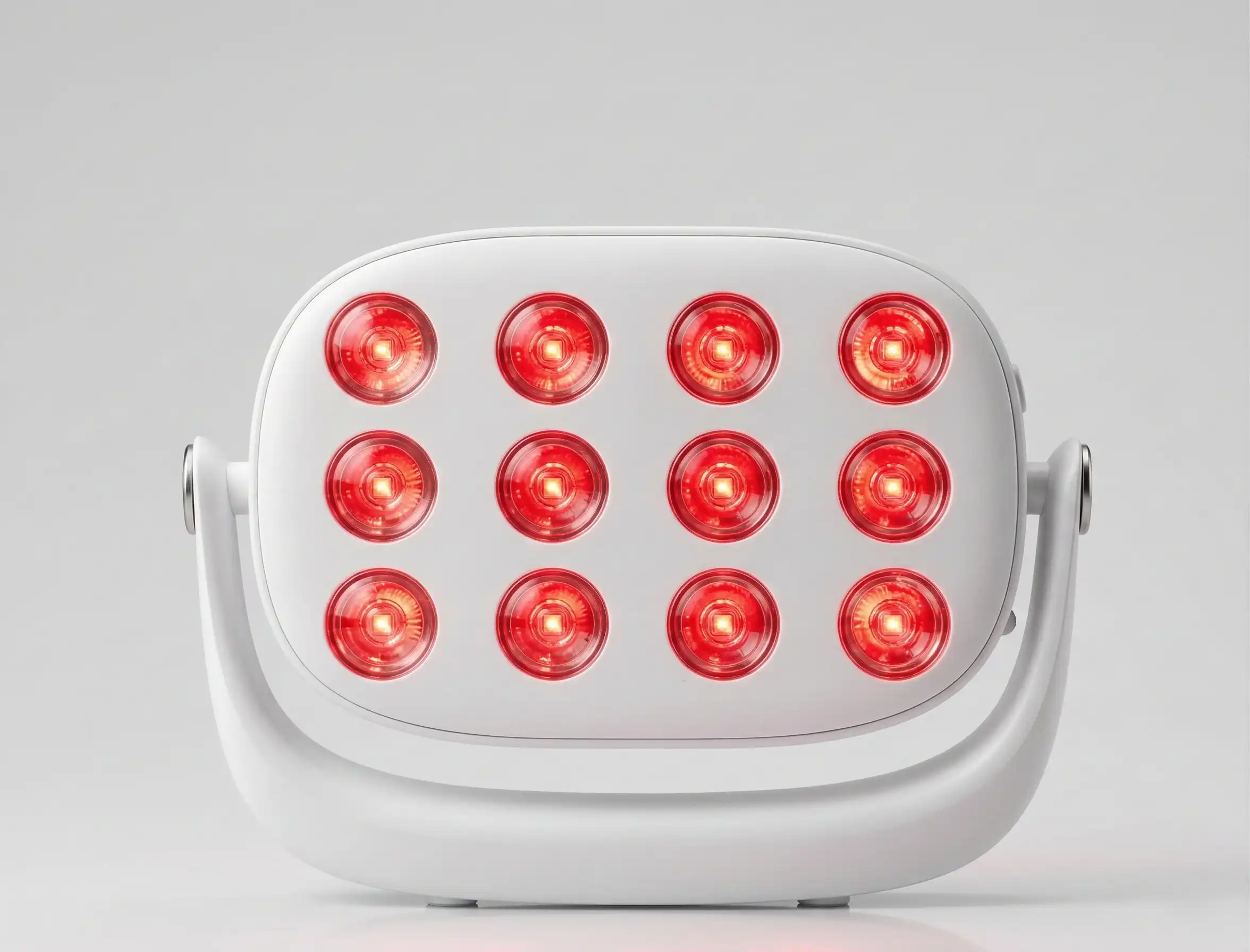
Valo Spark — For Targeted Recovery When Precision Matters
The Valo Spark fills the gap — verified 850nm at therapeutic irradiance, compact enough to position precisely over an Achilles tendon, a knee, or a shoulder insertion that a panel can’t efficiently target. TSA-approved, 6-hour battery, designed for athletes whose training takes them away from a fixed home setup.
For comprehensive athletic protocols: panel for large muscle group post-workout recovery, Valo Spark for tendon targeting and travel. That combination covers every scenario a serious training schedule creates.
Internal Links