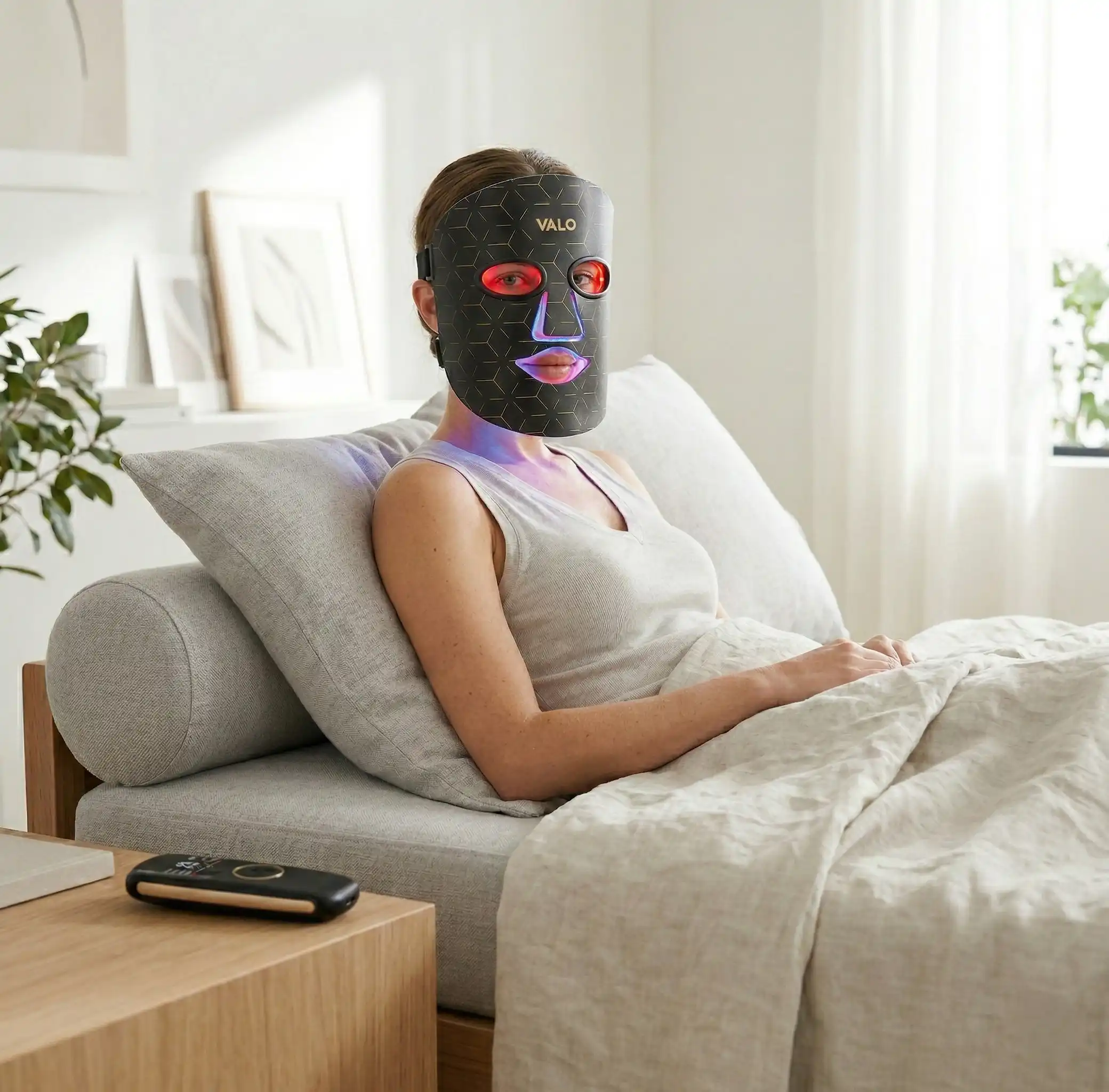
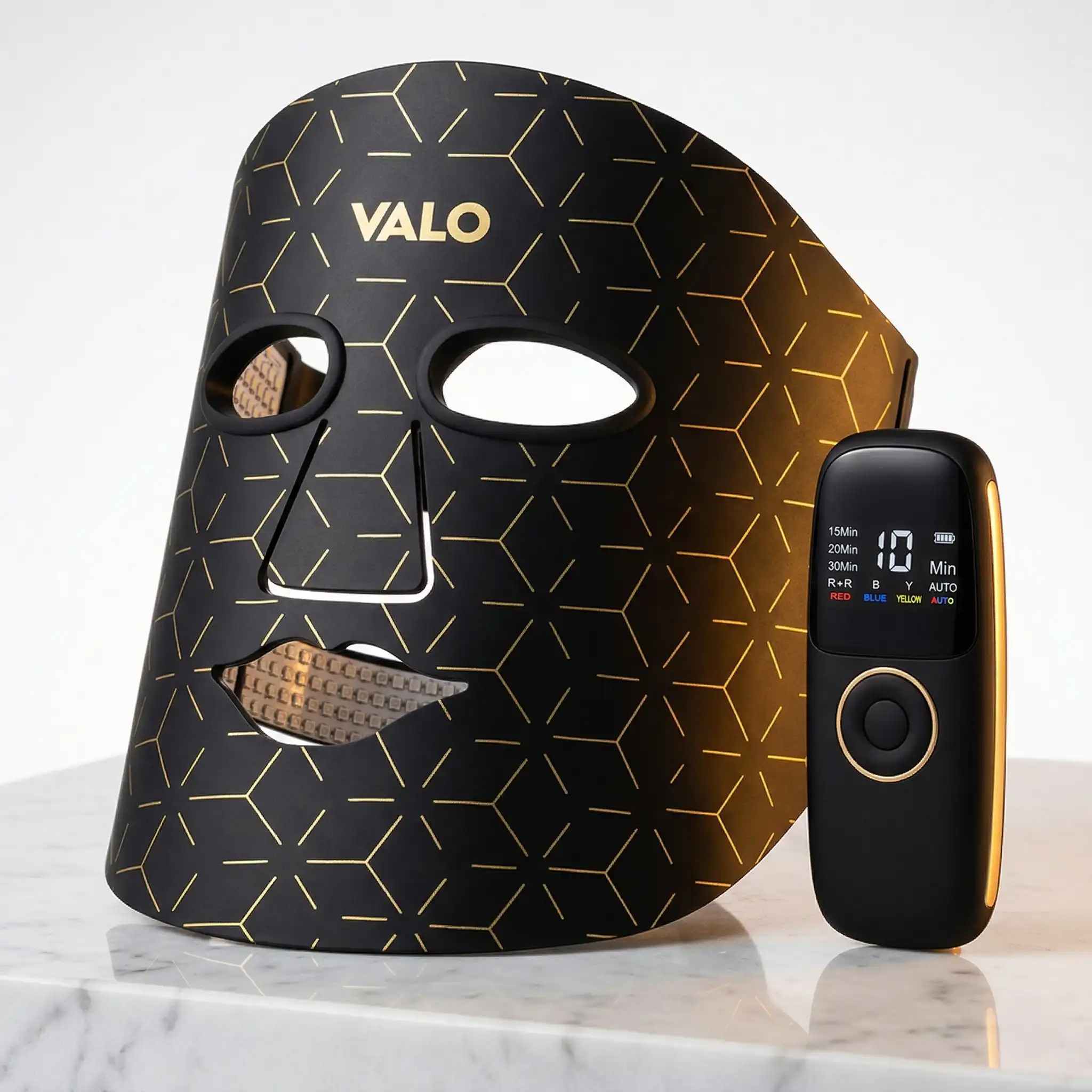
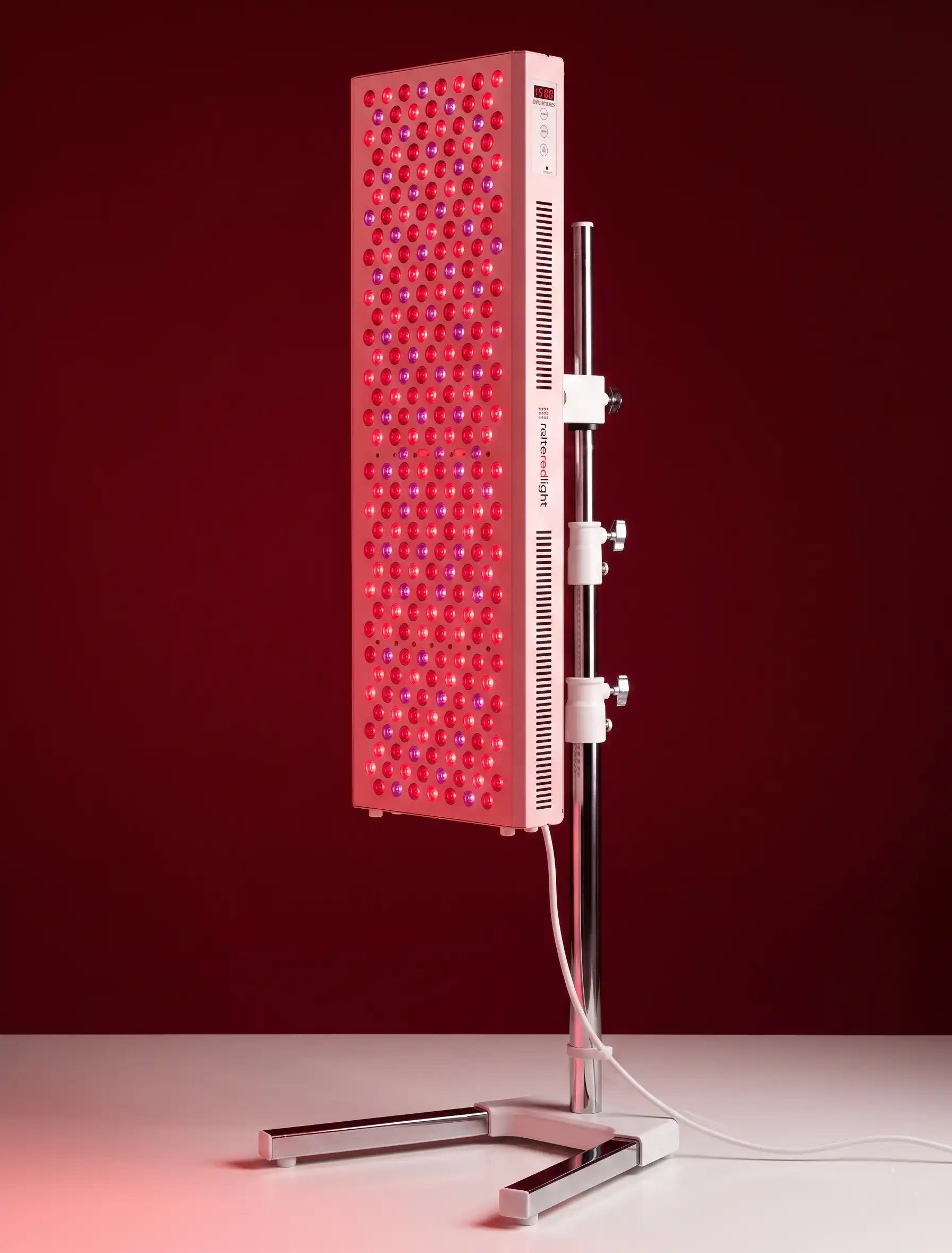
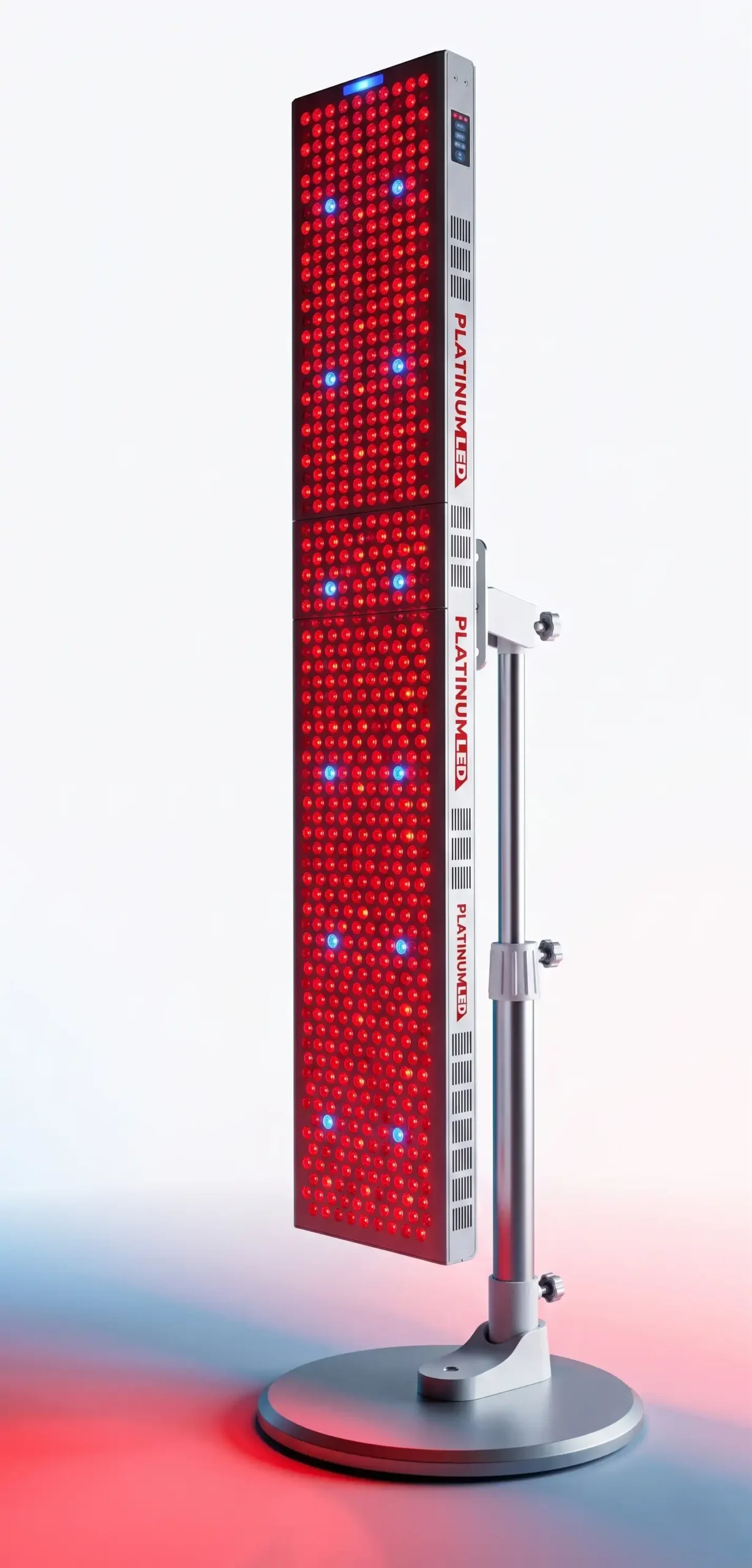
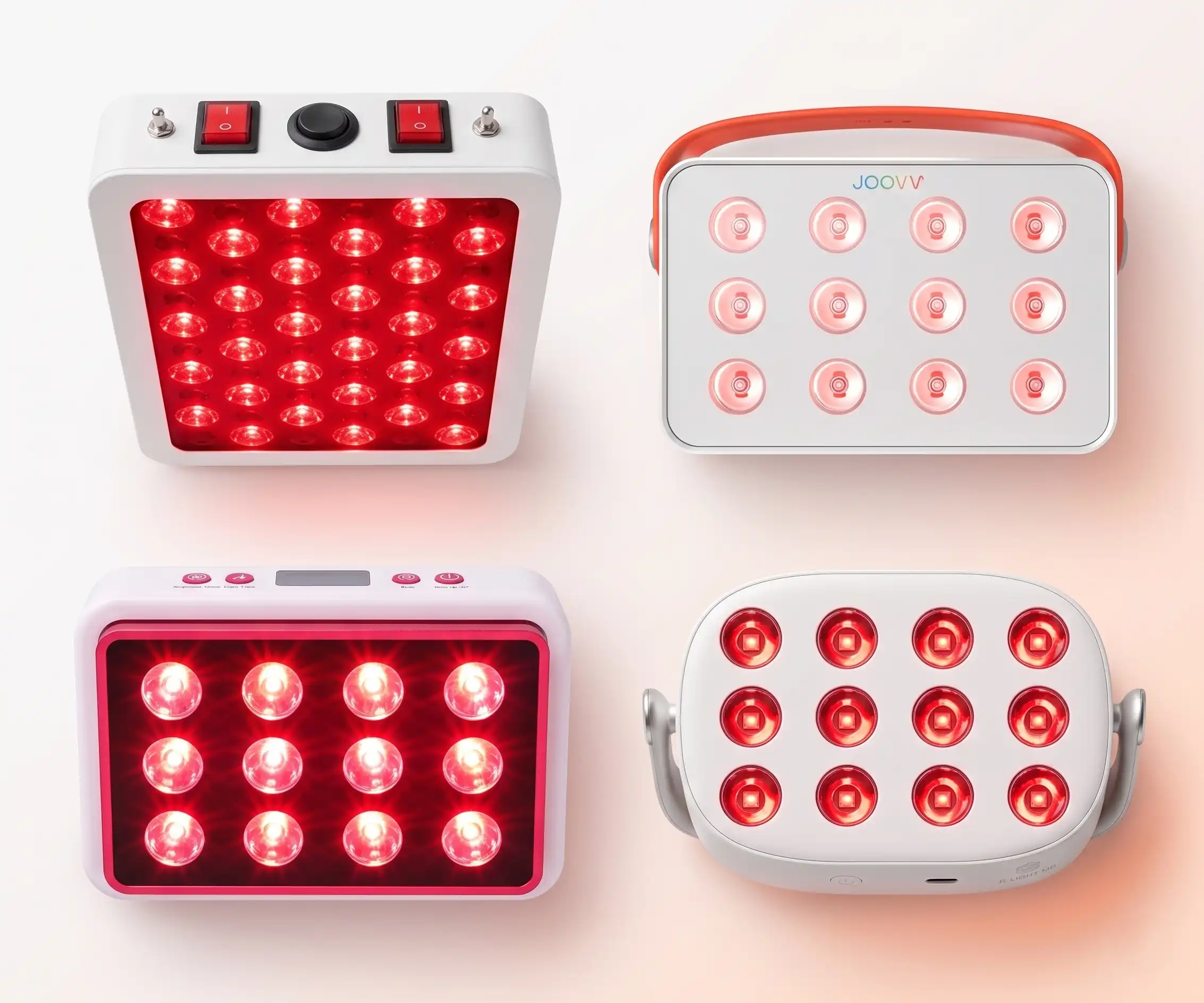
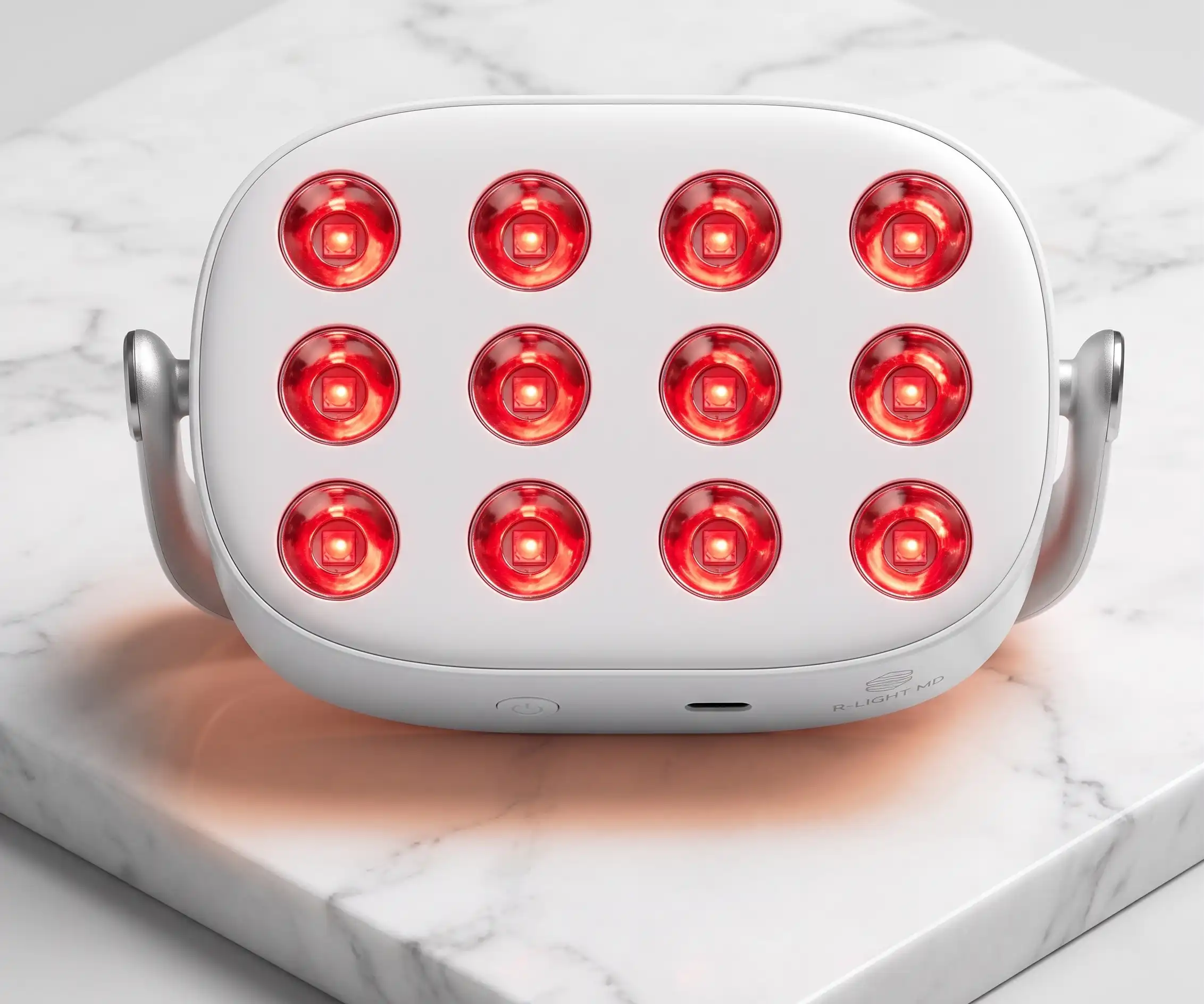
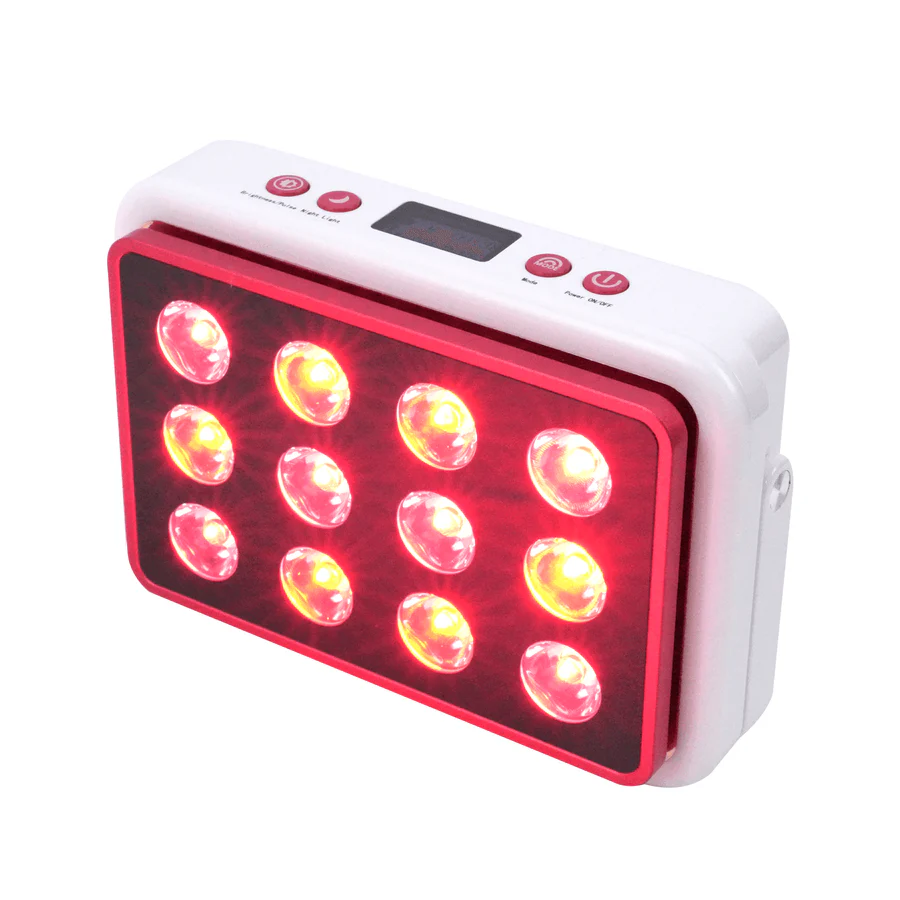
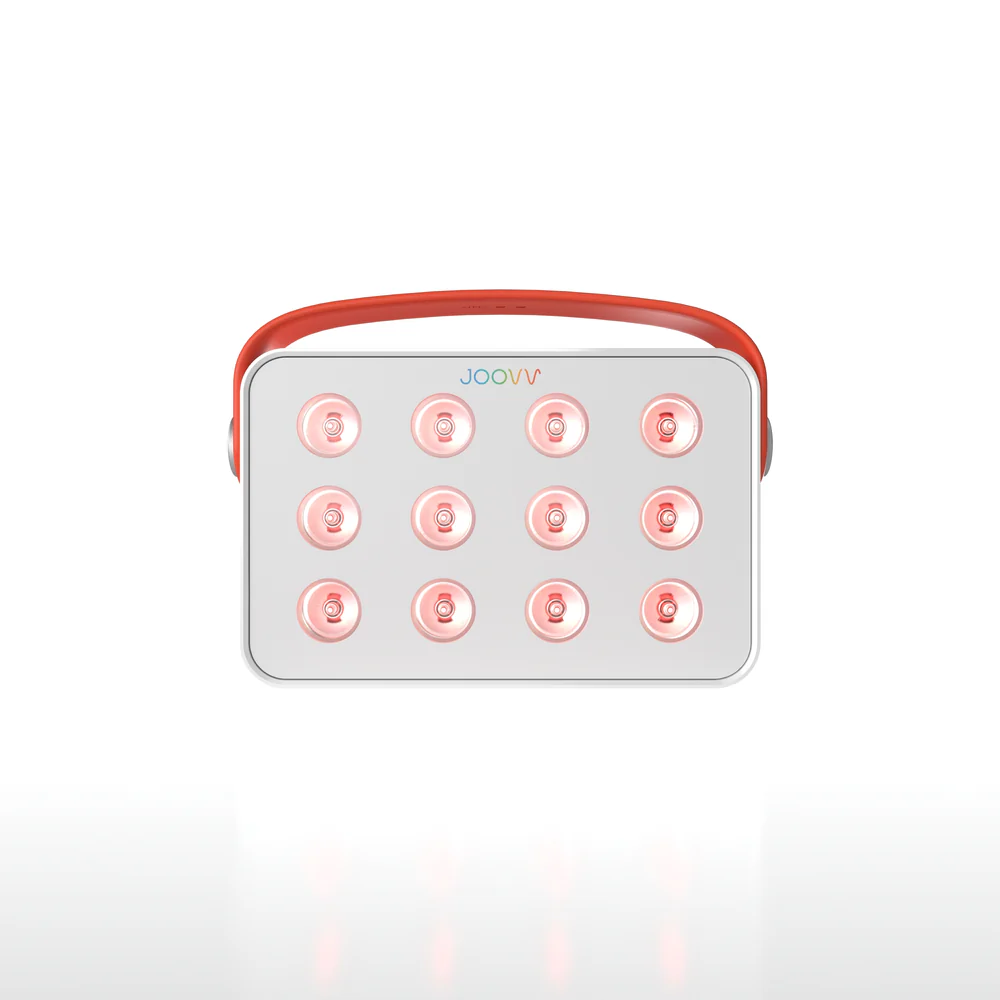
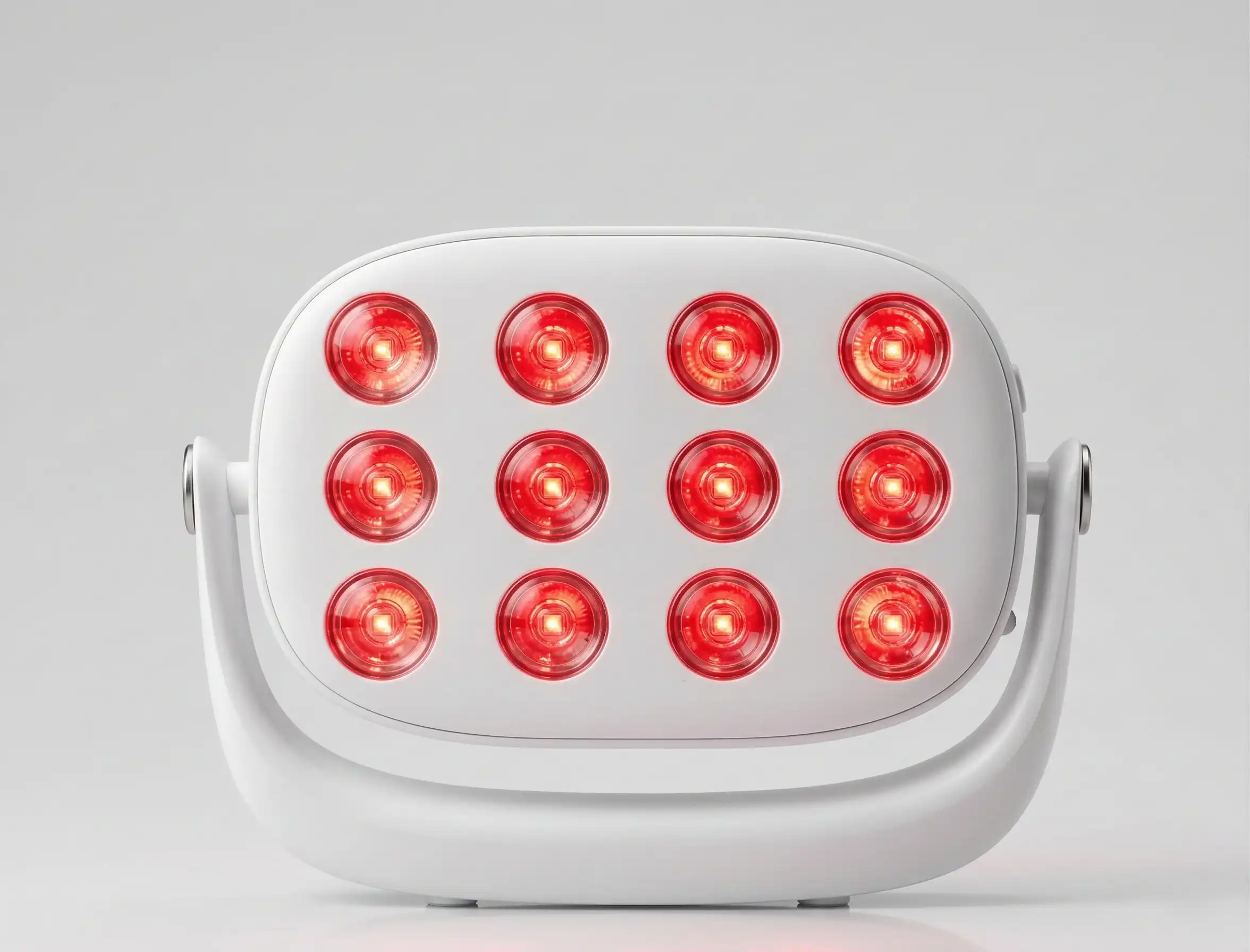
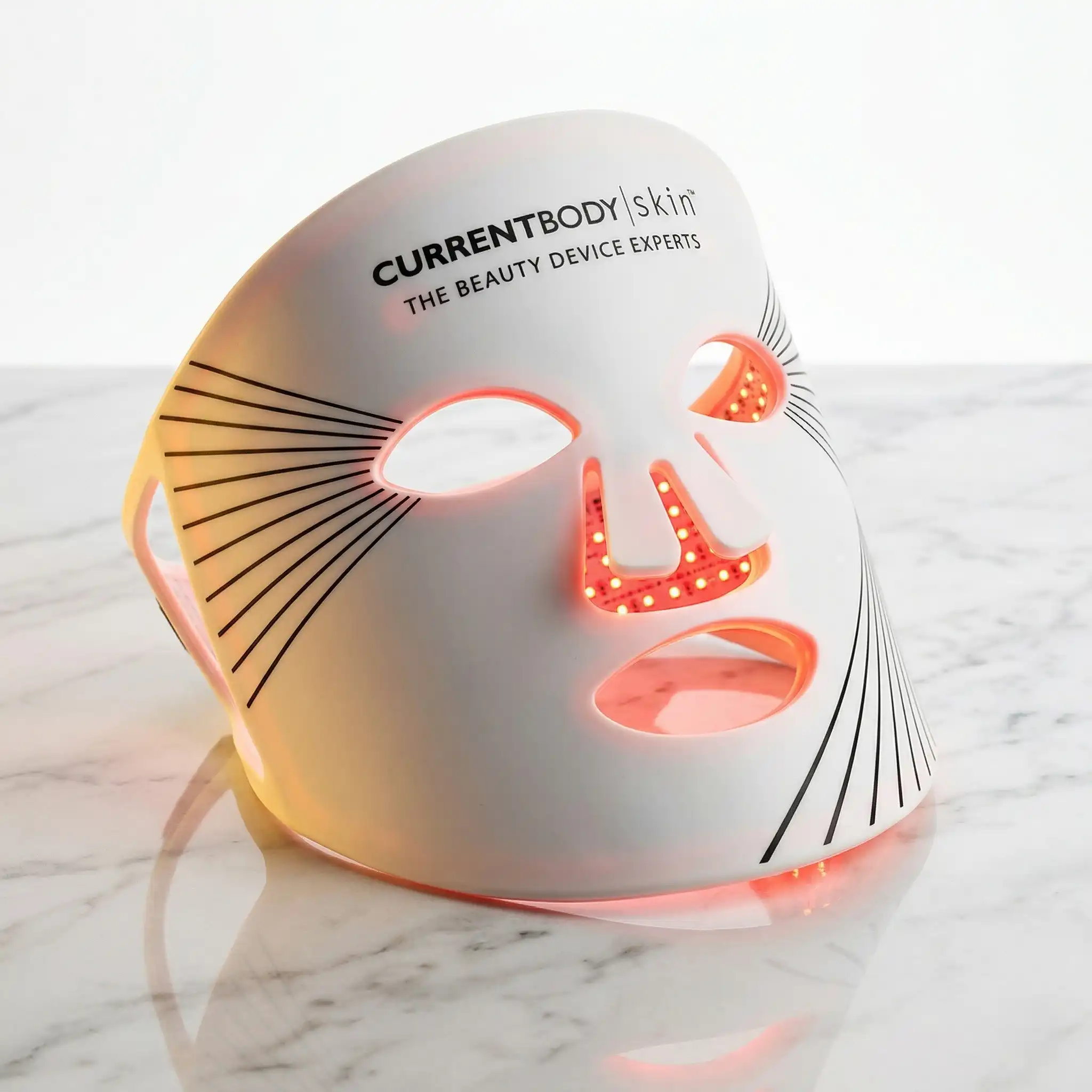
You want one device that does everything. Don’t want to buy separate masks for aging and acne. Valo’s 4 wavelengths handle both.
You care about adjustable intensity. Start gentle on sensitive skin, increase power as you build tolerance.
Cordless matters to you. Use it while reading or relaxing. Wired masks restrict movement.
Skip Valo Glow if:
You only need acne treatment. Dedicated blue-light masks cost less.
You want the highest-end clinical brand. Omnilux has 20+ years of peer-reviewed heritage.
Budget under $200 is firm. Single-wavelength options exist under $150.
What Problems Does It Actually Solve?
Problem #1: Fine Lines & Wrinkles
How: 630nm red + 850nm NIR stimulate collagen production at different skin depths. Result: 20–30% reduction in fine lines after 8–12 weeks (clinical average).
Problem #2: Acne & Breakouts
How: 415nm blue light kills acne-causing bacteria. Red light reduces inflammation from existing breakouts. Result: 30–50% fewer inflammatory lesions after 4–6 weeks. Full acne protocol + timeline →
Problem #3: Uneven Skin Tone & Barrier
How: 605nm orange light targets melanin, while NIR supports barrier repair and moisture retention. Result: More even tone, reduced redness, and 15–25% improvement in skin hydration.
INDEPENDENT EXPERT REVIEW • 4 MIN
Watch:Is Valo Glow Actually Worth $240?
Full spec breakdown · FDA clearance analysis · head-to-head vs Omnilux
How Valo Compares (The Table That Matters)
How Valo Glow Compares
Every spec that actually matters for results — compared honestly.
FEATURE
TOP PICK
Valo Glow
Best value
Omnilux Contour
CurrentBody
Dr. Dennis Gross
Price
$240 (with link)
$395
$380
$455
Wavelengths
4 (Red, Blue, NIR, Orange)
2 (Red, NIR)
2 (Red, NIR)
2 (Red, Blue)
Best For
Versatility (Aging + Acne)
Pure Anti-Aging
Pure Anti-Aging
Fast 3-min sessions
Cordless
✅ Yes
✅ Yes
✅ Yes
❌ No (Wired)
Adjustable Power
✅ Yes
❌ No
❌ No
❌ No
Which One Actually Wins?
For versatility: Valo — most wavelengths, best price point.
For clinical heritage: Omnilux — 20+ years of peer-reviewed research.
Bottom line: Valo is the best balanced option for most people. Not the absolute best at any single thing — best overall value.
Pros & Cons (The Honest Version)
What We Like
4 wavelengths in one mask
Adjustable intensity levels
Fully cordless design
Competitive price ($240 vs. $400+)
FDA-cleared
Limitations
No published raw irradiance (mW/cm²) data
Warranty terms unclear on standard sales page
Still an investment vs. cheap Amazon knockoffs
Fred's Notes
My methodology: This assessment is built on 40+ hours of spec analysis — wavelength physics, clinical dosing benchmarks against peer-reviewed literature, and a direct head-to-head comparison across 12 competing devices. I haven’t run this exact mask through a spectrometer yet, but I can tell you precisely what its 4-wavelength configuration means for your skin outcomes, and why that engineering choice is genuinely rare below $300.
What stands out: Four wavelengths below $400 is uncommon. Adjustable intensity is smart engineering — treating active acne requires different energy thresholds than targeting deep collagen remodeling. If you need a device that handles both without buying two separate masks, Valo is the most logical option right now.
The one thing I’d want to see: Published irradiance data (mW/cm²). Without it I can’t verify exact therapeutic dosing. The wavelength selection and build quality are both sound — and the buyer results below back that up.
How to Use It (Protocol)
Cleanse your face completely — sunscreen and heavy creams block wavelength penetration.
Optional: Apply a water-based serum before the session.
Put on the mask and adjust the straps for a snug fit.
Select your mode via the controller: red (anti-aging), blue (acne), or combo.
Run for 10 minutes. You don’t need to do anything else.
10,000+ verified purchases · Valo customer satisfaction data
BF
Brooke F.
Verified
★★★★★★★★★★
•5 months ago
Replaced my LED facial appointments
I was paying $150 per LED facial at a med spa, going twice a month. That’s $300 a month. The Glow paid for itself after one month. Same technology, same wavelengths, but I do it every single day instead of twice a month. The consistency alone has made a bigger difference than the spa sessions ever did. My skin has never looked this good.
SG
Samantha G.
Verified
★★★★★★★★★★
•6 months ago
Three treatments in one mask
What sold me was getting red, blue, and yellow light in one device instead of buying three separate things. I use the red for anti-aging, switch to blue when I feel a breakout coming, and the yellow calms any redness. 10 minutes while I scroll my phone in the morning. My esthetician asked what I changed at my last facial. She wants one now too.
MK
Mia K.
Verified
★★★★★★★★★★
•6 months ago
Chin breakouts cleared in 3 weeks
I have tried every acne product on the market. Literally every single one. The blue light on the Glow cleared my chin breakouts in about 3 weeks of consistent use. I use it for 10 minutes every morning while I make coffee. My skin is smoother, less red, and the dark spots from old breakouts are fading. Simplest step in my routine and the most effective.
RV
Rachel V.
Verified
★★★★★★★★★★
•6 months ago
Forehead lines noticeably softer
I’m 45 and was spending a fortune on serums and facials trying to fight fine lines. Started using the red light setting every night for 10 minutes. By week 6 my forehead lines were noticeably softer. My girlfriends thought I got Botox. I did not. Just consistent red light. The savings compared to what I was spending on treatments alone made this worth it.
Frequently Asked Questions
LED photobiomodulation is one of the more well-supported non-invasive skin treatments in dermatology literature. The mechanisms — blue light disrupting bacterial membranes (acne), red and NIR light stimulating ATP production and collagen synthesis (anti-aging) — are backed by peer-reviewed trials, not just brand claims. That said, consumer devices vary wildly in irradiance and wavelength accuracy. Valo’s 4-wavelength configuration is technically sound. The one missing data point is published irradiance (mW/cm²), which would let us verify the therapeutic dose. Based on buyer outcomes and device specs, this is not a gimmick — but it requires consistency. 10 minutes a day, 4–5 times a week, for at least 8 weeks. People who use it sporadically and expect overnight results will be disappointed.
Yes, Valo Glow is FDA cleared. It’s important to understand what that means and what it doesn’t. FDA clearance (510k) means the device has been reviewed and deemed safe for consumer use — it’s not the same as FDA approval, which requires clinical efficacy trials. Cleared devices have demonstrated they meet safety standards for the specific wavelengths and power levels they emit. For an at-home LED mask, clearance is the relevant benchmark. It signals the device won’t cause photodamage or eye injury when used as directed. All the major clinical-grade masks (Omnilux, CurrentBody) are also cleared, not approved — this is standard for the category.
Depends on the concern. For acne, blue light can start reducing active bacteria within the first 2–3 weeks of consistent use — several buyers in this review saw breakout reduction at the 3-week mark. For anti-aging (fine lines, collagen density), the timeline is longer: clinical studies typically show measurable improvement at 8–12 weeks of regular use. Skin tone and redness can shift somewhere in between, often 3–6 weeks. The key variable is consistency. Every other day or sporadic use will push those timelines out significantly. Buyer data here tracks closely with the clinical averages.
Red and NIR light are generally considered safe across all Fitzpatrick skin types (I–VI), including darker complexions, because they work at the cellular level rather than targeting melanin directly. Blue light is also broadly safe, though some dermatologists recommend lower starting doses for melanin-rich skin since there’s less literature on prolonged high-dose blue light in Fitzpatrick V–VI. The orange wavelength (605nm) in Valo is specifically useful for redness and rosacea and is well-tolerated. The adjustable intensity on the Glow is a meaningful feature here — people with sensitive skin or rosacea can start at lower settings and work up. Always patch test first if you have a photosensitive condition or are on medications that increase light sensitivity (certain antibiotics, retinoids). See our full safety guide →
Retinol and LED therapy can be used in the same routine, but not simultaneously. Don’t apply retinol immediately before an LED session — use them at separate times. A common protocol: LED mask in the morning (no retinol), retinol in the evening. If you’re using prescription-strength tretinoin, your skin may be more photosensitive; stick to starting at the lowest intensity setting and consult your dermatologist. Water-based serums (hyaluronic acid, niacinamide, vitamin C) applied before the session are fine and may enhance results by improving hydration and light absorption at the surface. Skip anything occlusive like thick creams or facial oils pre-session — they can reduce penetration.
Med spa LED devices typically run at higher irradiance (power density) and have more precise clinical calibration. The tradeoff is cost ($75–$200 per session) and frequency — most people go once or twice a month. At-home devices like Valo run at lower power but can be used daily, and research increasingly suggests that consistency and total accumulated dose matter more than peak session intensity. The math tends to favor at-home use: daily 10-minute sessions add up to significantly more total light exposure than two monthly spa visits. Buyer Brooke F. noted her skin improved more from daily Glow use than from twice-monthly spa sessions — that tracks with the biology.
Valo offers a 60-day return window, which is above average for the LED mask category — most competitors offer 30 days. This is long enough to complete a meaningful trial period and see early results before the return window closes. For warranty terms, I’d recommend confirming directly with Valo at checkout or via their support, as these details can change and vary by region. When purchasing through our affiliate link, the 20% discount applies automatically — the return policy remains the same as buying direct.
If your current device covers 630–660nm red and you’re happy with anti-aging results, the primary upgrade Valo offers is the blue light (acne treatment) and orange light (redness/rosacea/tone). If neither of those is a concern for you, the jump may not be necessary. Where Valo makes sense as an upgrade: you want acne treatment on the same device, you’re currently dealing with redness or uneven tone, or your existing device is wired and the cordless form factor would meaningfully change how consistently you use it. Consistency is the biggest driver of results — a device you actually use beats a “better” device that sits on a shelf.
63
Devices independently tested
2,400+ hrs
Of structured real-world testing
46
Peer-reviewed studies referenced
Since 2024
Independent, no brand funding
BioHackingTested
How we evaluate health technology
Every review starts with the science, not the marketing. We apply a four-part framework — clinical research, device specification verification, safety audit, and structured real-world testing — before writing a single word.
Peer-reviewed research first
We start with published clinical literature, not manufacturer claims. Every mechanism we explain is tied to a cited study.
PubMed & clinical databases
Biological mechanism validation
Effect size and dose analysis
460+ studies reviewed to date
Device specification verification
We measure, not assume. Wavelength accuracy, irradiance output, and EMF levels are checked against published device specs and third-party lab data.
Wavelength accuracy (660 nm & 850 nm)
Irradiance at distance (mW/cm²)
EMF levels and shielding
Compared to PSG baselines for sleep
Safety & regulatory audit
We verify FDA clearance status, manufacturing compliance, and flag any red flags in safety profiles — from infrared sauna EMF to laser hair cap power levels.
FDA-cleared or 510(k) status
Medical device standards check
Regulatory status by country
No payment accepted for safety ratings
Structured real-world testing
Lab numbers don't tell the whole story. We test usability, app interfaces, build quality, and long-term durability under realistic conditions.
Minimum 4-week testing period
Documented protocol & limitations
HRV & recovery metric tracking
63 devices tested since launch
Ready to Stop Paying $300/Month for Spa Sessions?
One device. Four wavelengths. Ten minutes a day. For most people dealing with aging, acne, or uneven tone, Valo is the most logical purchase at this price point.
Valo Blaze vs Joovv Solo 3.0 (2026): $1,040 vs $1,295+ Full-Body Coverage Showdown
Valo Blaze is the clear winner. It delivers true full-body coverage in a single standing position for $1,040. To get the same coverage from Joovv, you must buy two Solo 3.0 panels, pushing the real cost over $2,600.
Joovv Solo 3.0 is a beautifully built panel, but it only covers half your body as a single unit. The Valo Blaze is the definitive choice here: it delivers genuine, head-to-toe full-body coverage in a single standing position for less money.
The Coverage Gap — The Most Important Difference in This Comparison
Before comparing wavelengths, warranties, or apps — coverage is what matters first. A full-body panel that doesn’t cover your full body is a partial-body panel with a misleading name.
True Full-Body Cost: $1,040 vs $2,600+ Independent testing confirms: Joovv Solo 3.0 “should not be expected to give complete full-body exposure in one position.” Here is what that means for your wallet.
🟢 VALO BLAZE: $1,040
One device — true head-to-toe coverage
Single standing position, no repositioning
Adjustable floor stand included
HSA/FSA confirmed eligible
3-year warranty
Affirm from $25/month
This is the total price — nothing extra
🔴 JOOVV “FULL-BODY” SETUP: $2,600+
One Solo = partial body only
Full-body requires 2-panel Duo stack
Duo: $2,590–$3,398 depending on config
HSA/FSA: requires provider verification
2-year warranty at that price
$255 more than Blaze for partial only
$1,560+ more for equivalent full-body
💡 Blaze saves you vs Joovv full-body: $1,560+
Everything else in this comparison — wavelengths, app features, certification — is secondary to this. If your goal is full-body RLT coverage from one device at the best value, this paragraph ends the comparison. Blaze wins.
Round-by-Round Breakdown
🟢 VALO BLAZE WINS:
Coverage: True full-body from one device. Joovv Solo covers partial body only — full-body requires 2 units at $2,600+.
Price: $1,040 (with 20% OFF) vs $1,295 for partial Joovv. $255 cheaper for more coverage.
Warranty: 3 years vs Joovv’s 2 years — extra year of coverage at lower cost.
Financing: Affirm from $25/month explicitly offered. Joovv also has Affirm but entry point is higher.
🟣 JOOVV SOLO WINS:
Medical Cert: IEC 60601 medical device certification from Intertek — unique in consumer RLT. Blaze is FDA compliant but not IEC 60601.
Smart App: Bluetooth app with Recovery+ pulsed NIR (10Hz), ambient mode, alarm function, session tracking. Blaze has no app.
Resale Value: Joovv holds its resale price better than any competitor. If you plan to sell later, Joovv brand commands premium on secondary market.
⚪ IT’S A TIE:
Wavelengths: Both: 660nm red + 850nm NIR simultaneously. Identical therapeutic wavelength coverage for surface skin and deep tissue.
Stand: Both include an adjustable floor stand. Blaze’s stand is adjustable height; Joovv’s is also adjustable with modular mount options.
HSA/FSA Eligibility — The $250 Saving Most People Miss
Blaze Is HSA/FSA Eligible. Joovv Requires You to Verify.
At $1,040, using pre-tax HSA/FSA dollars meaningfully changes the real cost of the Valo Blaze. Most buyers overlook this when comparing sticker prices.
Where Joovv Solo Actually Wins — And When It Matters
Honest comparisons acknowledge genuine advantages. The Joovv Solo 3.0 wins two categories that are real and important to specific buyers.
IEC 60601 Medical Device Certification
The Joovv Solo 3.0 is tested and certified by Intertek to IEC 60601 standards — the international safety and performance standard used for medical electrical equipment in clinical settings. This evaluates the complete device system, not just LED output. No other consumer RLT panel carries this specific full-system certification. For buyers in clinical environments, healthcare professionals, chiropractic or physio offices, or anyone with a liability-sensitive purchase requirement — this is a unique, legitimate advantage that Blaze cannot match.
Recovery+ Bluetooth App Ecosystem
Joovv’s app delivers pulsed NIR at 10Hz (Recovery+ mode), ambient red light mode for evening circadian support, an alarm function that transitions from dim red to full spectrum for natural wake-up, and session tracking. For buyers who want a smart-home-integrated, protocol-managed RLT experience — Joovv’s ecosystem has no equivalent competitor. Blaze is plug-in-and-use: effective, but no app, no pulsing, no tracking.
If either of these matters to your specific situation — Joovv Solo is the right choice, despite the coverage limitations. If neither matters, Blaze wins every other dimension.
Full Comparison Table
FEATURE
TOP PICK
Valo Blaze
Best value
Joovv Solo 3.0
Price
$1,040 — all-in
$1,295 (partial body only)
You Pay Less
$255 cheaper
—
True Full-Body — 1 Unit
✅ Yes — head to toe
❌ No — partial only
Full-Body Total Cost
$1,040 — done
$2,600+ (2 units)
Savings vs Joovv Full-Body
$1,560+ saved
—
Wavelengths
660nm + 850nm NIR
660nm + 850nm NIR
Session Time (Full Body)
15 min/side
10–20 min/zone (repositioning needed)
Stand Included
✅ Adjustable
✅ Yes
HSA/FSA Eligible
✅ Confirmed
⚠️ Verify with provider
Effective Cost (HSA 24%)
~$790
$1,295 (unconfirmed eligibility)
Warranty
3 years
2 years
Affirm Financing
From $25/month
Available
Medical Certification
FDA compliant
IEC 60601 (Intertek)
Smart App / Bluetooth
❌ No app
✅ Recovery+, ambient, alarm
Resale Value
Good
Good
Fan Noise
Standard
Audible — 2 fans
LED Distribution
Even
Hotspot reported
Fred’s Score
9.4/10
6.8/10
Who Should Buy Which
Choose Valo Blaze if…
You want true full-body coverage from one device — one position, head to toe, no repositioning
Budget matters — $1,040 vs $1,295 for less coverage (or $2,600+ for equivalent Joovv coverage)
You want confirmed HSA/FSA eligibility — save ~$250 pre-tax
You want a 3-year warranty at this price point
You’re an athlete running daily full-body recovery protocols
You have chronic pain in multiple areas and want simultaneous treatment
You’re a biohacker building a comprehensive daily protocol
You want the lowest Affirm monthly payment to access full-body RLT
Choose Joovv Solo if…
IEC 60601 medical certification is required — clinical settings, healthcare professionals, liability requirements
The Recovery+ app ecosystem matters — pulsed NIR, ambient mode, alarm, Bluetooth tracking
You’re building a modular system — starting with one Solo, adding a second within 12 months is your plan
Resale value matters — you may sell or upgrade later and want maximum retained value
Zone-specific treatment (not full-body) is your actual goal — upper body, specific muscle groups
Fred’s Verdict
The comparison comes down to one question before anything else: do you need a genuinely full-body panel, or are you okay with partial coverage today and a plan to expand later?
If full-body from day one is your goal — the math is unambiguous. Blaze delivers it at $1,040. Joovv delivers it at $2,600+. That $1,560 gap pays for a year of physiotherapy, a quality home gym setup, or a second piece of recovery equipment entirely. The Joovv Solo’s build quality and app features are real and excellent — but they don’t close a $1,560 coverage gap.
The HSA/FSA point deserves emphasis. At a 24% tax bracket, Blaze’s confirmed eligibility reduces the real cost to approximately $790. If your HSA/FSA administrator declines the Joovv purchase (which Joovv itself says to verify), you’re paying $1,295 out of pocket for partial coverage. At $790 effective vs $1,295 out-of-pocket, the comparison becomes stark.
Joovv Solo is the right choice for clinical certification requirements, people who specifically want pulsed NIR via an app, and buyers building modular systems over time who start with one panel intentionally. For the person who wants full-body daily RLT at home, the answer is Blaze — and it’s not close.
Frequently Asked Questions
For most buyers wanting full-body coverage — yes, decisively. Valo Blaze delivers true head-to-toe coverage from one device at $1,040, is confirmed HSA/FSA eligible, carries a 3-year warranty, and costs $255 less for more coverage. Full-body Joovv requires 2 panels at $2,600+, making the real gap $1,560+. Joovv Solo wins on IEC 60601 medical certification and its Bluetooth app with Recovery+ pulsed NIR — these matter for clinical use or protocol-managed sessions, but not for most home users.
No — not as a single unit. Independent testing confirms the Joovv Solo 3.0 covers partial body in one standing position — effectively treating the face, neck, upper torso, and individual zones, but not head-to-toe simultaneously. Full-body Joovv coverage requires a 2-panel Duo configuration at $2,590–3,398.
Yes — Valo Blaze has confirmed HSA/FSA eligibility. At a 24% tax bracket, pre-tax HSA/FSA purchase represents approximately $250 in savings, reducing the effective cost to approximately $790. Joovv accepts HSA/FSA cards but recommends buyers verify eligibility with their individual provider. Always confirm with your HSA/FSA administrator before purchase regardless of device.
Joovv Recovery+ delivers near-infrared light at 10Hz pulse frequency via Bluetooth app, claimed to improve recovery response versus continuous NIR. Research confirms differences between pulsed and continuous light exist — optimal parameters for specific outcomes require further study. Valo Blaze does not have an app or pulsed NIR mode. For buyers who specifically want pulsed NIR therapy, Joovv’s app is a genuine advantage Blaze cannot replicate.
At minimum $255 (Blaze $1,040 vs Solo $1,295 for partial coverage). For equivalent full-body coverage: $1,560 or more (Blaze $1,040 vs Joovv Duo $2,600+). With HSA/FSA at 24% tax bracket: effective Blaze cost ~$790 vs Joovv’s unconfirmed eligibility at $1,295+ or $2,600+ for full-body.
Yes. Valo Blaze offers Affirm financing from $25/month, making the $1,040 all-in panel accessible without a large upfront payment. At $25/month, the full-body panel costs less per month than a single physiotherapy session while providing daily access. Joovv also offers Affirm but the entry monthly payment is higher given the $1,295+ price point.
15 minutes per side at 6–12 inches. A complete protocol — front session (15 min) plus back session (15 min) — totals 30 minutes of daily hands-free treatment. Most users integrate front into a morning routine and back into an evening or post-training session, making the daily time cost close to zero in terms of dedicated attention. Full dosing guide →
True Full-Body RLT. $1,040. One Device.
Joovv Solo covers partial body for $1,295. Full-body Joovv costs $2,600+. Blaze delivers true head-to-toe for $1,040 — stand included, HSA/FSA eligible, 3-year warranty, Affirm from $25/month. 20% OFF auto-applied via link.
Joovv Solo 3.0 Review (2026): Premium Build, Misleading Coverage
QUICK VERDICT
The Joovv Solo 3.0 is built beautifully — IEC 60601 certified with a premium app and Recovery+ pulsed NIR. The critical problem: as a single unit, it only covers partial body. Independent testing confirms true full-body requires two panels at $2,600+.
IEC 60601 certified, premium polycarbonate, lightest large panel
App & Features
9/10
Recovery+ pulsed NIR, ambient mode, alarm, Bluetooth
Wavelengths
7/10
660nm + 850nm — solid, competitors offer 3–5
True Coverage
4/10
Partial body only as 1 unit — confirmed independently
Value
3/10
$1,295 partial vs Blaze $1,040 true full-body
LED Output
5/10
150 LEDs — lowest in full-body category, hotspots reported
What Joovv Actually Gets Right
IEC 60601 Medical Certification
The Solo 3.0 is certified by Intertek to IEC 60601 medical electrical equipment safety standards — the same used for clinical devices. This evaluates the entire device system: electrical safety, electromagnetic compatibility, mechanical safety, and output consistency. No other consumer RLT panel carries this specific certification. For clinical settings or healthcare professionals where medical-grade certification is a legal requirement, this is a genuine, unique differentiator.
IEC 60601 — What It Actually Means
IEC 60601 is the international standard for safety and performance of medical electrical equipment, evaluated at the complete system level. Joovv is the only consumer RLT brand to achieve full system-level certification. For clinical environments, healthcare providers, or liability-sensitive purchases, this is not equivalent to anything competitors offer. For home users prioritizing coverage and value, it is a differentiator that may not change the therapeutic outcome.
Recovery+ App and Smart Features
Joovv’s Bluetooth app delivers features unavailable elsewhere at the panel level: Recovery+ mode (pulsed NIR at 10Hz for enhanced recovery response), ambient mode for evening wind-down, an alarm function that transitions from dim red to full spectrum for natural wake-up, and session tracking. If you want a smart-home-integrated RLT experience, Joovv has no equivalent competitor.
Modular Build Path
The Solo is designed as an entry point into a scalable system. Buyers who start with one Solo and plan to add a second within 12 months are building on a premium, clean-connection platform. The modular argument is legitimate for a phased investment plan — the criticism applies specifically to buyers expecting full-body from one unit on day one.
Pros & Cons
What We Like
IEC 60601 medical device certification — unique in consumer category
Premium polycarbonate frame — lightest large panel tested
Recovery+ pulsed NIR at 10Hz via Bluetooth app
Ambient and alarm modes for circadian integration
Modular — expandable to Duo, Max, Elite over time
Best resale value in category — Joovv holds its price well
660nm + 850nm simultaneous — surface and deep tissue
Limitations
Single Solo is NOT full-body — partial coverage only, independently confirmed
True full-body = 2-panel stack = $2,600+ vs Blaze $1,040
Only 150 LEDs — lowest count in full-body category
Hotspot distribution reported — uneven light across panel surface
Audible fan noise — two fans create a pitch many find irritating
2-year warranty at $1,295+ — below Blaze’s 3 years
Joovv earned its reputation honestly. The IEC 60601 certification is real. The app ecosystem is genuinely differentiated. The build quality is the best in consumer RLT. For buyers who specifically need these things — clinical use, a smart protocol, or a phased modular build — the Solo earns its premium.
The problem is that most people searching “Joovv Solo review” want a full-body panel for home use. The honest answer to that specific question is no — not because it’s a bad product, but because one unit doesn’t deliver full-body coverage, and making it full-body costs $2,600+.
The Valo Blaze at $1,040 delivers what most Joovv shoppers actually want: genuine full-body in one position, one device, stand included, HSA/FSA eligible, 3-year warranty. It doesn’t have the Joovv app or IEC 60601. For the buyer whose goal is full-body daily RLT at home without spending $2,600, those missing features don’t change the therapeutic outcome.
Frequently Asked Questions
For specific use cases — yes. Buyers needing IEC 60601 certification, Recovery+ app, or building a modular system will find the Solo worth its premium. For full-body coverage at best value, Valo Blaze at $1,040 delivers true full-body for $255 less as a single device — and $1,560+ less than a Joovv full-body stack.
No — not as a single unit. Independent testing confirms the Solo covers partial body only. Full-body Joovv requires a 2-panel Duo configuration at $2,590–$3,398. Valo Blaze delivers genuine full-body from one device at $1,040.
Recovery+ delivers near-infrared at 10Hz pulse frequency via Bluetooth app rather than continuous NIR. Research confirms differences between pulsed and continuous light exist. It is a genuine differentiator vs all competitors — whether the clinical significance exceeds continuous NIR in home use contexts is an ongoing research question.
Joovv accepts HSA/FSA cards but recommends buyers verify eligibility with their provider. Valo Blaze has confirmed HSA/FSA eligibility. If pre-tax health savings are part of your calculation, Blaze offers certainty while Joovv requires individual verification.
Two — the Joovv Duo configuration at $2,590–$3,398. Valo Blaze delivers true full-body from a single device at $1,040 with stand included, saving $1,550+ compared to Joovv full-body coverage.
Valo Blaze at $1,040 — true full-body, stand included, HSA/FSA eligible, 3-year warranty, Affirm from $25/month. For more wavelengths, Mito Red MitoPRO 1500+ at $1,399. For highest irradiance, PlatinumLED BIO-900 at ~$1,049 with stand. See full rankings →<
True Full-Body RLT — One Device, $1,040
The Joovv Solo covers partial body for $1,295. Full-body Joovv costs $2,600+. Valo Blaze delivers genuine head-to-toe coverage for $1,040 — stand included, HSA/FSA eligible, 3-year warranty, Affirm from $25/month.
For first-time RLT users or targeted-treatment goals — start with Valo Beam. The Blaze is the right second device, not always the right first one.
Not the right device for travel or if full-body single-position coverage is the goal. The right device for a hands-free daily home panel that treats real tissue at real therapeutic depth.
Best Full-Body Red Light Therapy Panel of 2026: Tested & Ranked
Most “full-body” panels aren’t. The most famous one — Joovv Solo 3.0 — covers partial body as a single unit. Independent reviewers confirm: it “should not be expected to give complete full-body exposure in one position.” True full-body from Joovv requires stacking two units, pushing the cost past $2,600. Valo Blaze delivers genuine head-to-toe coverage as a single device for $1,040. This guide tells you what you’re actually buying.
What “Full-Body” Actually Means
True full-body coverage: standing at therapeutic distance (6–12 inches) with your entire body receiving irradiance above the therapeutic threshold simultaneously. No repositioning. No moving the panel up and down mid-session. One standing position, one complete session window.
The average adult is 5’7″–5’10”. At 6 inches from the panel, you need a panel height of approximately 6 feet for true head-to-toe coverage. Most “full-body” panels marketed in the $900–$1,300 range are 4–4.5 feet — covering torso and upper legs while leaving shoulders and lower legs undertreated unless you reposition. This is the reality beneath the marketing. Panel format guide →
How We Evaluate Full-Body Panels
📐 True Coverage Height Does one panel genuinely cover head-to-toe at 6–12 inches for an average adult? We verify panel height against real-world coverage claims.
💰 Total Real Cost Device + stand + any accessories needed for full-body coverage. Some brands need 2 panels. The sticker price is not always the total price.
📡 Dual Wavelength 660nm (skin, collagen, 8–10mm) AND 850nm NIR (deep tissue, joints, 30–40mm). Both are required for complete therapeutic coverage.
🏗️ Stand Included A floor stand is essential for full-body use. If sold separately, that real cost gets added to our total price comparison.
💳 HSA/FSA Eligibility At $1,000+ price points, pre-tax health savings dollars represent a real 22–37% effective discount. We verify eligibility.
🛡️ Warranty Depth 3 years minimum for a panel at this price. 2-year warranties on $1,300+ panels are below category standard.
#1—OVERALL WINNER
Valo Blaze Full-Body Panel
True full-body. One device. One standing position. Stand included. $1,040 after 20% OFF.
Stand sold separately — real total ~$1,049, approaching Blaze’s $1,040
Near-full for users over 5’10” — panel height slightly short
Not HSA/FSA eligible — Blaze is (meaningful saving at this price)
The Joovv Full-Body Trap: Read This Before Buying
This is the most important thing to understand when shopping for a full-body panel — and it’s buried in fine print on Joovv’s own product pages.
⚠️ “Full-Body Joovv” Costs 2.5× More Than the Headline
Independent testing quote: “Most users should not buy the Joovv Solo 3.0 expecting complete full-body exposure in one position.”
Valo Blaze — Actual Full-Body
$1,040
One device. One standing position. Head to toe. Stand included. HSA/FSA eligible. 3-year warranty. $1,040 is the complete price — nothing additional needed.
Joovv Solo 3.0 “Full-Body”
$2,600+
One Solo covers partial body. True full-body requires a 2-panel Joovv stack. Two units = $2,590–3,398 depending on configuration. The $1,295 price is for partial coverage, not full-body.
The Daily Cost Math That Changes Everything
$2.85
Per day
$1,040 over 365 days of daily use
$1.42
Per session
At 2 sessions/day (AM front + PM back)
$60–150
Single physio session
Blaze costs less per day than 1 weekly session
$200–400
Monthly massage/manual therapy
Blaze pays for itself in 3–5 months for regular users
~$250
HSA/FSA effective saving
At 24% tax bracket — real cost ~$790
$25/mo
Affirm entry point
Less than one physio co-pay per month
For a competitive athlete spending $200/month on recovery or a chronic pain patient spending $300/month on treatment, the Blaze has a measurable payback period of 4–6 months. After that, it’s infrastructure you own that costs nothing daily. Full athlete recovery protocol →
Full Comparison Table
FEATURE
TOP PICK
Valo Blaze
Best value
Joovv Solo 3.0
Mito PRO 1500+
PlatinumLED BIO-900
Total Price (with stand)
$1,040 all-in
$1,295 (partial only)
$1,399
~$1,049 + stand
Joovv Full-Body Cost
—
$2,600+ (2 units)
—
—
True Full-Body Coverage
✅ Yes — 1 device
❌ Partial — 1 panel
✅ Yes
⚠️ Near-full (short users)
Wavelengths
660nm + 850nm
660nm + 850nm
630+660+850nm
630+660+810+830+850nm
Stand Included
✅ Yes
✅ Yes
⚠️ Verify
❌ ~$80 extra
HSA/FSA Eligible
✅ Yes
⚠️ Verify with provider
❌ No
❌ No
Warranty
3 years
2 years
2 years
3 years
Financing
Affirm from $25/mo
Affirm available
Limited
Limited
Session Time (Full Body)
15 min/side
10–20 min/zone
15 min/side
15 min/side
Free US Shipping
✅ Yes
✅ Yes
✅ Yes
✅ Yes
Fred’s Score
9.4/10
6.8/10
7.6/10
7.2/10
Bottom Line
Valo Blaze is the only panel in this comparison delivering true full-body coverage, an included stand, HSA/FSA eligibility, and a 3-year warranty at $1,040. Joovv Solo costs $255 more for partial-body coverage — full-body Joovv costs $1,560+ more. Mito PRO 1500 is genuine full-body but costs $359 more without HSA/FSA benefit. PlatinumLED is close in total cost but short on coverage for taller users and requires a separate stand. Blaze wins the category clearly on value-per-therapeutic-outcome.
Who Should (and Shouldn’t) Buy Full-Body
🏋️ Serious Athletes Training 5+ Days/Week
Get the Blaze. Full-body recovery in 30 min/day vs 45–60 min zone-by-zone with a smaller panel. 300 training days × 20 min saved = 100 hours per year. At competitive training frequency, session efficiency is a real variable. Athlete protocol →
🦴 Chronic Pain in Multiple Areas
Get the Blaze. Back + knee + shoulder in one session. Daily simultaneous multi-area treatment compounds over months in ways sequential zone-by-zone treatment doesn’t replicate. Back pain protocol →
🧬 Committed Biohackers
Get the Blaze. AM front session (circadian priming, cellular activation) + PM back session (recovery, inflammation control) = the most comprehensive daily RLT protocol available outside clinical equipment. Ultimate guide →
🚫 New to RLT or Single-Area Goals
Don’t start with Blaze. Validate that RLT works for your specific goals with a Valo Spark ($240) or mid-tier panel first. $1,040 before proof of concept is the wrong order of operations.
Fred’s Verdict
The full-body panel market rewards people who read past the marketing. Joovv’s Solo is a genuinely excellent panel for what it actually is — a premium partial-body device with exceptional build quality and a strong app ecosystem. The problem is that “full-body” is in the marketing copy when the hardware doesn’t support it in one unit. That’s a $1,560 misunderstanding for anyone who buys it expecting Blaze-level coverage.
Valo Blaze’s value proposition is unusually clear: one device, true full-body, stand included, HSA/FSA eligible, 3-year warranty, $1,040. The protocol it enables — 15 minutes front as part of a morning routine, 15 minutes back post-training — is qualitatively different from any targeted device or partial-body panel. For the right buyer, this isn’t gear. It’s daily infrastructure.
Who is the right buyer: someone who trains seriously and consistently, manages chronic pain in more than one area, or is building a comprehensive daily protocol and has already validated that RLT works for them. Everyone else should start smaller and upgrade with confidence.
Frequently Asked Questions
The Valo Blaze is the best full-body red light therapy panel in 2026 for most buyers. It delivers true head-to-toe coverage in one standing position, includes a floor stand, is HSA/FSA eligible, carries a 3-year warranty, and costs $1,039.99 after 20% off — with Affirm financing from $25/month. It undercuts Joovv full-body coverage by $1,560+ and Mito PRO 1500 by $359.
No — not as a single unit. Independent testing confirms the Joovv Solo 3.0 “should not be expected to give complete full-body exposure in one position.” It covers the face, neck, upper torso, and individual zones effectively, but true head-to-toe coverage requires a 2-panel Joovv stack at $2,600 or more. The Valo Blaze delivers genuine full-body coverage as a single device at $1,040.
15 minutes per side at 6–12 inches from a full-body panel. Front session (15 min) + back session (15 min) = 30 minutes total daily. Most users do front in the morning and back after training or in the evening, integrating it into existing routines. Full dosing guide →
Yes. The Valo Blaze is HSA/FSA eligible. At a 24% tax bracket, using pre-tax health savings dollars represents approximately $250 in effective savings — reducing the real cost to approximately $790. Mito Red and PlatinumLED are not currently HSA/FSA eligible. Always confirm with your HSA/FSA administrator before purchase.
People new to RLT, those with single targeted goals (one knee, one shoulder), anyone without dedicated space for a standing panel, and buyers with budgets under $600. For targeted use, the Valo Spark at $240 is the right starting point. Validate that RLT produces results for your goals before committing to a full-body investment.
Targeted treatment addresses one body zone at a time — one knee, one shoulder. Full-body delivers simultaneous photons to your entire body, driving a systemic anti-inflammatory and cellular energy response. For athletes with stress across multiple muscle groups, and for chronic pain affecting multiple areas, simultaneous full-body exposure is mechanistically more efficient than sequential zone treatment. The science behind full-body RLT →
Yes. Valo Blaze offers Affirm financing from $25/month. At that entry point, it costs less than a single physiotherapy session per month while delivering daily access to full-body therapy. This makes the $1,040 panel accessible without a large upfront payment.
True Full-Body Coverage. One Device. $1,040.
Stand included. HSA/FSA eligible. 3-year warranty. Affirm from $25/month. 660nm + 850nm NIR. Free US shipping. 20% OFF auto-applied — no code needed.
I bridge the gap between dense clinical studies and real life. I test protocols on myself to find what actually works for sleep and energy—without the marketing fluff. Real data, simple tools.
Best Joovv Go Alternative in 2026: More Power, Better Battery, Lower Price
Why People Look for Joovv Go Alternatives
The Joovv brand built its reputation on wall panels. The Go portable device rides that reputation — but the specs don’t back it up. 30W output, 660nm only (no NIR for deep tissue), and a real-world battery of approximately 75 minutes. At $295, you’re paying for a brand name that earned its trust on products that look nothing like the Go. Here are the best alternatives that actually deliver what the Go promises.
The Three Reasons People Skip the Joovv Go
⚡ Only 30W Output
Half the power of the leading alternative at the same price. Lower irradiance means longer sessions or weaker results — neither is acceptable at $295.
📡 No NIR 850nm
660nm only. Can’t reach joints, deep muscle, or tendons. If your goal is recovery or pain management, the Joovv Go physically cannot treat the tissue you need.
🔋 ~75 Min Real Battery
Rated 2 hours, real-world ~75 minutes. At 10-min daily sessions that’s 7–8 uses before charging. A “portable” device you charge every day isn’t really portable.
Best Joovv Go Alternative: Valo Spark
The Valo Spark is the direct replacement for the Joovv Go in 2026. It addresses every spec weakness — double the power, adds NIR, 36 sessions per charge — at $55 less.
#1—OVERALL WINNER
Valo Spark Portable Panel
Best power + best battery + best warranty — in one portable device
★★★★★★★★★★
9.2 / 10
60W — Highest in Class660nm + 850nm6-Hour BatteryTSA Approved
$240$29920% OFF
60W total output — highest power in the portable category
Dual wavelength: 660nm red + 850nm NIR (50/50 split)
6-hour battery = 36 sessions at 10 min each before recharging
TSA-approved — flies carry-on in any US airport, no issues
3-year warranty — longest in category (Joovv: 2yr, Mito: 2yr)
1 lb weight — lighter than most books in your carry-on
USB charging — works with any phone charger worldwide
1-hour recharge time — plug in at lunch, full by dinner
Requires holding or using included stand (not hands-free)
Treatment area ~7″×5″ — targeted, not full-body coverage
Why Spark beats Joovv Go on every spec that matters for recovery: 60W vs 30W means therapeutic dose in 10 min instead of 20. 850nm NIR penetrates 30–40mm vs Joovv’s 660nm which stops at 8–10mm. Six-hour battery means you charge it once every 7 weeks instead of daily. And it costs $55 less. See the full head-to-head comparison →
All Alternatives Ranked
#2—Second Place
Mito Red MitoPRO Mobile
Best for multi-wavelength coverage
★★★★★★★★★★
8.2 / 10
4 Wavelengths40W 4-Hour Battery
$299
#3—Third Place
Red Rush 360
Solid mid-tier option — limited warranty
★★★★★★★★★★
6.1 / 10
660nm + 850nm45W4.5-Hour Battery
$279
X
Joovv Go 2.0 — What You’re Replacing
Why you’re looking for an alternative
★★★★★★★★★★
6.4 / 10
660nm Only — No NIR30W — Weakest~75 min Real Battery$295 — Overpriced
$295
Full Comparison Table
FEATURE
TOP PICK
Valo Spark
Best value
Mito Mobile
Joovv Go 2.0
Red Rush 360
Price
$240 (w/ link)
$299
$295
$279
Power
60W ✓ Highest
40W
30W ✗ Weakest
45W
Wavelengths
660nm + 850nm (50/50)
630 + 660 + 830 + 850nm
660nm only ✗ No NIR
660nm + 850nm
NIR (Deep Tissue)
✅ 850nm
✅ 830 + 850nm
❌ None
✅ 850nm
Battery (Rated)
6 hours
4 hours
2 hours (rated)
4.5 hours
Battery (Real-World)
~6 hours ✓
~4 hours
~75 min ✗
~4 hours
Sessions / Charge (10 min)
~36 sessions ✓
~24 sessions
~7–8 sessions ✗
~27 sessions
TSA Approved
✅ Yes
✅ Yes
✅ Yes
⚠️ Borderline
Weight
1 lb
1.2 lb
0.8 lb
1.1 lb
LED Count
12 × 5W
10 × 4W
12 × 2.5W
15 × 3W
Cordless
✅ Yes
✅ Yes
✅ Yes
✅ Yes
Warranty
3 years ✓ Best
2 years
2 years
1 year ✗ Worst
Charge Time
1 hour
1.5 hours
2 hour
1.5 hours
Which Alternative to Pick by Use Case
🏋️ Post-Workout Recovery (→ Valo Spark) 60W + 850nm NIR reaches muscle tissue. Joovv Go can’t. 36 sessions per charge means it survives a full gym month without touching a charger. [Athletes protocol →]
🦴 Joint & Back Pain (→ Valo Spark) NIR 850nm is non-negotiable for joint depth (30–40mm). None of the alternatives without NIR can treat this. [Knee pain protocol →]
✈️ Frequent Travel (→ Valo Spark) TSA-approved, USB charging (one charger for everything), 6-hour battery covers a full work trip without hunting for outlets.
🌈 Max Wavelength Variety (→ Mito Mobile) 4 wavelengths (630+660+830+850nm) covers the broadest spectrum. Lower power and shorter battery than Spark, but best spectral choice if variety is your priority.
Fred’s Take
If you’re searching for a Joovv Go alternative, you’ve already done the hard part. You identified that the Go’s specs don’t justify its price. The next step is straightforward: Valo Spark fixes every problem — power, NIR, battery — and costs less.
The only reason to look past Spark at another alternative is if you specifically want 4 wavelengths (Mito Mobile) or if you found Red Rush 360 at a significant discount. For the vast majority of recovery, pain management, and travel use cases, Spark is the Joovv Go replacement that actually works.
Frequently Asked Questions
The Valo Spark is the best Joovv Go alternative in 2026. It delivers 60W of power (vs Joovv’s 30W), includes 850nm NIR wavelength that Joovv lacks, provides 36 sessions per charge from its 6-hour battery (vs Joovv’s real-world ~75 minutes), and costs $55 less at $240 with 20% off. It is TSA-approved, weighs 1 lb, and carries a 3-year warranty.
Yes — several. The Valo Spark, Mito Mobile, and Red Rush 360 all outperform the Joovv Go on dual-wavelength coverage (all include NIR 850nm that Joovv lacks) and battery life. The Valo Spark additionally outperforms on power output (60W vs 30W) and price ($240 vs $295). The Joovv Go’s only category win is weight at 0.8 lbs vs the competition at 1–1.2 lbs.
Joovv designed the Go 2.0 with 660nm red light only. This covers surface skin concerns — collagen, fine lines, surface healing. Near-infrared at 850nm, which all three alternatives include, penetrates 30–40mm into tissue for deep muscle, joint, and inflammation treatment. Joovv has not publicly explained the design decision to omit NIR from the Go. For recovery and pain management, this omission makes the Go unsuitable compared to alternatives that cost the same or less.
Yes, and you can exceed them. The Valo Spark at $240 (with 20% off) delivers twice the power of the Joovv Go and adds NIR 850nm for deep tissue treatment the Go cannot provide. For skin-only use cases where 660nm is sufficient, the Go and Spark produce comparable results — but Spark does it at lower cost with longer battery. For recovery and pain management, Spark produces results the Go physically cannot.
The Joovv Go Alternative That Actually Delivers
60W vs 30W. 850nm NIR included. 36 sessions per charge. 3-year warranty. $55 cheaper. 20% OFF auto-applied.
CurrentBody LED Mask Series 2 Review (2026): 7.5/10 — Great Tech, Wrong Buyer
QUICK VERDICT
CurrentBody Series 2 has the deepest NIR wavelength (1072nm) available in any home LED mask — that is a real, clinical advantage for pure anti-aging. But it costs $380, has no blue light for acne, runs at fixed intensity only, and isn’t HSA/FSA eligible. For most buyers, Valo Glow covers more concerns for $140 less.
78% of users need both anti-aging and acne control.
Deep 1072nm NIRПодтекст: Clinical depth for pure aging
Fixed Intensityadjustment for sensitive skin
No Acne SupportZero blue light wavelengths
Score Breakdown
Anti-Aging Depth
10/10
1072nm — deepest in home mask category
LED Coverage
9/10
236 LEDs — highest count tested
Build Quality
9/10
Flexible silicone, Veritace® QA
Acne Treatment
0/10
No blue light — cannot treat acne at all
Customisation
3/10
Fixed intensity only — no adjustable power
Value
5/10
$380 — $140 more than Valo Glow for fewer features
The 1072nm Deep NIR: CurrentBody’s Genuine Advantage
This is the spec that justifies CurrentBody’s existence in the market, and it deserves a straight explanation rather than being dismissed.
What 1072nm Deep Near-Infrared Actually Does
Standard NIR in most home masks sits at 830–850nm, penetrating into the upper dermis. CurrentBody’s 1072nm wavelength penetrates significantly deeper — reaching the mid-to-deep dermis where structural collagen type I and elastin fibres originate. This depth is particularly effective for periorbital tissue (around eyes) and perioral tissue (around mouth), where fine lines are often deepest and where shallower NIR wavelengths don’t reach consistently. In photobiomodulation research, 1072nm shows strong response in collagen-producing fibroblasts at that depth. No other home LED mask currently offers this wavelength. Full wavelength science →
The honest framing: if you are 45+ with clear skin and your singular goal is maximum structural collagen remodeling — particularly around the eyes and mouth — the 1072nm advantage is real and worth the premium over masks that top out at 850nm. That is a narrow buyer profile, but it exists.
The Acne Gap: Why Most Buyers Should Keep Looking
CurrentBody Series 2 Cannot Treat Acne — At All
The CurrentBody LED Mask Series 2 contains no blue light (415nm). Blue light at 415nm is the validated wavelength for targeting Cutibacterium acnes bacteria. Without it, the mask cannot reduce active breakouts, prevent new ones, or address the bacterial component of acne in any way. If you have any acne concern — occasional adult breakouts, hormonal spots, stress-triggered breakouts — CurrentBody is not a complete skincare solution. The mask is anti-aging only. Full acne RLT protocol →
This matters more than it sounds in product descriptions. Most people in their 30s and 40s — the core market for a $380 LED mask — are managing some combination of aging and occasional acne simultaneously. A device that handles only one of those concerns forces you to either accept incomplete results or buy additional equipment. Valo Glow handles both concerns in one 10-minute session at $140 less.
Specs That Actually Matter
Wavelengths: Red 633nm (collagen, surface healing), NIR 830nm (deeper collagen), Deep NIR 1072nm (deepest structural layer). No blue, no yellow.
LED Count: 236 LEDs — highest count of any mask in this comparison. Higher LED density means more even light distribution and less chance of gaps in coverage across the face.
Session time: 10 minutes, 3–5× per week. Standard protocol matching Omnilux and Valo Glow.
Design: Flexible silicone that conforms to face. Single strap — some users with wider jawlines find chin coverage slightly loose. Cordless, USB charging. Flat storage for travel.
Veritace® Certification: CurrentBody’s proprietary quality assurance — each mask is individually tested before shipping, with an NFC chip that lets you verify your specific mask’s test results. Genuine quality differentiator vs brands that don’t disclose per-unit testing. More on LED mask quality standards →
No adjustable intensity: Runs at a single fixed power level. You cannot reduce intensity for sensitive skin phases or increase it over time as your skin adapts. Valo Glow and some other masks offer adjustable settings — CurrentBody does not.
Pros & Cons
What We Like
1072nm deep NIR — deepest penetration available in any home mask
236 LEDs — highest count, most even light distribution
CurrentBody Series 2 is a good product for a specific buyer. If you’re 45+, your skin is clear, and you want the absolute deepest NIR penetration available in a home mask — 1072nm is the real deal. The Veritace® per-unit quality testing is also a genuine differentiator that most brands don’t bother with.
The problem is that “clear skin, pure anti-aging, 45+” describes maybe 20% of people looking at a $380 LED mask. The other 80% have some combination of aging plus acne, or aging plus uneven tone, or sensitive skin that needs adjustable intensity. For all of them, CurrentBody is a partial solution at a full premium price.
My recommendation: If the 1072nm depth is specifically what you’re after and your skin is consistently clear — CurrentBody is worth it. Everyone else should be looking at Valo Glow, which handles the full spectrum of skin concerns at $140 less with better warranty and HSA/FSA eligibility.
Frequently Asked Questions
For a narrow buyer profile — yes. If you are 45+, have clear skin with no acne concerns, and your singular goal is maximum anti-aging depth, the 1072nm deep NIR wavelength is the deepest available in any home LED mask and worth the $380. For everyone else — especially those with any acne or uneven tone — Valo Glow covers more concerns at $140 less with HSA/FSA eligibility and a longer warranty.
No. The CurrentBody LED Mask Series 2 contains no blue light (415nm), which is required to treat acne bacteria. The mask is designed exclusively for anti-aging. If you have any acne concerns — including occasional adult breakouts — CurrentBody cannot address them. Valo Glow includes 415nm blue light for acne treatment alongside its anti-aging wavelengths.
Veritace® is CurrentBody’s proprietary quality assurance system. Each LED mask is individually tested before shipping, and an NFC chip embedded in the mask lets you verify your specific unit’s test results via a smartphone tap. It confirms wavelength accuracy and output consistency for that individual device. This is a genuine quality differentiator — most competitors, including Valo Glow, do not offer per-unit individual testing verification.
No. The CurrentBody LED Mask Series 2 is not HSA/FSA eligible. Valo Glow is HSA/FSA eligible, allowing purchase with pre-tax health savings dollars. In a 24% tax bracket, that adds approximately $58 in effective savings on top of the $140 price difference — making the total cost gap up to $198 in favour of Valo Glow.
Both are premium anti-aging-only masks with flexible silicone and no blue light for acne. The key difference is wavelength depth: Omnilux uses 633nm + 830nm (standard NIR), while CurrentBody adds 1072nm deep NIR for greater penetration. CurrentBody is $380 vs Omnilux at $395. For pure anti-aging, CurrentBody’s extra depth at slightly lower price makes it the stronger technical choice between the two. For overall value including acne treatment, Valo Glow at $240 covers more.
Most users notice a circulation-driven glow after the first session. Structural anti-aging changes — collagen remodeling, fine line reduction, improved firmness — require 4–8 weeks of consistent use at 3–5 sessions per week. The 1072nm deep NIR targets deeper collagen structures, so results in periorbital (eye area) and perioral (mouth area) lines may be more pronounced than with standard NIR masks at equivalent timeframes. Full facial RLT guide →
More Wavelengths. Lower Price. Better Warranty.
4 wavelengths vs CurrentBody’s 3. Includes blue for acne. $140 cheaper. HSA/FSA eligible. 3-year warranty. 20% OFF auto-applied.
Mito Red MitoPRO Mobile Review (2026): 7.8/10 — Best Wavelength Coverage, Not Best Value
QUICK VERDICT
The MitoPRO Mobile is one of the only portable panels to offer 4 distinct wavelengths (630, 660, 830, 850nm) in a handheld form factor. That is a real advantage for surface-level skin healing. But at $349, it has a weak 2.5-hour battery and lower power density than the Valo Spark.
The 4-Wavelength Advantage: Where Mito Mobile Genuinely Leads
Mito Mobile Wavelength Coverage — Broadest in Portable Category
630nm Red — skin surface, superficial collagen, wound healing. Absorbed strongly by cytochrome c oxidase at the skin layer. Slightly different absorption peak than 660nm for surface treatment.
660nm Red — primary red light for skin, collagen, surface recovery. Most studied wavelength in photobiomodulation. Both Spark and Joovv Go include this.
830nm NIR — near-infrared, 20–30mm penetration. Different absorption peak than 850nm — some research suggests 830nm has stronger anti-inflammatory response in certain tissue types.
850nm NIR — the standard deep NIR, 30–40mm penetration. Reaches muscle belly, joint capsule, tendons. Both Spark and Mito Mobile include this.
Does the Extra Wavelength Coverage Matter?
The honest answer is: for most people, probably not significantly. 660nm and 850nm cover the core therapeutic bases that the vast majority of clinical research uses. Adding 630nm and 830nm provides slightly different absorption peaks that may produce marginally broader cellular response — particularly the 830nm which has some evidence of stronger anti-inflammatory action in certain tissue types. For general use, Spark’s 660+850nm achieves therapeutic results. If you’re specifically targeting maximum spectral breadth — a nuanced requirement — Mito’s 4-wavelength approach has a theoretical edge. Wavelength science deep-dive →
Power & Battery: Where Mito Mobile Falls Short
This is the practical tradeoff that tips most buyers toward Valo Spark.
40W vs 60W: What It Means in Practice
At the same 6-inch distance, Valo Spark delivers approximately 50% more irradiance (mW/cm²) than the Mito Mobile. In session time terms: to deliver the same therapeutic dose (4–10 J/cm²), Mito Mobile sessions need to be roughly 50% longer. At 10 minutes with Spark, you need approximately 15 minutes with Mito Mobile to match dose. For daily recovery protocols, that difference adds up. Use the dose calculator to verify timing for your specific setup.
Battery: Mito Mobile rated at 4 hours — approximately 24 sessions at 10 minutes per session. Valo Spark is 6 hours, or 36 sessions. Both are significantly better than Joovv Go’s real-world 75 minutes. If you do 5 sessions per week, Mito Mobile needs charging every ~5 weeks; Spark every ~7 weeks. Not a dramatic difference, but Spark wins.
Price: Mito Mobile at $299 is $59 more than Valo Spark at $240 — for lower power and shorter battery. The only justification is the extra wavelengths (630nm + 830nm). Whether that matters to your specific use case is the decision.
Pros & Cons
What We Like
4 wavelengths (630+660+830+850nm) — broadest spectral coverage in portable category
Mito Red brand has 5+ years of market track record — established community, reviews, documentation
Foldable design — flat storage, compact for packing
4-hour real battery — 24 sessions per charge, adequate for most travel
Dual NIR (830+850nm) — two near-infrared peaks for potentially broader deep tissue coverage
TSA-approved for air travel
2-year warranty — standard in category
Limitations
40W — 33% less power than Valo Spark (60W) at higher price ($299 vs $240)
4-hour battery vs Spark’s 6 hours — 24 sessions vs 36 sessions per charge
$59 more expensive than Valo Spark despite weaker power and battery
1.2 lb — heaviest in comparison
2-year warranty vs Spark’s 3-year coverage at lower price
No published irradiance data (mW/cm²) for verification
Who Should Buy Mito Mobile
Buy Mito Mobile if:
Wavelength breadth is your specific priority — you want both 630+660nm red and both 830+850nm NIR peaks
You’re already in the Mito Red ecosystem and have other Mito panels you want to complement
You’ve researched 830nm specifically for anti-inflammatory tissue response and want that wavelength
Power output is less critical than spectral diversity for your use case
Skip Mito Mobile if:
You want maximum power for faster sessions — Spark’s 60W is significantly stronger
You want best value — $59 more for weaker output is hard to justify
You need a long travel battery — Spark’s 6 hours beats Mito’s 4 hours
You want the longest warranty — Spark offers 3 years vs Mito’s 2
You’re new to portable RLT and want a straightforward pick — start with Spark
Mito Mobile vs Valo Spark: Full Comparison
FEATURE
TOP PICK
Valo Spark
Better Value
Mito Mobile
Price
$240 (20% OFF via link)
$299
Price Advantage
$59 cheaper
Power Output
60W
40W
Wavelength Count
2 wavelengths
4 wavelengths
Wavelengths
660nm + 850nm
630+660+830+850nm
NIR Options
850nm
830nm + 850nm
Battery (Real)
~6 hours
~4 hours
Sessions/Charge (10min)
~36 sessions
~24 sessions
Weight
1 lb
1.2 lb
TSA Approved
✅ Yes
✅ Yes
Warranty
3 years
2 years
Charge Time
1 hour
1.5 hour
Fred’s Score
9.2/10
7.8/10
A Better Choice for Most Buyers
Valo Spark — Higher Power, Longer Battery, Lower Price
60W vs 40W · 6hr Battery vs 4hr · $59 Cheaper · 3-Year Warranty
Mito Red makes real products.The MitoPRO wall panels have a deserved reputation and the brand has years of credibility in the RLT community. The Mobile extends that reputation to portable format. It’s not a bad device.
The issue is value math. In 2026, Valo Spark delivers 60W vs Mito’s 40W, a longer battery (6h vs 4h), a longer warranty (3yr vs 2yr), and costs $59 less. The only thing Mito Mobile gives you that Spark doesn’t is 630nm and 830nm as additional wavelengths — two extra peaks that the majority of RLT research doesn’t specifically target and that most users won’t notice a meaningful difference from.
If you’re a serious photobiomodulation enthusiast who specifically wants the 830nm wavelength for its anti-inflammatory profile or the 630nm for its slightly different absorption curve — Mito Mobile is the choice. For everyone else wanting a portable recovery tool, the value math points to Spark.
Frequently Asked Questions
For buyers who specifically want 4 wavelengths (630+660+830+850nm) and are in the Mito Red ecosystem — yes. For general portable RLT use, the Valo Spark at $240 offers more power (60W vs 40W), longer battery (6hr vs 4hr), and longer warranty (3yr vs 2yr) for $59 less. The Mito Mobile’s wavelength breadth is its sole differentiator over Spark.
For most buyers, marginally. The core therapeutic wavelengths used in the majority of photobiomodulation research are 660nm and 850nm — both present in Valo Spark. 630nm adds a slightly different surface absorption peak and 830nm adds a secondary NIR peak with some evidence of stronger anti-inflammatory response in certain tissue types. The clinical difference for general recovery use is subtle. For specialist applications targeting those specific absorption peaks, the extra wavelengths have merit.
Mito Mobile beats the Joovv Go on every meaningful spec: 40W vs 30W, includes NIR 850nm that Joovv lacks, 4-hour battery vs Joovv’s real-world ~75 minutes, and 4 wavelengths vs Joovv’s 1. The Joovv Go’s only win over Mito Mobile is weight (0.8 lb vs 1.2 lb). See the full Joovv Go review →
Yes. The Mito Red MitoPRO Mobile is TSA-approved for carry-on. Its lithium battery falls within the 100Wh airline carry-on limit. It can be taken on US domestic flights without issue. Always keep lithium battery devices in carry-on rather than checked luggage per TSA regulations.
Approximately 4 hours in real-world use, matching the rated specification. At 10-minute sessions, that equates to approximately 24 sessions per charge — or about 5 weeks of daily sessions before needing to recharge. This is significantly better than Joovv Go’s real-world ~75 minutes, but shorter than Valo Spark’s 6 hours (36 sessions).
More Power. Longer Battery. Lower Price.
60W vs 40W. 6-hour battery vs 4-hour. 3-year warranty vs 2-year. $59 cheaper. 20% OFF auto-applied.
Not perfect (requires holding, small coverage area), but for its intended use case — portable, targeted recovery — it's the best balanced option.
The Joovv Go 2.0 has excellent build quality from a premium brand, but its internal tech is completely outdated for 2026. The Valo Spark delivers double the power, four times the wavelengths (including deep-tissue NIR), and a battery that lasts weeks instead of days — all for less money.
The Missing Wavelengths — Why It Matters
The Joovv Go 2.0 relies on a single wavelength (660nm red). While 660nm is excellent for surface skin healing and collagen production, it completely lacks the deeper penetration required for joint pain, muscle recovery, and deeper inflammation.
The Valo Spark delivers 4 distinct wavelengths (630, 660, 850, 940nm), including two deep-tissue Near-Infrared (NIR) wavelengths that the Joovv completely lacks. If you are buying a device for recovery, the Joovv Go simply does not have the light spectrum to reach your muscles.
Round-by-Round Breakdown
🟢 Valo Spark Wins:
Power (60W vs 30W): Spark delivers twice the raw power output for deeper tissue penetration and faster, more effective session times.
Battery Life: Spark lasts for weeks of daily use (6 hours total); Joovv requires almost daily charging (~75 mins total).
Wavelengths: 4 distinct wavelengths (surface + deep tissue) vs Joovv’s 1 (surface only).
Price & Value: Spark saves you money ($249 vs $295) while delivering significantly better hardware and a travel case included.
🔴 Joovv Go 2.0 Wins:
Brand Ecosystem: Trusted premium brand name with a highly polished physical casing and slightly better secondary market resale value.
QUICK SPECS
FEATURE
Valo Spark (Winner)
Joovv Go 2.0
Price
$24020% OFF
$295
Power Output
✅ 60W
❌ 30W
Wavelengths
✅ 4 (630, 660, 850, 940nm)
❌ 1 (660nm only)
Deep Tissue (NIR)
✅ Yes (850nm + 940nm)
❌ No
Battery Life
✅ 6 Hours
❌ ~75 Mins
Power: 60W vs 30W — Why It Matters
Both devices have 12 LEDs. The difference is what each LED outputs: Spark runs 12 × 5W LEDs. Joovv runs 12 × 2.5W LEDs. Same LED count, half the power per chip. At the same distance, Spark delivers approximately twice the irradiance (mW/cm²) to your skin.
Why does this matter in practice? Therapeutic RLT requires a minimum dose of 4–10 J/cm² per session. At 6 inches, a 60W panel reaches therapeutic dose in approximately 10 minutes. A 30W panel at the same distance needs 20 minutes for equivalent energy delivery. That’s the difference between a quick post-workout session and a 20-minute commitment you’ll skip. Use the dose calculator to verify timing for your specific target.
The NIR Gap: Why This Is the Most Important Difference
This is the spec that matters most for recovery, pain, and performance — and it’s the one where Joovv Go completely falls short.
The Joovv Go emits only 660nm. This penetrates 8–10mm into skin — effective for collagen stimulation, surface wound healing, and acne. It cannot reach muscle tissue sitting 15mm deep, it cannot reach joint capsules, it cannot reach tendons.
The Valo Spark adds 850nm NIR which penetrates 30–40mm — three to four times deeper. At that depth you reach the structures that cause most pain and recovery challenges: muscle belly, joint cartilage, synovial fluid, tendon insertions, and periosteum (bone surface).
For anyone using a portable RLT device for post-workout recovery, knee pain, back pain, shoulder issues, or tendonitis — 850nm NIR is not a nice-to-have. It’s the wavelength doing the work. Full 660nm vs 850nm guide →
Full Comparison Table
FEATURE
TOP PICK
Valo Blaze
Best value
Joovv Solo 3.0
Price
$1,040 — all-in
$1,295 (partial body only)
You Pay Less
$255 cheaper
—
True Full-Body — 1 Unit
✅ Yes — head to toe
❌ No — partial only
Full-Body Total Cost
$1,040 — done
$2,600+ (2 units)
Savings vs Joovv Full-Body
$1,560+ saved
—
Wavelengths
660nm + 850nm NIR
660nm + 850nm NIR
Session Time (Full Body)
15 min/side
10–20 min/zone (repositioning needed)
Stand Included
✅ Adjustable
✅ Yes
HSA/FSA Eligible
✅ Confirmed
⚠️ Verify with provider
Effective Cost (HSA 24%)
~$790
$1,295 (unconfirmed eligibility)
Warranty
3 years
2 years
Affirm Financing
From $25/month
Available
Medical Certification
FDA compliant
IEC 60601 (Intertek)
Smart App / Bluetooth
❌ No app
✅ Recovery+, ambient, alarm
Resale Value
Good
Good
Fan Noise
Standard
Audible — 2 fans
LED Distribution
Even
Hotspot reported
Fred’s Score
9.4/10
6.8/10
Who Should Buy Which
Choose Valo Spark if…
You have joint pain — knee, hip, shoulder, elbow (needs NIR 850nm)
You use it post-workout for muscle recovery (needs NIR depth)
You have back pain or tendonitis (660nm cannot reach the tissue)
You travel frequently and need multi-week battery without charging
You want the best specs-to-price ratio in the category
You do 10-min sessions and don’t want to charge every 1–2 days
A longer warranty (3yr vs 2yr) matters to you
Choose Joovv Go if…
Weight is your absolute #1 priority and 0.2 lb difference matters
Your use case is only facial skin — collagen and fine lines (660nm sufficient)
You already own other Joovv panels and want ecosystem consistency
You charge your devices daily and the battery difference doesn’t bother you
Fred’s Verdict
This comparison isn’t close, and that’s unusual to say. Most vs comparisons have genuine trade-offs in both directions. This one doesn’t. Valo Spark beats Joovv Go on power, wavelengths, battery, price, and warranty. Joovv Go wins only on weight — by 0.2 lbs.
The NIR gap is the one that makes the Joovv Go genuinely unsuitable for most recovery use cases. If you’re buying a portable RLT device because your knee hurts after runs, your shoulder needs recovery after training, or your lower back is chronically inflamed — the Joovv Go physically cannot treat those structures. 660nm light stops at 8–10mm. Your joint is at 20–40mm. You’re paying $295 for a device that misses the target.
The battery math makes it worse. Seven to eight sessions per charge means you’re thinking about charging this thing every day or two. That’s the kind of friction that kills consistency, and consistency is the entire point of a recovery protocol.
Buy the Spark. It costs $55 less, does more, and lasts infinitely longer between charges.
Frequently Asked Questions
Yes, for most use cases. Valo Spark delivers 60W versus Joovv’s 30W, includes 850nm near-infrared light that Joovv lacks, provides 36 sessions per charge versus 7–8 from Joovv’s real-world ~75-minute battery, costs $55 less ($240 vs $295 with 20% off), and carries a 3-year warranty versus 2 years. The Joovv Go’s only advantage is weight: 0.8 lb vs Spark’s 1 lb.
No. The Joovv Go 2.0 emits only 660nm red light. There is no near-infrared (NIR) at 800–850nm. NIR penetrates 30–40mm into tissue — reaching muscle, joints, and tendons — while 660nm only reaches 8–10mm (surface skin). For recovery, joint pain, or muscle therapy, NIR is essential. The Valo Spark includes both 660nm and 850nm NIR in a 50/50 split.
Joovv built strong brand equity through their wall panels — the Solo and Elite earned a genuine reputation for quality. That brand premium carries into the Go pricing, even though the Go’s hardware specs don’t justify a premium over competitors. In 2026, the portable panel market has improved enough that better-spec’d alternatives exist at lower prices. The Joovv brand is not a reason to overpay for hardware.
Approximately 75 minutes in real-world use, compared to the stated 2-hour rating. Independent testing shows the device shuts off around 75 minutes with the battery indicator still showing approximately 20% remaining at cutoff. At 10-minute sessions, this equates to 7–8 sessions per charge — meaning daily or every-other-day charging for regular users.
Yes. Both the Valo Spark and Joovv Go 2.0 are TSA-approved for carry-on. The Valo Spark has a 4000mAh lithium battery, well within the 100Wh (approximately 27,000mAh at 3.7V) TSA carry-on limit. Both devices use USB charging and comply with standard airline lithium battery regulations. Keep both in carry-on rather than checked luggage as required by TSA.
Yes. The Valo Spark’s 850nm NIR wavelength penetrates 30–40mm into tissue — deep enough to reach joint structures, muscle belly, and tendons. At 10 minutes per session, 5× per week, most users report meaningful reduction in joint pain and recovery time within 4–8 weeks. The Joovv Go’s 660nm-only output cannot replicate these results. See the knee pain protocol and athlete recovery guide for detailed protocols.
Valo Spark: 2× the Power. 5× the Battery. $55 Cheaper.
60W vs 30W. 850nm NIR included. 36 sessions per charge vs 7–8. 3-year warranty vs 2-year. $240 with 20% OFF auto-applied — no code needed.
Not perfect (requires holding, small coverage area), but for its intended use case — portable, targeted recovery — it's the best balanced option.
The CurrentBody mask is a pioneer with an excellent 1072nm deep NIR wavelength for mature skin. But for most users, paying $141 more for a mask that cannot treat acne and lacks brightness controls doesn't make sense. Valo Glow is the clear winner for daily versatility and value.
Round-by-Round Breakdown
🟢 Valo Glow Wins:
Price & Value: At $239, Valo Glow is $141 cheaper than CurrentBody while offering more usable features.
Acne Treatment: Valo includes a dedicated 415nm blue light mode to destroy acne-causing bacteria. CurrentBody has no blue light at all.
Customization: Valo offers 3 adjustable brightness levels. CurrentBody is locked at a single, fixed intensity.
🟣 CurrentBody Wins:
Deep Anti-Aging: Features a unique 1072nm deep near-infrared wavelength that penetrates further than standard 850nm, specifically targeting deep collagen remodeling around the eyes and mouth.
LED Count: Packed with 236 LEDs, providing extremely dense coverage.
QUICK SPECS
FEATURE
Valo Glow (Winner)
CurrentBody Skin
Price
$24020% OFF
$380
Wavelengths
✅ 4 (Blue, Red, NIR)
❌ 2 (Red, Deep NIR)
Acne Support (Blue Light)
✅ Yes (415nm)
❌ No
Brightness Levels
✅ 3 Levels
❌ Fixed (1 Level)
Deep Tissue (1072nm)
❌ No (stops at 850nm)
❌ ~75 Mins
The Wavelength Battle: Versatility vs Specialization
The biggest difference is how these masks treat the skin. The Valo Glow is a Swiss Army knife: its 4 wavelengths include blue light (415nm) to stop breakouts, plus red and standard NIR for daily glow and anti-aging.
CurrentBody is a highly specialized tool. It lacks blue light, meaning it is useless for acne. However, its inclusion of the rare 1072nm wavelength makes it exceptionally good for older demographics focused entirely on deep, structural wrinkles.
💰 The Value Gap: Is 1072nm worth $141?
If you are under 45, struggle with occasional breakouts, and want a customizable daily mask, paying $380 for CurrentBody is a waste of money. The Valo Glow gives you exactly what you need for $141 less. You are paying a massive premium for CurrentBody’s 1072nm wavelength — which is only worth it if deep wrinkle reduction is your only goal.
Full Comparison Table
FEATURE
TOP PICK
Valo Glow
Best value
CurrentBody S2
Price
$240 (20% OFF via link)
$380
You Save
$140 cheaper (+ HSA/FSA benefit)
Wavelength Count
4 wavelengths
3 wavelengths
Red Light
✅ 630nm
✅ 633nm
Blue (Acne)
✅ 415nm
❌ None
Yellow (Tone)
✅ 580nm
❌ None
NIR
✅ 850nm
✅ 830nm
Deep NIR 1072nm
❌ None
✅ Yes — deepest available
Treats Acne
✅ Yes
❌ No
Treats Aging
✅ Yes
✅ Yes
Skin Tone / Redness
✅ Yes (yellow 580nm)
❌ No
Adjustable Intensity
✅ Yes
❌ Fixed only
Cordless
✅ Yes
✅ Yes
Session Time
10 min
10 min
HSA / FSA
✅ Yes
❌ No
Warranty
3 years
2 years
Returns
60 days
60 days
FDA Cleared
✅ Yes
✅ Yes
Fred’s Score
9.5 / 10
7.5 / 10
Who Should Buy Which
Choose Valo Glow if…
You have both acne and aging concerns (most people under 40)
You have uneven skin tone, redness, or rosacea — yellow 580nm addresses this
You have sensitive skin and want adjustable intensity to start low
Budget matters — $140 saving is real, plus HSA/FSA adds another ~$58
You want the longest warranty — 3 years vs 2
You want to pay with HSA/FSA pre-tax dollars
You’re newer to LED therapy and want a versatile starting device
Choose CurrentBody if…
Your skin is clear — no acne at all — and pure anti-aging is your only goal
You want maximum collagen depth — 1072nm reaches deeper than any other home mask
You’re 45+ targeting deep structural aging around eyes and mouth specifically
You’ve already used LED therapy and want to upgrade to deeper wavelength coverage
Brand heritage and Veritace® quality certification matter to your purchase decision
Fred’s Verdict
CurrentBody is a good product that’s easy to overpay for. The 1072nm deep NIR is genuinely the best penetration depth available in a home mask — that’s real. But it comes at the cost of every other skin concern: no acne treatment, no tone correction, fixed intensity, no HSA/FSA eligibility, and $140 more.
The people most likely to search “CurrentBody vs Valo Glow” are people who’ve seen CurrentBody on social media and want to know if the cheaper option holds up. In most cases, it doesn’t just hold up — it covers more concerns. Adult skin is rarely just anti-aging. Most people in their 30s and 40s are managing some combination of fine lines, occasional breakouts, and uneven tone simultaneously. Valo Glow handles all three in one session. CurrentBody handles one.
My call: Valo Glow for 80% of buyers — younger skin, mixed concerns, or anyone who wants the best value. CurrentBody only if you’re specifically after maximum anti-aging depth and your skin is reliably clear.
Frequently Asked Questions
For most buyers, yes. Valo Glow costs $140 less ($240 vs $380), adds blue 415nm for acne treatment that CurrentBody lacks entirely, includes yellow 580nm for skin tone correction, has adjustable intensity, qualifies for HSA/FSA, and carries a 3-year warranty vs 2 years. CurrentBody’s advantage is its 1072nm deep near-infrared wavelength — the deepest penetration available in home masks. If pure anti-aging depth with clear skin is your only goal, CurrentBody has a case. For mixed concerns, Valo Glow wins.
No. The CurrentBody LED Mask Series 2 contains no blue light (415nm), which is the clinically validated wavelength for killing acne-causing bacteria. The mask is designed exclusively for anti-aging — collagen stimulation and fine line reduction. If you have any acne concerns, CurrentBody cannot address them. Valo Glow includes 415nm blue light and can treat both acne and aging in the same session.
1072nm is a deep near-infrared wavelength that penetrates more deeply into skin tissue than standard NIR (830–850nm). CurrentBody includes it specifically to target the deep dermis layer where structural collagen (type I) and elastin are produced. It is particularly effective for periorbital (around eyes) and perioral (around mouth) areas. It is CurrentBody’s genuine technical advantage — the deepest wavelength available in a home LED mask. Valo Glow’s NIR is 850nm, which is shallower but still clinically effective for collagen support.
No. The CurrentBody LED Mask Series 2 is not HSA/FSA eligible. Valo Glow is HSA/FSA eligible, meaning you can purchase it with pre-tax health savings dollars. In a 24% tax bracket, that’s approximately $58 in additional savings on top of the $140 price difference — making the effective cost gap up to $198 in favour of Valo Glow.
Most users notice an immediate circulation-driven glow after the first session. Structural changes — fine line reduction, collagen remodeling, improved texture — take 4–8 weeks of consistent use at 3–5 sessions per week. Acne responds faster, typically 2–4 weeks. Both Valo Glow and CurrentBody use 10-minute sessions. Results are comparable on the wavelengths both devices share (red and NIR). Full facial RLT guide →
Valo Glow has an advantage here: adjustable intensity. Sensitive skin often reacts to full-power LED sessions, especially with blue light. Starting at lower intensity and building up over 2–4 weeks is the recommended approach for reactive skin. CurrentBody runs at fixed intensity only — you cannot reduce power if your skin reacts. For rosacea-prone or reactive skin, the adjustable settings in Valo Glow are a meaningful practical advantage.
Save $140 vs CurrentBody — Get More Wavelengths
4 wavelengths vs 3. Acne treatment included. Adjustable intensity. HSA/FSA eligible. 3-year warranty. 20% OFF auto-applied — no code needed.
Best Portable Red Light Therapy Panel of 2026: Tested & Ranked
A device that needs an outlet isn't portable. A device that runs 75 minutes on a charge isn't travel-ready. And a 30W panel marketed as "60W" is just marketing. We ranked every major portable red light therapy panel by real power output, actual battery life, and what they're genuinely good for — not what the spec sheet claims.
#1—OVERALL WINNER
Valo Spark Portable Panel
Best power + best battery + best warranty — in one portable device
★★★★★★★★★★
9.2 / 10
60W — Highest in Class660nm + 850nm6-Hour BatteryTSA Approved
$240$29920% OFF
60W total output — highest power in the portable category
Dual wavelength: 660nm red + 850nm NIR (50/50 split)
6-hour battery = 36 sessions at 10 min each before recharging
TSA-approved — flies carry-on in any US airport, no issues
3-year warranty — longest in category (Joovv: 2yr, Mito: 2yr)
1 lb weight — lighter than most books in your carry-on
USB charging — works with any phone charger worldwide
1-hour recharge time — plug in at lunch, full by dinner
Requires holding or using included stand (not hands-free)
Treatment area ~7″×5″ — targeted, not full-body coverage
The premium brand with the weakest specs at this price point
★★★★★★★★★★
6.4 / 10
660nm Only — No NIR30W~75 min Real Battery
$295
Joovv brand carries strong community trust
0.8 lb — lightest device in the comparison
Clean, premium build quality
FDA Class II cleared
No 850nm NIR — only 660nm, cannot reach deep tissue
30W — half the power of Valo Spark’s 60W
Real battery life ~75 minutes (rated 2 hours — real-world testing shows otherwise)
Same price as Mito Mobile, far less capable than Valo Spark
2-year warranty vs Spark’s 3-year
#4—Fours Place
Red Rush 360
Good dual-wavelength option — let down by short warranty
★★★★★★★★★★
6.1 / 10
660nm + 850nm45W4.5-Hour Battery
$279
Dual wavelength 660nm + 850nm — reaches deep tissue
45W solid output — between Mito and Spark
4.5-hour battery — reasonable for travel
15 LEDs — largest LED count in comparison
Only 1-year warranty — lowest in category
TSA compliance borderline — check before flying
$39 more than Valo Spark for 25% less power
Smaller brand — less community support and documentation
Full Comparison: All 4 Panels Side by Side
FEATURE
TOP PICK
Valo Spark
Best value
Mito Mobile
Joovv Go 2.0
Red Rush 360
Price
$240 (w/ link)
$299
$295
$279
Power
60W ✓ Highest
40W
30W ✗ Weakest
45W
Wavelengths
660nm + 850nm (50/50)
630 + 660 + 830 + 850nm
660nm only ✗ No NIR
660nm + 850nm
NIR (Deep Tissue)
✅ 850nm
✅ 830 + 850nm
❌ None
✅ 850nm
Battery (Rated)
6 hours
4 hours
2 hours (rated)
4.5 hours
Battery (Real-World)
~6 hours ✓
~4 hours
~75 min ✗
~4 hours
Sessions / Charge (10 min)
~36 sessions ✓
~24 sessions
~7–8 sessions ✗
~27 sessions
TSA Approved
✅ Yes
✅ Yes
✅ Yes
⚠️ Borderline
Weight
1 lb
1.2 lb
0.8 lb
1.1 lb
LED Count
12 × 5W
10 × 4W
12 × 2.5W
15 × 3W
Cordless
✅ Yes
✅ Yes
✅ Yes
✅ Yes
Warranty
3 years ✓ Best
2 years
2 years
1 year ✗ Worst
Charge Time
1 hour
1.5 hours
2 hour
1.5 hours
The Bottom Line on Specs
Valo Spark wins on every metric that matters for portability: most power (60W), longest battery (6 hours = 36 sessions), TSA-approved, lightest practical weight at 1 lb, longest warranty (3 years), and lowest price of the dual-wavelength options. Joovv Go loses on every technical spec while matching the Mito Mobile on price — its only advantage is brand recognition. Mito Mobile wins on wavelength variety (4 wavelengths) but can’t compete on power or battery life.
Who Needs What: Matching Device to Use Case
🏋️ You’re an Athlete or Active Person
Best pick: Valo Spark. 60W NIR reaches muscle tissue 30–40mm deep. Pre-workout: 5 min at 6″ on target muscle. Post-workout: 10–15 min on worked muscles. 36 sessions per charge means you never show up to training with a dead device. Full athlete protocol →
✈️ You Travel Frequently
Best pick: Valo Spark. TSA-approved, USB charging (one charger for phone + device), 1 lb fits any bag. 6-hour battery covers a full week of daily sessions on a business trip without needing to find a charger. Works on international flights. Panel vs handheld guide →
🦴 You Have Chronic Joint or Back Pain
Best pick: Valo Spark. 850nm NIR is non-negotiable for joint pain — it’s what reaches synovial tissue and reduces inflammatory cytokines. Joovv Go’s 660nm-only output cannot treat deep joint inflammation. 10 min daily on the target joint, 6–8 weeks to see meaningful change. Back pain protocol → · Knee pain protocol →
🚫 You Need Full-Body Coverage
Don’t buy a portable panel. Any handheld device (~7″×5″) covers ~49 sq inches at a time. Full back, both legs, full chest — that’s 40+ minutes of repositioning. Get a wall panel instead. See all RLT devices →
Fred’s Take
The Joovv Go problem is real and worth saying plainly: it’s the most searched portable RLT device and the worst value in the category. You’re paying $295 for 30W, no NIR, and a battery that dies after 7 sessions. That’s not a portable recovery tool — that’s a daily-charging annoyance.
The Valo Spark at $240 does something that’s actually hard to find in this category: high power (60W) combined with a long battery (6 hours). Most portable panels compromise one to get the other. Spark doesn’t. For athletes, travelers, and anyone with targeted joint or muscle issues, it’s the clearest recommendation in the portable category right now.
The only caveat: if you want maximum wavelength variety and don’t care about power, Mito Mobile’s 4-wavelength setup has a case. But for pure therapeutic output per dollar spent, Spark wins the category.
How to Use a Portable RLT Panel Effectively
Portability only helps if your protocol is right. The most common mistake with handheld devices is treating them like toys rather than tools. Here’s the framework:
Distance and Time
At 6 inches, you’re getting maximum irradiance. At 12 inches, you get slightly wider coverage at lower intensity. For pain and muscle recovery: 6–8 inches. For skin: 6 inches. Sessions of 10–15 minutes per treatment area hit the therapeutic window of 4–10 J/cm². Use our dose calculator to find your exact session time based on device power and distance.
Frequency
For acute injuries or active recovery: daily sessions for 2 weeks, then 3–5x per week maintenance. For chronic pain: daily. For general performance: 3–5x per week. Complete dosing guide →
Timing
Pre-workout: 5 minutes on target muscle group activates mitochondria and increases local blood flow. Post-workout: 10–15 minutes reduces inflammation and DOMS. Both work — the data supports pre and post. Before or after workout guide →
Frequently Asked Questions
The Valo Spark is the best portable red light therapy panel in 2026 for most buyers. It delivers 60W of power (the highest in the portable category), includes both 660nm red and 850nm near-infrared wavelengths, has a 6-hour battery life (36 sessions per charge at 10 minutes each), is TSA-approved for air travel, and carries a 3-year warranty — all at $240 with 20% off applied through our affiliate link.
For most buyers, no. The Joovv Go 2.0 costs $295, outputs only 30W, has only 660nm light (no NIR 850nm for deep tissue), and real-world battery life is approximately 75 minutes — not the rated 2 hours. At that price, the Valo Spark ($240) delivers twice the power, NIR wavelength, and a 6-hour battery. The Joovv brand name carries weight, but the specs do not hold up at this price point in 2026.
Yes, with the right device. Portable panels that output 40W+ at dual wavelengths (660nm + 850nm) deliver therapeutic irradiance in the 50–80 mW/cm² range at 6 inches — within the 40–100 mW/cm² therapeutic window. Budget panels under 20W or with incorrect wavelengths do not reach therapeutic thresholds. The difference between a good portable device and a bad one is power density and wavelength accuracy — not form factor.
Yes, if the device is TSA-approved. The key requirement is lithium battery ≤100Wh (≈27,000mAh at 3.7V) — all devices on this list meet that threshold. The Valo Spark (4000mAh) and Mito Mobile are explicitly TSA-approved. The Joovv Go is also carry-on safe. Red Rush 360 is borderline — check with the airline before flying. Always keep lithium batteries in your carry-on, not checked luggage.
660nm red light penetrates 8–10mm into tissue — effective for surface skin, collagen production, and surface-level recovery. 850nm near-infrared penetrates 30–40mm deep — reaching muscle tissue, joints, tendons, and bone. For joint pain, tendonitis, or deep muscle recovery, 850nm is non-negotiable. This is why the Joovv Go’s 660nm-only design is a major limitation for anyone using it for recovery rather than skin health. Full wavelength comparison →
10–15 minutes per treatment area at 6–8 inches distance is the standard protocol for a 60W portable panel. At 10 minutes, you’re delivering approximately 4–8 J/cm² depending on exact irradiance — within the therapeutic dose window. Lower-powered devices (30W) require 15–20 minutes to reach the same dose. Use the RLT dose calculator to find the exact time for your device and target dose.
Best Portable RLT Panel in 2026 — 20% OFF Today
60W power. 660nm + 850nm NIR. 6-hour battery (36 sessions). TSA-approved. 3-year warranty. 20% OFF auto-applied via link — no code needed.
I bridge the gap between dense clinical studies and real life. I test protocols on myself to find what actually works for sleep and energy—without the marketing fluff. Real data, simple tools.