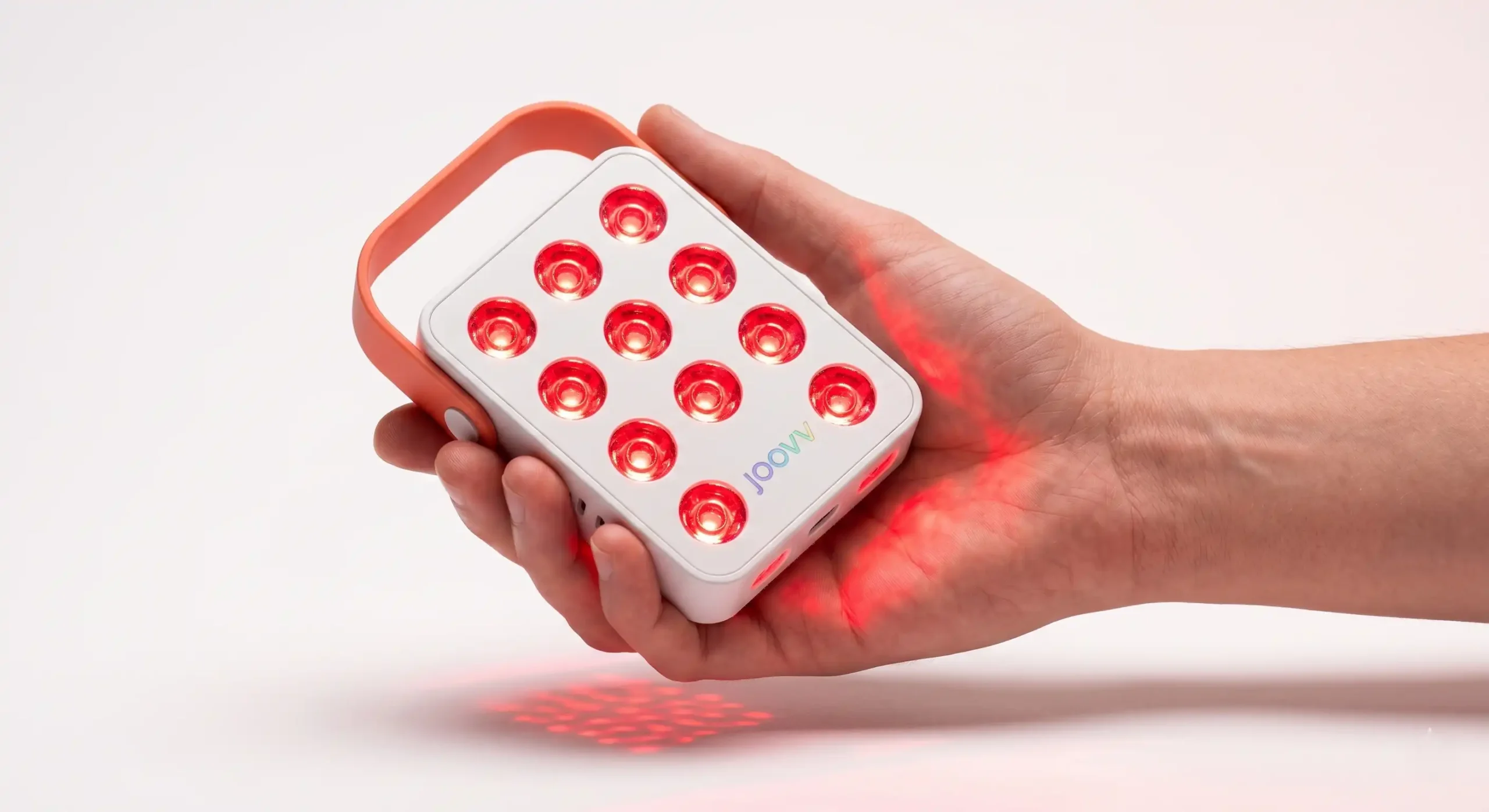
Joovv Go 2.0 Review (2026): Strong Brand, Weak Specs
The Joovv Go 2.0 is a well-built device from a trusted brand, but in 2026 it is outclassed on every measurable spec. With only 30W of power, a single 660nm wavelength (no deep-tissue NIR), and a weak 75-minute battery life, you are paying for the logo, not the hardware.
Score Breakdown
Power Output
4/10
30W — half the category leader
Wavelengths
4/10
660nm only — no NIR 850nm
Battery Life
3/10
~75 min real vs 2h rated
Build Quality
9/10
Premium materials, solid feel
Portability
9/10
0.8 lb — lightest in category
Value
4/10
$295 for weakest specs
Battery Life: The Real Numbers
This is where the Joovv Go’s biggest gap lives — and it’s a gap that matters daily if you’re using this device for recovery or pain management.
Joovv rates the Go 2.0 at 2 hours of battery life. Independent testing shows the device shuts off at approximately 75 minutes — with the battery indicator still showing 20% remaining at cutoff. At 10 minutes per session, that’s 7–8 sessions per charge. Daily use means daily charging.
🔋 Real Battery Life vs Valo Spark
- Valo Spark: 6 hours → 36 sessions per charge ✅
- Joovv Go 2.0: ~75 min real → 7–8 sessions per charge ❌
At 5 sessions per week, Joovv Go needs charging every 1–2 days. Valo Spark at the same protocol charges once every 7 weeks. For gym use, travel, or any on-the-go recovery — this is the difference between a device you’ll actually use and one that’s perpetually searching for an outlet.
The No-NIR Problem: Why 660nm Alone Isn’t Enough
The Joovv Go 2.0 emits only 660nm red light. There is no near-infrared (NIR) wavelength — no 830nm, no 850nm. For many buyers, this is the single most important spec to understand before purchasing.
660nm red light penetrates 8–10mm into tissue. It’s effective for surface-level skin health, collagen stimulation, wound healing, and acne. For these use cases, the Joovv Go works.
What 660nm cannot do: reach joints, deep muscle tissue, tendons, or bone. Near-infrared (800–850nm) penetrates 30–40mm — three to four times deeper. For muscle recovery, joint pain, back pain, tendonitis, or arthritis, 850nm NIR is not optional. It’s the wavelength that reaches the tissue you’re trying to treat. Full wavelength guide →
Most people searching for a portable RLT device have one of these goals: post-workout muscle recovery, chronic joint pain, or injury rehabilitation. All three require NIR. The Joovv Go cannot effectively address any of them at the tissue depth that matters.
This makes the Go a niche device — good for facial skin treatment, surface-level recovery, and circadian light support. If that’s your use case, it works. For everything else, the missing 850nm is a deal-breaker.
Pros & Cons
- Best build quality in the portable category — premium plastic, solid construction
- Lightest device at 0.8 lb — fits anywhere
- Joovv brand has strong community trust and customer support track record
- FDA Class II cleared
- TSA-approved for carry-on travel
- Clean UI — simple button control, no fiddly settings
- Green goggles included — better eye protection than most competitors
- No 850nm NIR — cannot treat deep tissue, joints, or muscle inflammation
- 30W output — half the power of Valo Spark (60W) for the same price
- Real battery ~75 min — rated 2 hours, real-world tests show 75 min before shutoff
- Only 7–8 sessions per charge at 10 min sessions — needs daily charging with regular use
- $295 price is hard to justify against dual-wavelength alternatives
- 2-year warranty (Valo Spark offers 3 years at lower price)
- No published irradiance data (mW/cm²) from Joovv
Who Should Buy the Joovv Go (And Who Shouldn’t)
Buy Joovv Go if:
- Your primary goal is facial skin health — collagen, fine lines, surface tone (660nm is sufficient)
- You want the lightest possible device (0.8 lb) and weight is the top priority
- You have a strong preference for the Joovv brand ecosystem and already own other Joovv panels
- Your sessions are short (5 min) and you charge daily anyway
Skip Joovv Go if:
- You have joint pain — knee, hip, shoulder, elbow (needs NIR 850nm)
- You want muscle recovery after workouts (needs NIR to reach muscle depth)
- You have back pain or tendonitis (660nm cannot reach the tissue)
- You travel frequently and need reliable multi-day battery without daily charging
- You want the best value for your $295 budget (better options exist)
- You do 10+ min sessions — battery dies after 7–8 sessions
Joovv Go vs the Category
| FEATURE | Joovv Go 2.0 | TOP PICK Valo Spark Better Value | Mito Mobile | Red Rush 360 |
|---|---|---|---|---|
| Price |
$295 |
$240 (20% OFF) |
$299 |
$279 |
| Power (W) |
30W — weakest |
60W — highest |
40W |
45W |
| Wavelengths |
660nm only |
660nm + 850nm |
630 + 660 + 830 + 850nm |
660nm + 850nm |
| NIR 850nm |
❌ None |
✅ Yes |
✅ Yes |
✅ Yes |
| Battery (Rated) |
2 hours (rated) |
6 hours |
4 hours |
4.5 hours |
| Battery (Real-World) |
~75 minutes |
~6 hours |
~4 hours |
~4 hours |
| Sessions / Charge |
~7–8 sessions |
~36 sessions |
~24 sessions |
~27 sessions |
| Weight |
0.8 lb — lightest |
1 lb |
1.2 lb |
1.1 lb |
| TSA Approved |
✅ Yes |
✅ Yes |
✅ Yes |
⚠️ Borderline |
| Warranty |
2 years |
3 years |
2 years |
1 years |
| Fred’s Score |
6.4 / 10 |
9.2 / 10 |
7.8 / 10 |
6.1 / 10 |
A Better Alternative for Most Buyers
If you’re reading a Joovv Go review because you want a portable RLT panel for recovery, travel, or joint pain — the Valo Spark covers those use cases better at a lower price. Here’s the summary:
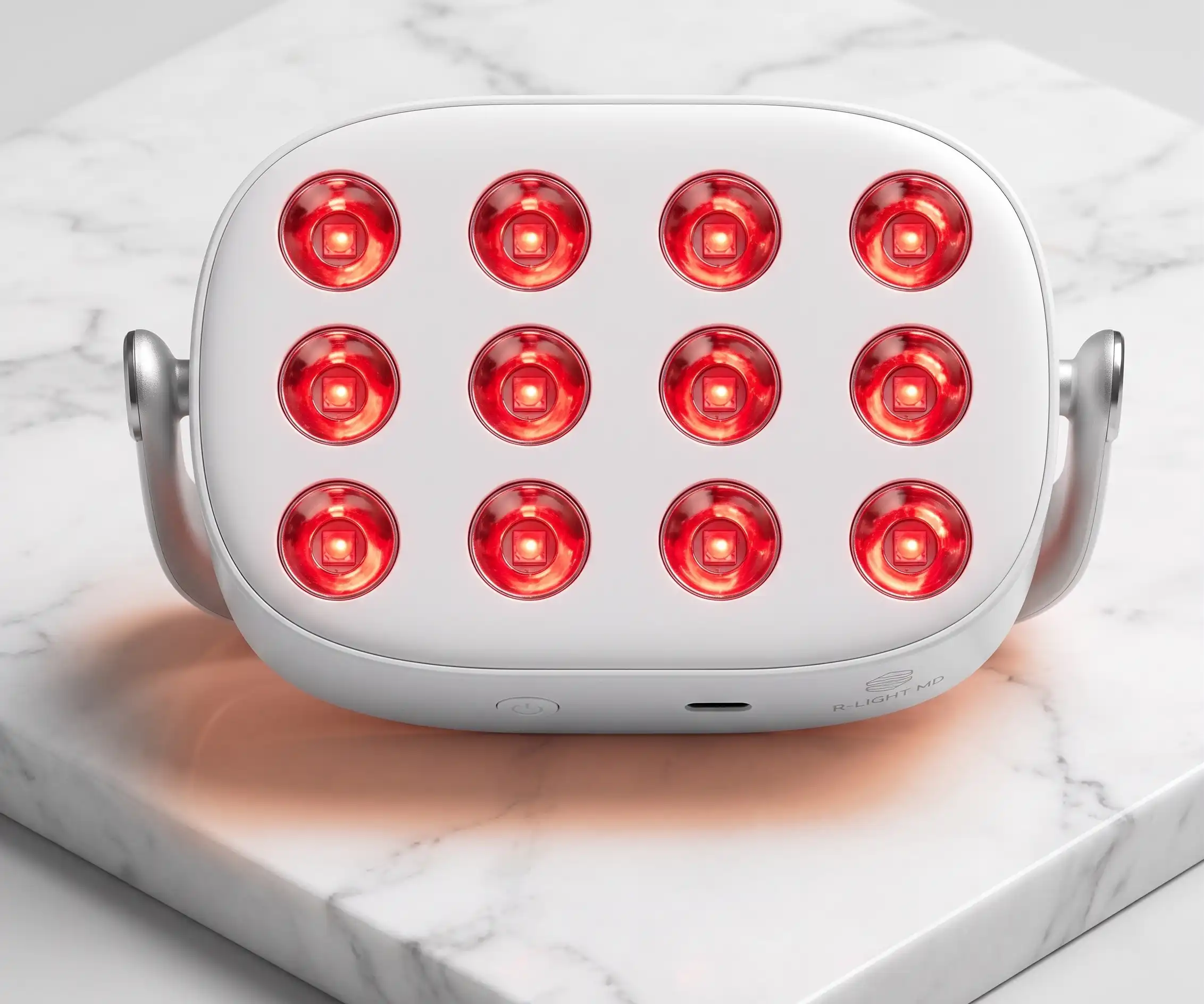
For a detailed head-to-head breakdown of every spec, see the full Valo Spark review and the full portable panel rankings for 2026.
Joovv built an excellent brand on their wall panels. The Solo and Elite are legitimate products with solid specs and real clinical backing. That reputation is deserved. The problem is that it carries over to the Go 2.0, which does not deserve the same confidence at its price point.
30W and 660nm-only puts the Go 2.0 behind the Hooga HG200 (60+ mW/cm², dual wavelength) at half the price. The battery gap is the most damaging part: 7–8 sessions per charge at $295 is a poor deal by any measure. When you bring a Joovv Go to the gym and it dies after a week without charging, that’s the moment the brand premium stops mattering.
My recommendation: If you’re committed to the Joovv ecosystem and already own a wall panel, the Go makes sense for portability within that system. For everyone else — the Valo Spark delivers more of everything that matters for $55 less.
Frequently Asked Questions
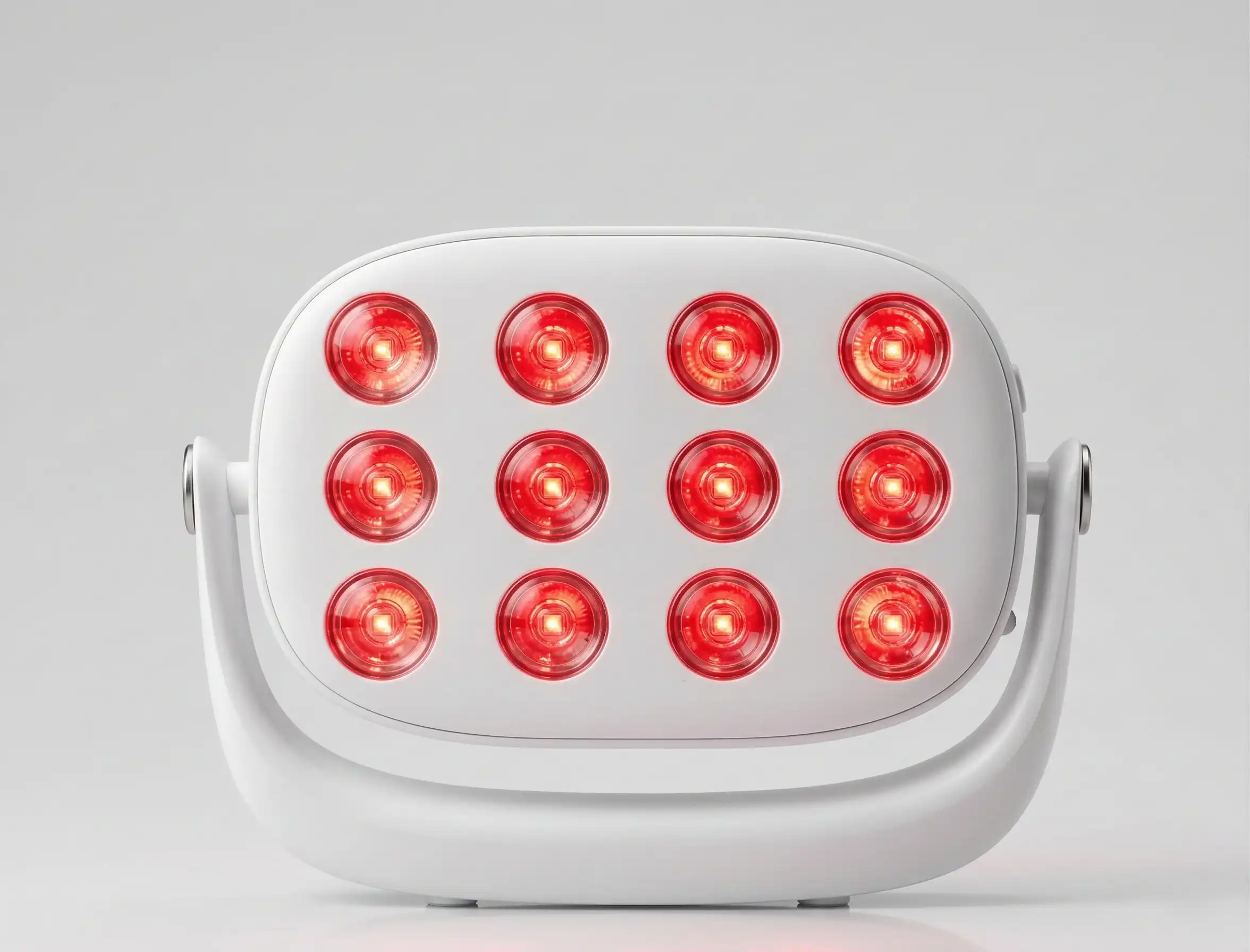
The Portable Panel That Actually Beats Joovv
60W vs 30W. 850nm NIR included. 6-hour battery vs 75 minutes. $240 vs $295. 3-year warranty vs 2-year. The specs aren’t close.Not perfect (requires holding, small coverage area), but for its intended use case — portable, targeted recovery — it's the best balanced option.