
Valo Beam Review: The Mid-Size Panel That Hits the $500 Sweet Spot (2026)
Valo Beam is a mid-size home panel with 660nm + 850nm dual wavelength output, adjustable stand included, and a 3-year warranty. Best for dedicated home users treating back pain, shoulder pain, and post-workout recovery who want hands-free daily sessions without the full-body panel price tag.
Who Should Buy the Valo Beam (And Who Shouldn’t)
Buy Valo Beam if:
- You want a hands-free home panel. Stand is included. Set it up, step in front, set a timer. No holding required — which is what makes a 6-week daily protocol actually sustainable.
- You're treating back pain, shoulder pain, or post-workout recovery. The Beam covers your full back or both legs in one position — a meaningful advantage over the Spark for large muscle group treatment.
- $500 is your budget ceiling. Full-body panels start above $1,000. Beam gives you serious mid-size coverage at half the price of a Blaze.
- You want dual wavelength at a mid-range price. Both 660nm and 850nm means surface skin benefits and deep tissue treatment in the same session.
Skip Valo Beam if:
- Full-body single-position coverage is the goal. Beam covers upper or lower body per position — not head-to-toe simultaneously. That's the Valo Blaze.
- You travel and need portability. Mid-size panels are home-only. For protocol continuity on the road, Valo Spark is what you want.
- Your only goal is facial anti-aging. A face mask covers that more precisely and conveniently. The Valo Glow is the right tool for purely facial protocols.
- You're just starting out and unsure. Validate the protocol works for your goals with a targeted approach first.
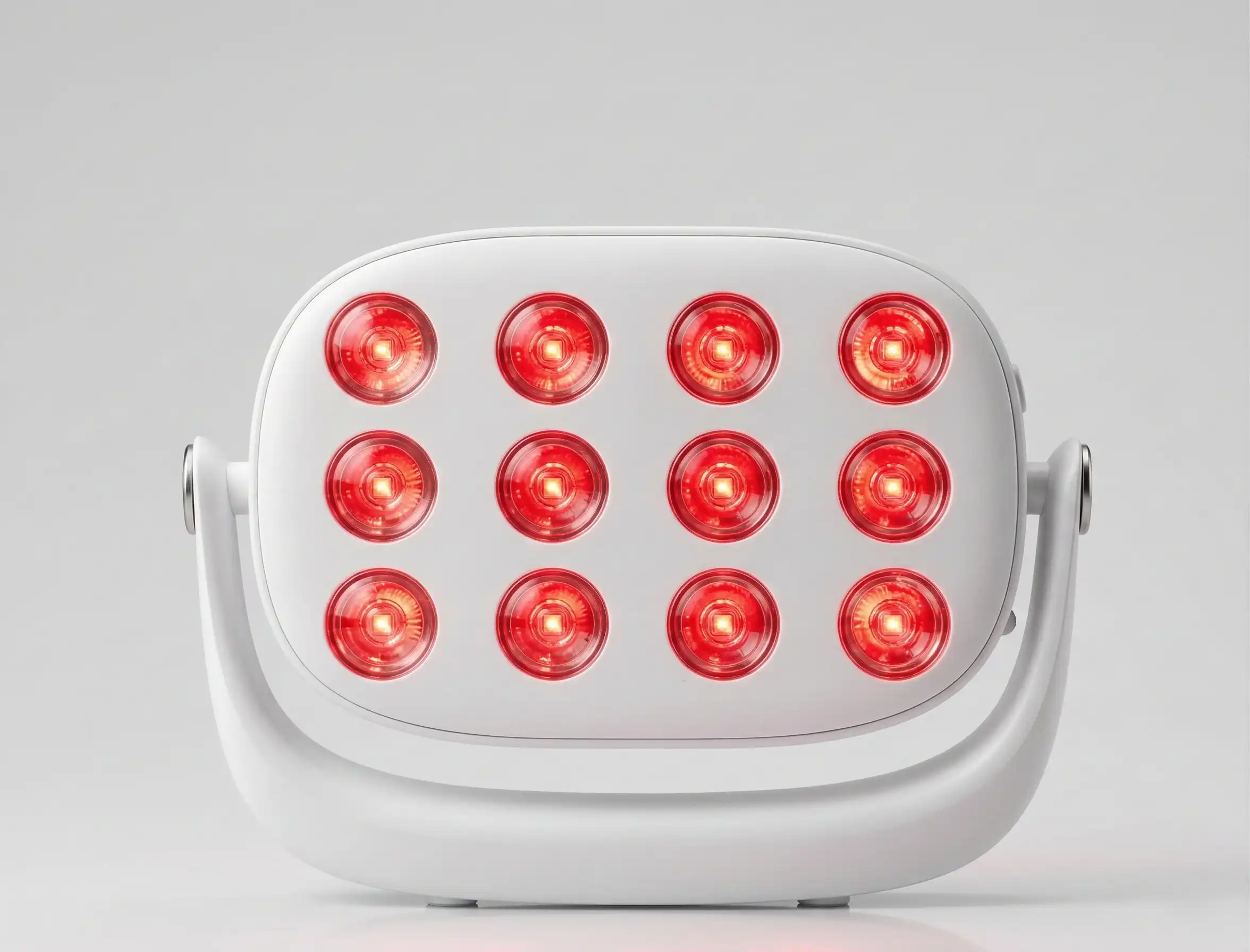
Wavelength Breakdown — What Each Does
660nm (red light): Penetrates approximately 8–10mm into tissue. Targets the epidermis and superficial dermis — stimulating collagen-producing fibroblasts, reducing surface inflammation, accelerating wound healing, and supporting acne treatment. This is the wavelength that drives skin health benefits. For the mechanism in detail, see the 660nm vs 850nm guide.
850nm (near-infrared): Penetrates 20–40mm — reaching deep muscle, joint tissue, tendons, and spinal structures. This is the wavelength that matters for back pain, knee pain, shoulder pain, and athletic recovery. Without 850nm, you’re treating skin. With it, you’re reaching the tissue generating most musculoskeletal pain.
The Beam delivers both simultaneously, which means a single 15-minute session covers surface and deep tissue in the same pass. No switching between modes or separate sessions.
How Valo Beam Compares
Every spec that actually matters for results — compared honestly.
| FEATURE | TOP PICK Valo Beam Best value | ALTERNATIVE Mito Red MitoPRO 300 | ALTERNATIVE Joovv Solo 3.0 | ALTERNATIVE PlatinumLED BIO-300 |
|---|---|---|---|---|
| Price |
$479.99 20% OFF |
$549 |
$595 |
$369 |
| Wavelengths |
660nm + 850nm |
630 + 660 + 850nm |
660nm + 850nm |
630 + 660 + 850nm |
| Stand Included |
✅ Yes |
❌ Sold separately |
✅ Yes |
❌ Sold separately |
| Warranty |
3 years |
2 years |
2 years |
3 years |
| HSA/FSA Eligible |
✅ Yes |
❌ No |
✅ Yes |
❌ No |
| Financing |
Affirm from $25/mo |
Limited |
Affirm |
Limited |
Honest Notes on Competitors
vs Mito Red MitoPRO 300: Mito Red has strong brand recognition and three-wavelength output (630nm + 660nm + 850nm). At $549 without a stand included, Beam wins on total value. Worth comparing if spectral variety beyond the two core wavelengths matters to you. For a broader competitive context, see the panel buying guide.
vs Joovv Solo 3.0: Joovv has established clinical heritage and a modular expansion ecosystem. At $595 for lower power with a stand, you’re paying for brand. For specs-to-price performance, Beam is the better value.
vs PlatinumLED BIO-300: Closest competitor in price. PlatinumLED has excellent community reputation. The Beam edges ahead on warranty clarity, HSA/FSA eligibility, and stand inclusion.
What matters about the dual-wavelength design: 660nm + 850nm in a mid-size panel means one 15-minute session covers both collagen synthesis in surface tissue and deep tissue repair simultaneously. You’re not choosing between surface and depth — you’re getting both. That’s the right design for a panel targeting recovery and pain protocols. For the wavelength science, see the ultimate guide to RLT.
The stand inclusion matters more than it sounds: Half the reason people abandon RLT protocols is friction — having to set up the device each session. A panel with a stand that stays in position means you walk up to it, turn it on, step in front. That removes the decision point that kills daily habits. Stands sold separately cost $50–100 extra on competitor panels.
Who I’d put this in front of: Anyone training 3–5 days per week who wants a serious post-workout recovery tool. Anyone with chronic back, neck, or shoulder pain who needs hands-free daily treatment. Anyone who’s used a Spark and wants to upgrade to larger-area home coverage. See the home setup guide for how to integrate a panel into a daily routine.
Pros & Cons
- Dual 660nm + 850nm — surface and deep tissue in every session
- Stand included — hands-free from day one, no add-ons
- 3-year warranty — best in the mid-panel category
- HSA/FSA eligible — use pre-tax health dollars
- Affirm financing — from $25/mo makes $499 panel accessible
- Free US shipping
- Covers full back or both legs in one position
- Not portable — mains-powered, home use only. For travel, Valo Spark is the answer
- Half-body per position — full-body coverage requires repositioning. For single-position full-body, Valo Blaze
- Requires dedicated space — not a store-in-a-drawer device
- No published third-party irradiance data — spec verification pending independent lab testing
How to Use Valo Beam — Protocol by Goal
For Back Pain & Neck Pain
Stand 6 inches from panel, device at lumbar height. Or position device on stand and sit/lie with your back toward it. 15–20 minutes per zone, 5x per week minimum for 4–6 weeks. Always bare skin — fabric blocks 50–90% of therapeutic dose depending on material. For exact positioning by pain location and the full dosing math, see the back pain protocol, neck & shoulder guide, and dosing guide.
For Athletic Recovery
Post-workout within 60 minutes: front of body (quads, chest) 15 minutes standing. Turn around: back (hamstrings, back) 15 minutes. Total 30 minutes hands-free while you cool down. For pre-workout use, timing, and sport-specific protocols, see the athletes recovery guide and before or after workout guide.
For Tendonitis & Joint Pain
Position panel at height of the affected joint — knee, shoulder, elbow — 6 inches from skin, 12–15 minutes per zone, 5x per week. The Beam’s panel size covers the full joint and surrounding muscle simultaneously, which a handheld does less efficiently for larger joints. Full protocol in the tendonitis guide and knee pain protocol.
For Sleep & Evening Routine
Panel as ambient room lighting 60–90 minutes before bed (6+ feet distance, low effective irradiance). Then 10–15 minute active session at 6 inches before switching to ambient mode. Full mechanism and timing in the sleep protocol. For how to calculate your exact session dose, use the RLT dose calculator.How to Use Valo Beam — Protocol by Goal
For Back Pain & Neck Pain
Stand 6 inches from panel, device at lumbar height. Or position device on stand and sit/lie with your back toward it. 15–20 minutes per zone, 5x per week minimum for 4–6 weeks. Always bare skin — fabric blocks 50–90% of therapeutic dose depending on material. For exact positioning by pain location and the full dosing math, see the back pain protocol, neck & shoulder guide, and dosing guide.
For Athletic Recovery
Post-workout within 60 minutes: front of body (quads, chest) 15 minutes standing. Turn around: back (hamstrings, back) 15 minutes. Total 30 minutes hands-free while you cool down. For pre-workout use, timing, and sport-specific protocols, see the athletes recovery guide and before or after workout guide.
For Tendonitis & Joint Pain
Position panel at height of the affected joint — knee, shoulder, elbow — 6 inches from skin, 12–15 minutes per zone, 5x per week. The Beam’s panel size covers the full joint and surrounding muscle simultaneously, which a handheld does less efficiently for larger joints. Full protocol in the tendonitis guide and knee pain protocol.
For Sleep & Evening Routine
Panel as ambient room lighting 60–90 minutes before bed (6+ feet distance, low effective irradiance). Then 10–15 minute active session at 6 inches before switching to ambient mode. Full mechanism and timing in the sleep protocol. For how to calculate your exact session dose, use the RLT dose calculator.
Quick Protocol Reference
Protocol Reference
| Goal | Distance | Duration | Frequency | Min. Period |
|---|---|---|---|---|
| Back / neck pain | 6 inches | 15–20 min/zone | 5x/week | 4–6 weeks |
| Athletic recovery | 6–8 inches | 15 min front + 15 min back | Post-workout | Ongoing |
| Inflammation / joints | 6 inches | 12–15 min/zone | 5x/week | 4–6 weeks |
| Skin & collagen | 6 inches | 10–15 min/zone | 5x/week | 8–12 weeks |
| Sleep support (ambient) | 4–6 feet | 60–90 min pre-bed | Nightly | 2–3 weeks |
Common Questions
How we evaluate health technology
Every review starts with the science, not the marketing. We apply a four-part framework — clinical research, device specification verification, safety audit, and structured real-world testing — before writing a single word.
Peer-reviewed research first
We start with published clinical literature, not manufacturer claims. Every mechanism we explain is tied to a cited study.
- PubMed & clinical databases
- Biological mechanism validation
- Effect size and dose analysis
Device specification verification
We measure, not assume. Wavelength accuracy, irradiance output, and EMF levels are checked against published device specs and third-party lab data.
- Wavelength accuracy (660 nm & 850 nm)
- Irradiance at distance (mW/cm²)
- EMF levels and shielding
Safety & regulatory audit
We verify FDA clearance status, manufacturing compliance, and flag any red flags in safety profiles — from infrared sauna EMF to laser hair cap power levels.
- FDA-cleared or 510(k) status
- Medical device standards check
- Regulatory status by country
Structured real-world testing
Lab numbers don't tell the whole story. We test usability, app interfaces, build quality, and long-term durability under realistic conditions.
- Minimum 4-week testing period
- Documented protocol & limitations
- HRV & recovery metric tracking
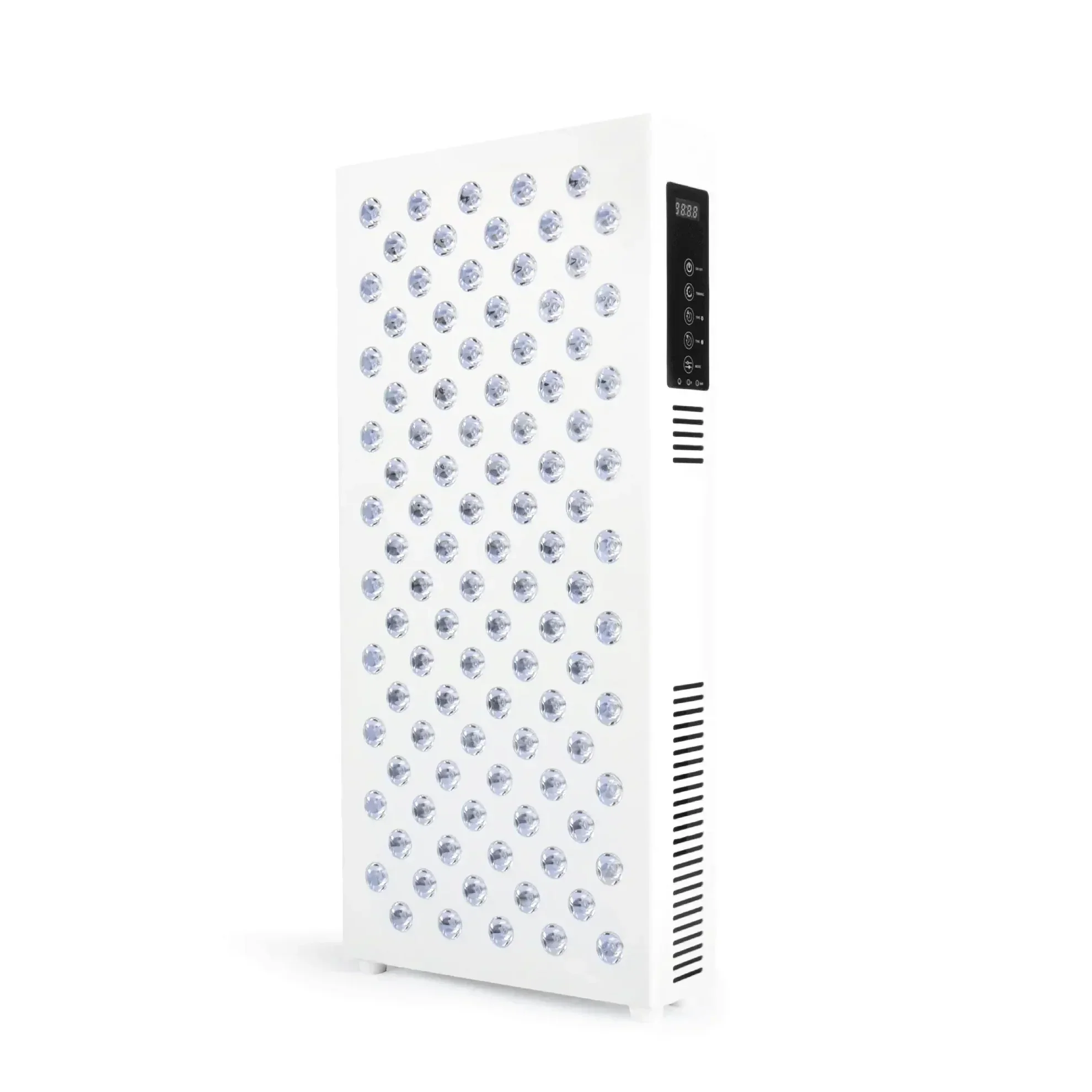
Should You Buy the Valo Beam?
For dedicated home users treating back pain, recovering from training, or running a serious daily RLT protocol — yes. Dual wavelength, stand included, 3-year warranty, HSA/FSA eligible. The right combination at the $500 price point.Not the right device for travel or if full-body single-position coverage is the goal. The right device for a hands-free daily home panel that treats real tissue at real therapeutic depth.