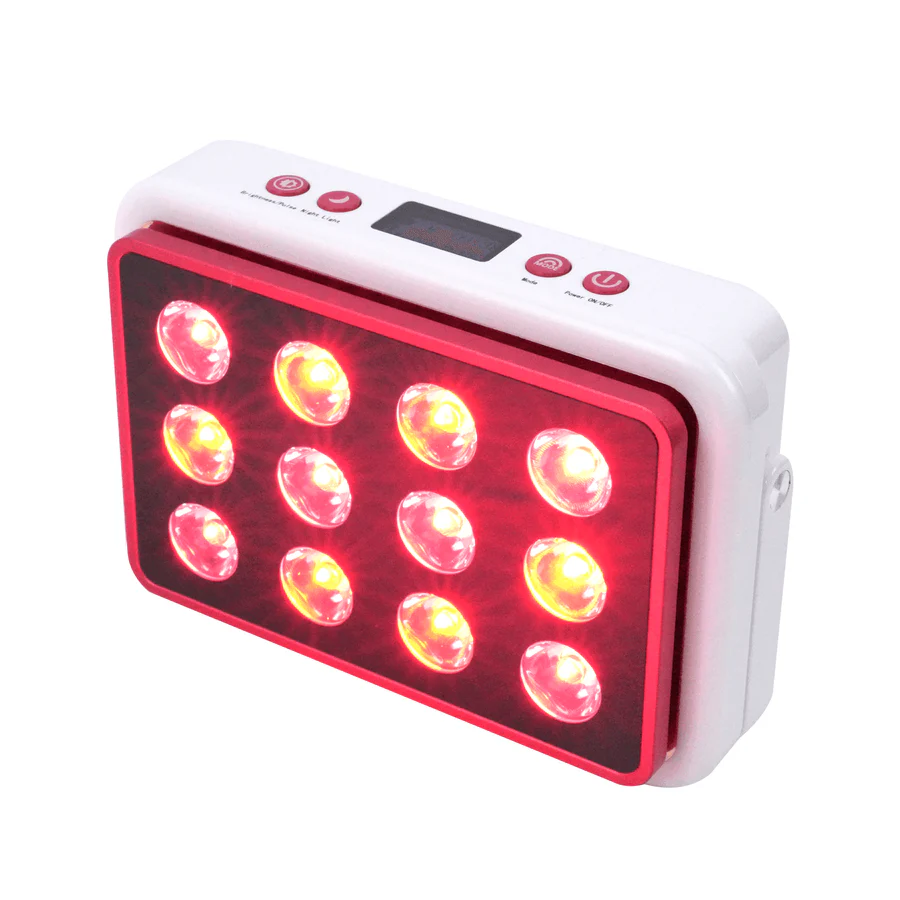
Mito Red MitoPRO Mobile Review (2026): 7.8/10 — Best Wavelength Coverage, Not Best Value
The MitoPRO Mobile is one of the only portable panels to offer 4 distinct wavelengths (630, 660, 830, 850nm) in a handheld form factor. That is a real advantage for surface-level skin healing. But at $349, it has a weak 2.5-hour battery and lower power density than the Valo Spark.
Score Breakdown
Wavelengths
10/10
4 wavelengths — broadest in portable category
Brand Trust
9/10
5+ years in market, strong community
Power Output
6/10
40W — solid but 33% below Valo Spark
Battery Life
6/10
4 hours — good, but half of Spark’s 6hrs
Value
5/10
$299 — $59 more than Spark for weaker specs
Value
5/10
$299 — $59 more than Spark for weaker specs
The 4-Wavelength Advantage: Where Mito Mobile Genuinely Leads
630nm Red — skin surface, superficial collagen, wound healing. Absorbed strongly by cytochrome c oxidase at the skin layer. Slightly different absorption peak than 660nm for surface treatment.
660nm Red — primary red light for skin, collagen, surface recovery. Most studied wavelength in photobiomodulation. Both Spark and Joovv Go include this.
830nm NIR — near-infrared, 20–30mm penetration. Different absorption peak than 850nm — some research suggests 830nm has stronger anti-inflammatory response in certain tissue types.
850nm NIR — the standard deep NIR, 30–40mm penetration. Reaches muscle belly, joint capsule, tendons. Both Spark and Mito Mobile include this.
Power & Battery: Where Mito Mobile Falls Short
This is the practical tradeoff that tips most buyers toward Valo Spark.
At the same 6-inch distance, Valo Spark delivers approximately 50% more irradiance (mW/cm²) than the Mito Mobile. In session time terms: to deliver the same therapeutic dose (4–10 J/cm²), Mito Mobile sessions need to be roughly 50% longer. At 10 minutes with Spark, you need approximately 15 minutes with Mito Mobile to match dose. For daily recovery protocols, that difference adds up. Use the dose calculator to verify timing for your specific setup.
Battery: Mito Mobile rated at 4 hours — approximately 24 sessions at 10 minutes per session. Valo Spark is 6 hours, or 36 sessions. Both are significantly better than Joovv Go’s real-world 75 minutes. If you do 5 sessions per week, Mito Mobile needs charging every ~5 weeks; Spark every ~7 weeks. Not a dramatic difference, but Spark wins.
Price: Mito Mobile at $299 is $59 more than Valo Spark at $240 — for lower power and shorter battery. The only justification is the extra wavelengths (630nm + 830nm). Whether that matters to your specific use case is the decision.
Pros & Cons
- 4 wavelengths (630+660+830+850nm) — broadest spectral coverage in portable category
- Mito Red brand has 5+ years of market track record — established community, reviews, documentation
- Foldable design — flat storage, compact for packing
- 4-hour real battery — 24 sessions per charge, adequate for most travel
- Dual NIR (830+850nm) — two near-infrared peaks for potentially broader deep tissue coverage
- TSA-approved for air travel
- 2-year warranty — standard in category
- 40W — 33% less power than Valo Spark (60W) at higher price ($299 vs $240)
- 4-hour battery vs Spark’s 6 hours — 24 sessions vs 36 sessions per charge
- $59 more expensive than Valo Spark despite weaker power and battery
- 1.2 lb — heaviest in comparison
- 2-year warranty vs Spark’s 3-year coverage at lower price
- No published irradiance data (mW/cm²) for verification
Who Should Buy Mito Mobile
Buy Mito Mobile if:
- Wavelength breadth is your specific priority — you want both 630+660nm red and both 830+850nm NIR peaks
- You’re already in the Mito Red ecosystem and have other Mito panels you want to complement
- You’ve researched 830nm specifically for anti-inflammatory tissue response and want that wavelength
- Power output is less critical than spectral diversity for your use case
Skip Mito Mobile if:
- You want maximum power for faster sessions — Spark’s 60W is significantly stronger
- You want best value — $59 more for weaker output is hard to justify
- You need a long travel battery — Spark’s 6 hours beats Mito’s 4 hours
- You want the longest warranty — Spark offers 3 years vs Mito’s 2
- You’re new to portable RLT and want a straightforward pick — start with Spark
Mito Mobile vs Valo Spark: Full Comparison
| FEATURE | TOP PICK Valo Spark Better Value | Mito Mobile |
|---|---|---|
| Price |
$240 (20% OFF via link) |
$299 |
| Price Advantage |
$59 cheaper | |
| Power Output |
60W |
40W |
| Wavelength Count |
2 wavelengths |
4 wavelengths |
| Wavelengths |
660nm + 850nm |
630+660+830+850nm |
| NIR Options |
850nm |
830nm + 850nm |
| Battery (Real) |
~6 hours |
~4 hours |
| Sessions/Charge (10min) |
~36 sessions |
~24 sessions |
| Weight |
1 lb |
1.2 lb |
| TSA Approved |
✅ Yes |
✅ Yes |
| Warranty |
3 years |
2 years |
| Charge Time |
1 hour |
1.5 hour |
| Fred’s Score |
9.2/10 |
7.8/10 |
A Better Choice for Most Buyers
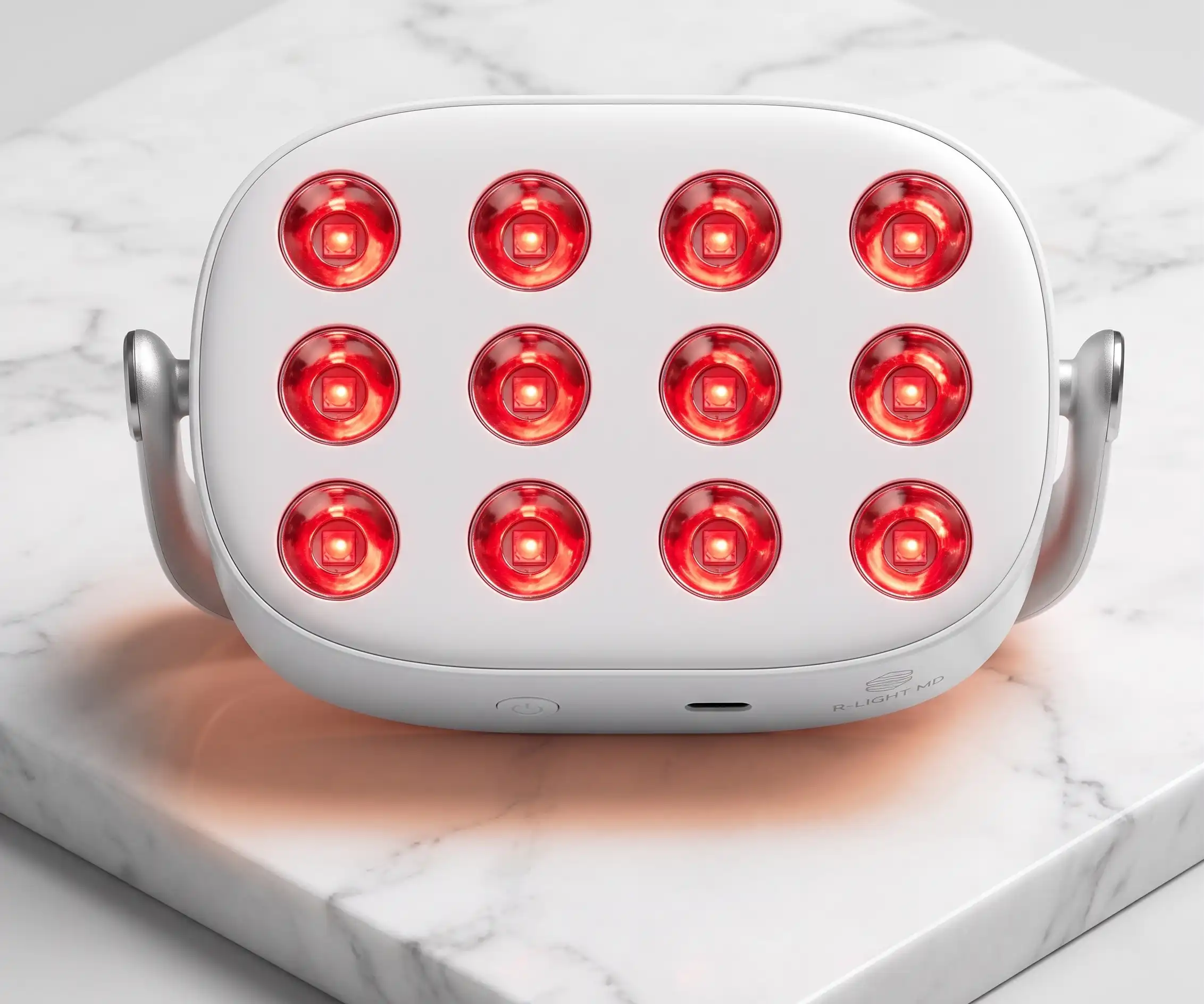
For a full portable category ranking see the best portable red light therapy panel 2026 guide →
Mito Red makes real products.The MitoPRO wall panels have a deserved reputation and the brand has years of credibility in the RLT community. The Mobile extends that reputation to portable format. It’s not a bad device.
The issue is value math. In 2026, Valo Spark delivers 60W vs Mito’s 40W, a longer battery (6h vs 4h), a longer warranty (3yr vs 2yr), and costs $59 less. The only thing Mito Mobile gives you that Spark doesn’t is 630nm and 830nm as additional wavelengths — two extra peaks that the majority of RLT research doesn’t specifically target and that most users won’t notice a meaningful difference from.
If you’re a serious photobiomodulation enthusiast who specifically wants the 830nm wavelength for its anti-inflammatory profile or the 630nm for its slightly different absorption curve — Mito Mobile is the choice. For everyone else wanting a portable recovery tool, the value math points to Spark.
Frequently Asked Questions
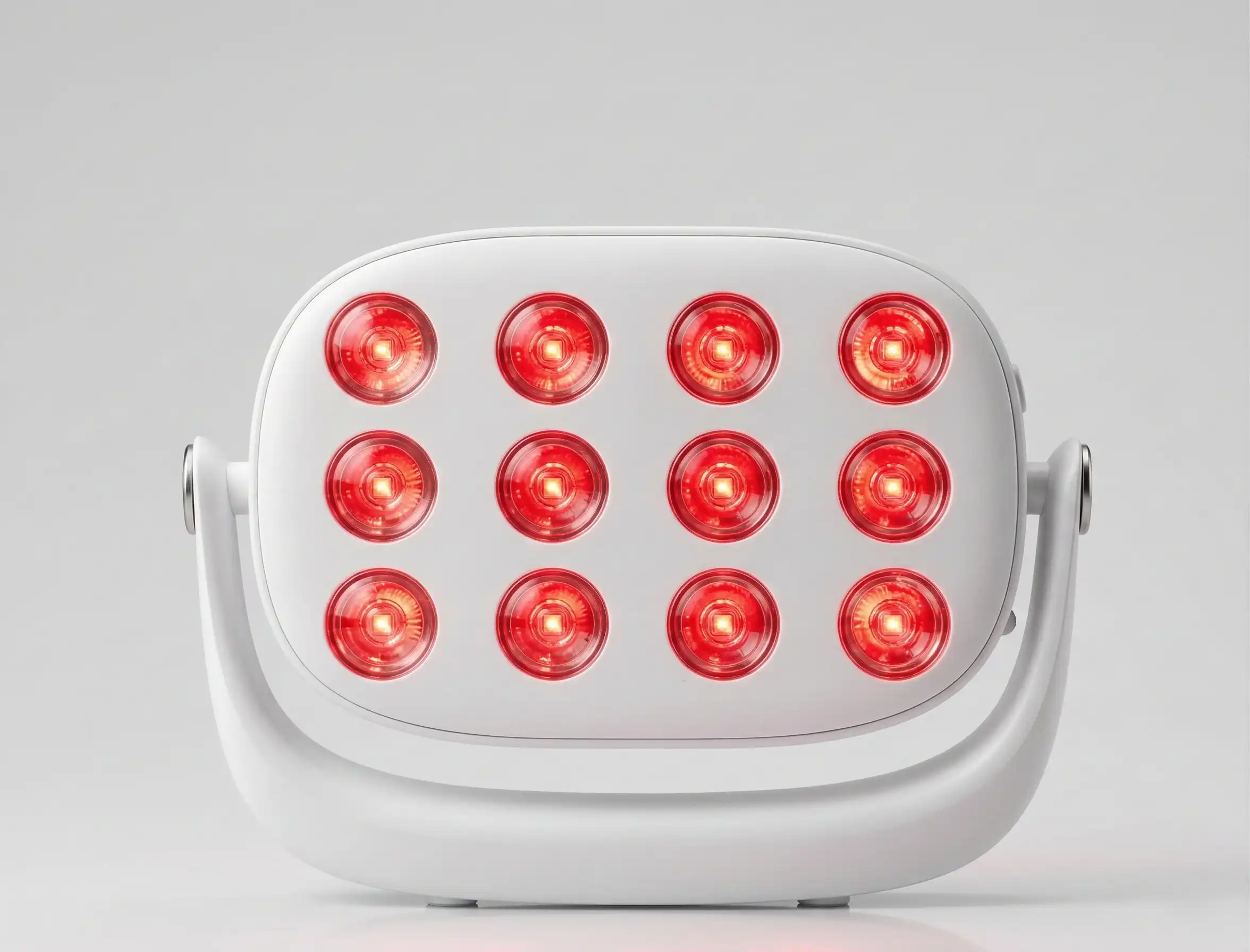
More Power. Longer Battery. Lower Price.
60W vs 40W. 6-hour battery vs 4-hour. 3-year warranty vs 2-year. $59 cheaper. 20% OFF auto-applied.Not perfect (requires holding, small coverage area), but for its intended use case — portable, targeted recovery — it's the best balanced option.