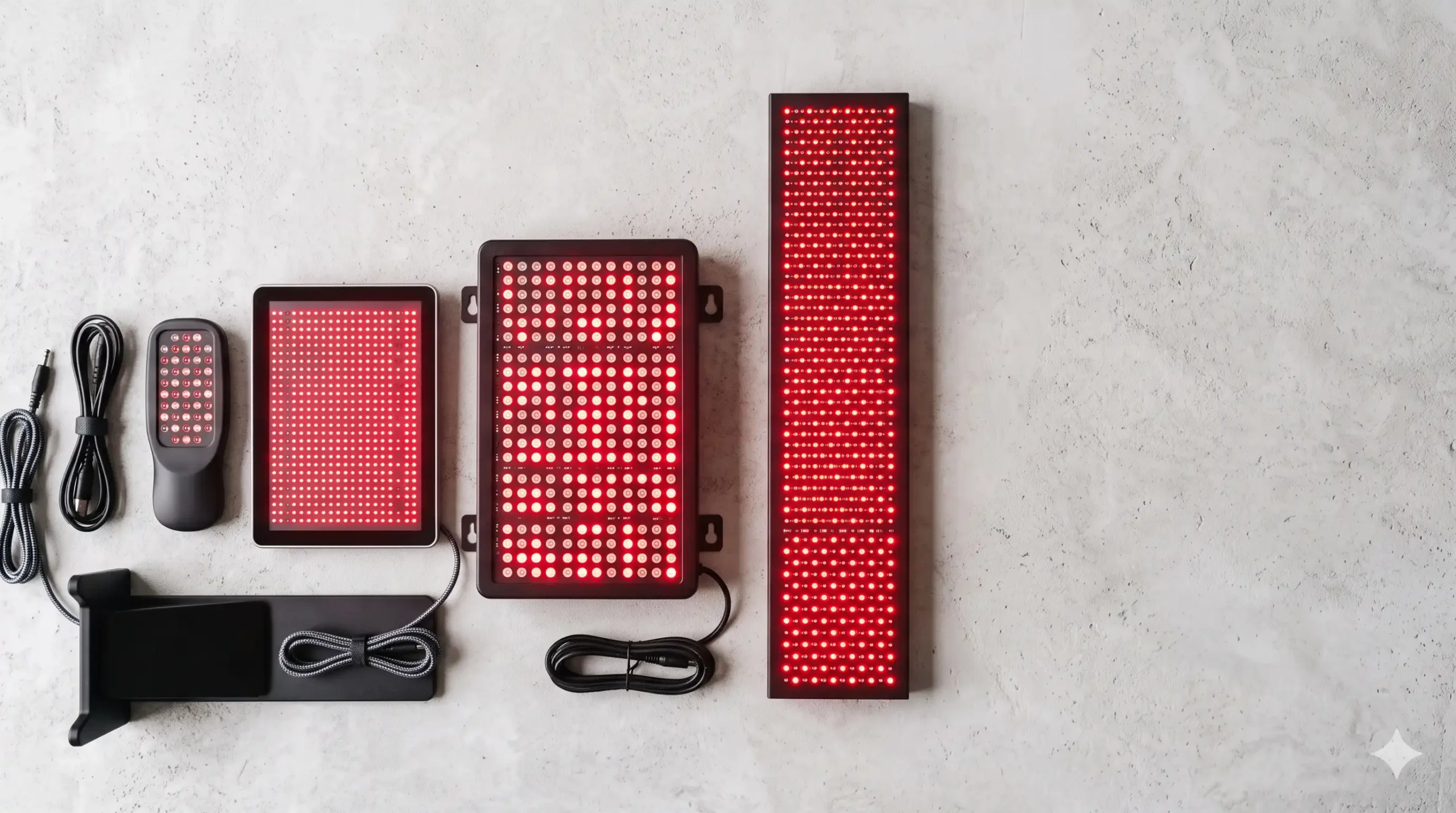
How Much Does Red Light Therapy Cost? (2026 Complete Price Guide)
Red light therapy pricing spans $240 handheld devices to $17,000+ full-body beds — and clinic sessions can run $40–$120 each. This guide breaks down every cost tier, compares at-home vs clinic economics, and shows exactly where the real value is.
Key Insights
- A quality at-home device pays for itself against clinic sessions within 3–6 months for most people. At $60/session average, 3 sessions per week at a clinic costs $720/month. A $240 at-home portable device breaks even in under two weeks of equivalent use. The math is straightforward — the question is whether an at-home device delivers comparable therapeutic parameters.
- The biggest price variable in at-home devices isn’t quality — it’s coverage area. A $240 portable device and a $1,040 full-body panel use essentially the same clinical wavelengths (660nm + 850nm). What you’re paying more for at the higher end is simultaneous coverage area, not better light per square inch. Understanding this distinction prevents the most common overspend in this category.
- HSA/FSA eligibility turns a $1,040 device into a ~$790 effective cost. Pre-tax health account dollars represent 24–37% real savings depending on your tax bracket. Not every device in this category qualifies — Valo’s full panel and mask line are HSA/FSA eligible, while Mito Red and PlatinumLED are not.
- Clinic pricing varies enormously by location and session type. Red light therapy at a spa runs $40–$80/session. Medical clinic RLT (often using Class IV laser equipment, not LED panels) can run $100–$300+/session and is a genuinely different modality. At-home consumer LED panels are benchmarked against spa-level LED sessions, not medical laser procedures.
- The honest context: “Red light therapy” covers a spectrum from $30 Amazon panels to clinical Class IV laser systems — and the relevant comparison for any at-home purchase decision is against spa/wellness LED sessions, not hospital-grade equipment. This guide covers the consumer LED category specifically, with honest notes on where clinical equipment differs.
At-Home Device Price Ranges: What You Actually Get at Each Tier
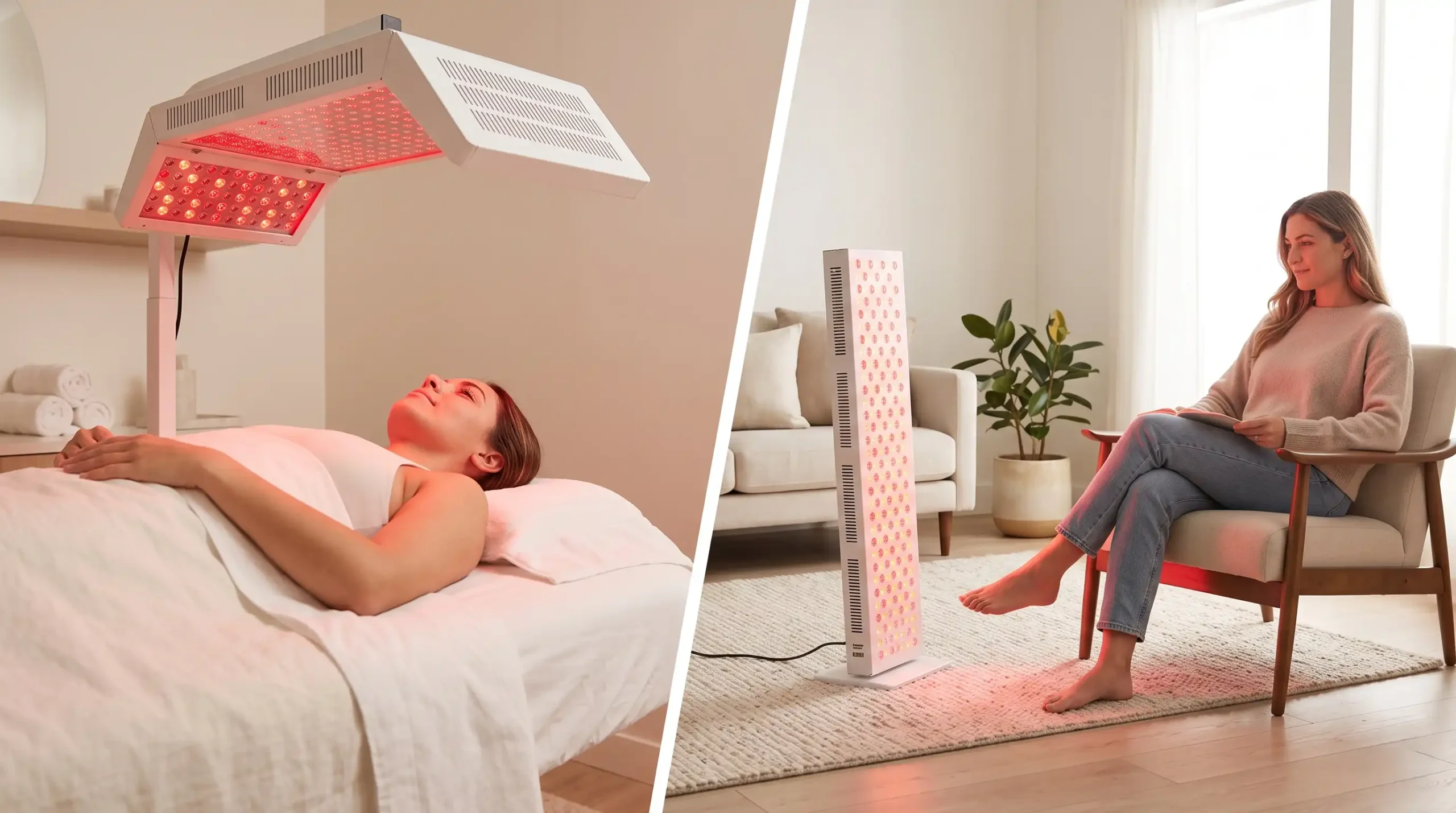
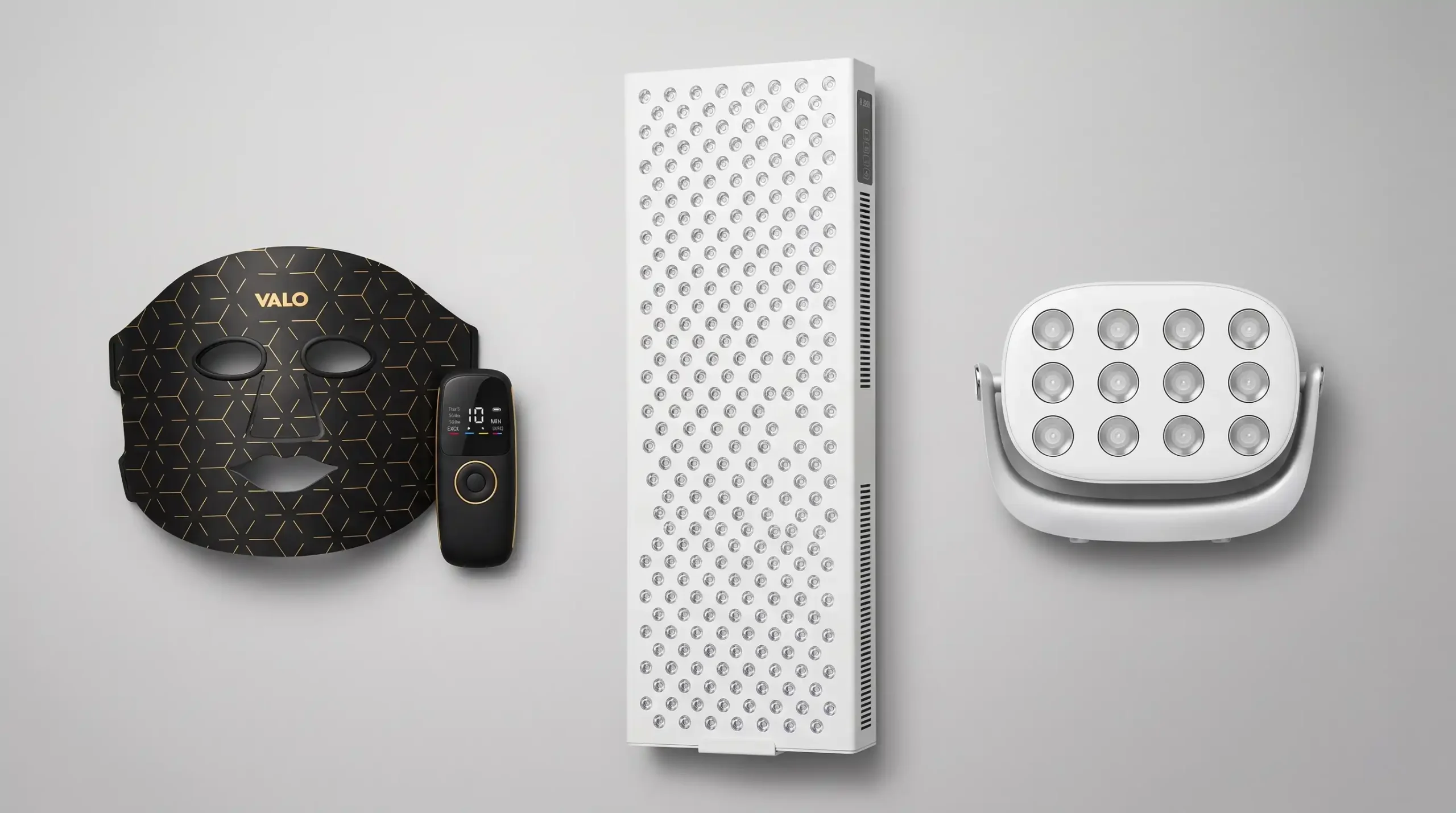
The at-home red light therapy market divides cleanly into four price tiers. Here’s what changes (and what doesn’t) as you move up:
Master Price Table: At-Home Devices by Category
| Category | Price Range | What You Get | Best For | Coverage |
|---|---|---|---|---|
| Handheld / Portable | $150–$350 | 660+850nm, battery-powered, targeted treatment | Beginners, single-area goals, travel | Single zone (one joint, one area) |
| Targeted Panel (tabletop) | $300–$600 | Higher power, plug-in, larger treatment area | Torso, back, legs — one zone per session | Half-body per session |
| Full-Body Panel | $800–$1,500 | Head-to-toe coverage, floor stand, simultaneous full coverage | Athletes, multi-area pain, comprehensive protocols | Full body, 1 position |
| Full-Body Bed / Pod | $3,000–$20,000+ | 360° coverage, both sides simultaneously, hands-free | Professional/clinical home setup | 360° simultaneous |
Key insight: the therapeutic wavelengths (660nm + 850nm) are present across all tiers. Coverage area is what scales with price — not the quality of light per square inch.
Valo Device Pricing: Full Lineup, Current Prices
Valo devices commonly include HSA/FSA eligibility and warranty coverage, but terms vary by product. Always verify current warranty, eligibility, and pricing on Valo’s product page before buying.
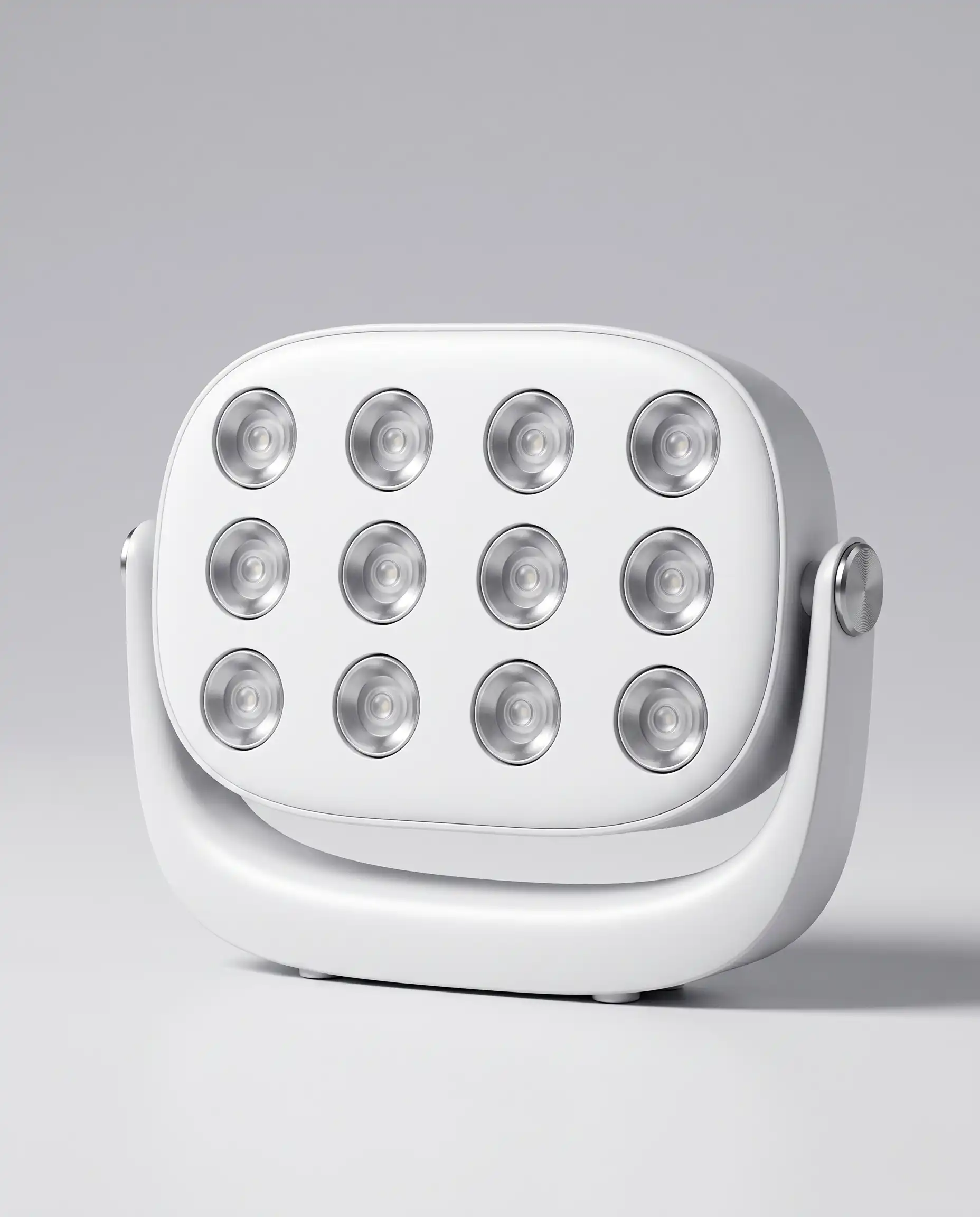
Valo Spark Portable Panel
- Same clinical wavelengths (660nm + 850nm) as panels costing 4× more
- 60W output — highest power in the portable category
- 6-hour battery, 36 sessions per charge
- TSA-approved for carry-on travel
- The lowest-risk way to start RLT — validate results before upgrading
- Single treatment zone per session — not suitable for full-body protocols
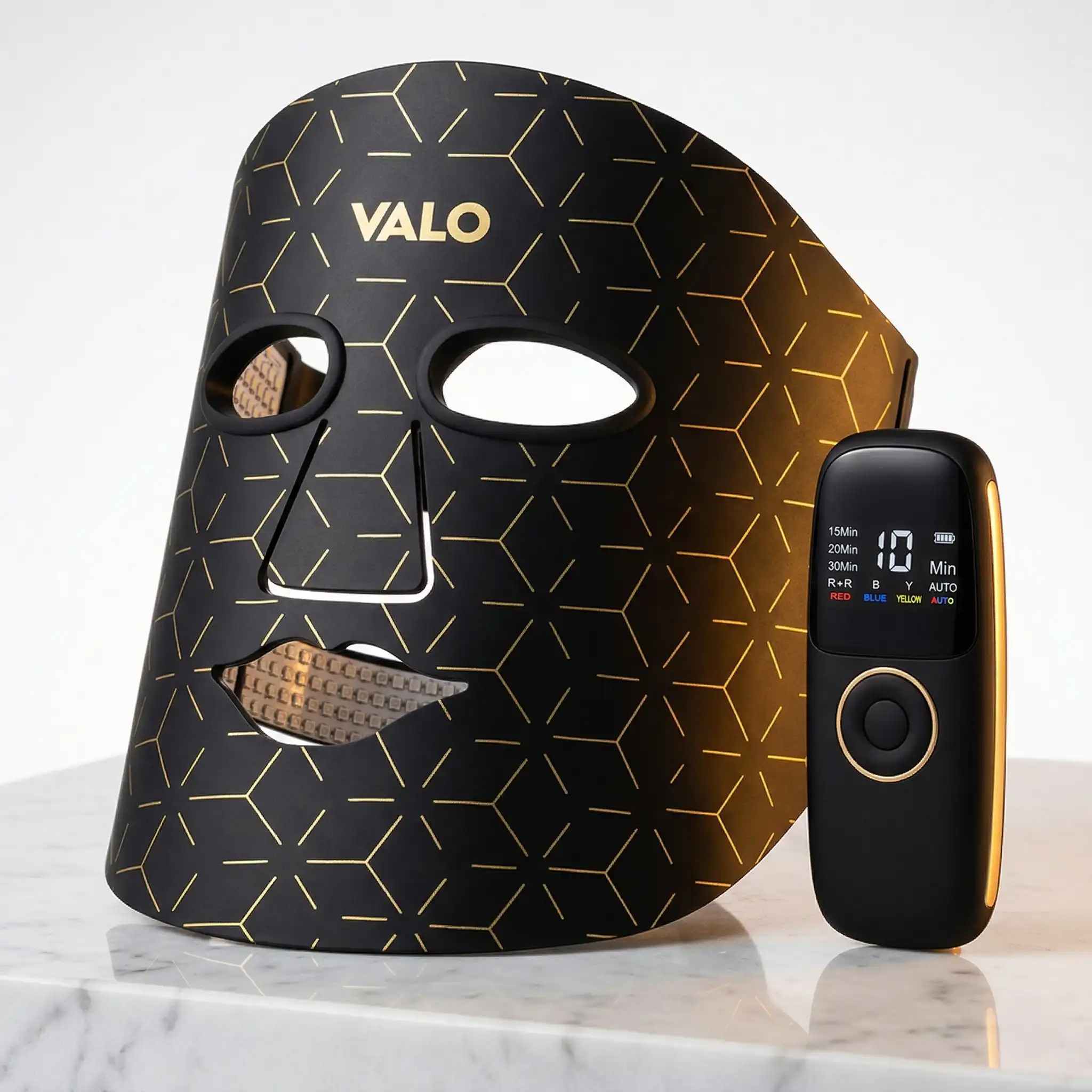
Valo Glow Face Mask
- 415nm blue light for acne — most masks at this price don't have it
- 630nm red + 850nm NIR for anti-aging collagen stimulation
- Adjustable intensity — rare under $300
- HSA/FSA eligible — effective cost ~$180 in a 24% bracket
- 60-day return window, 3-year warranty
- Face-only coverage — doesn't replace a body panel for pain/recovery
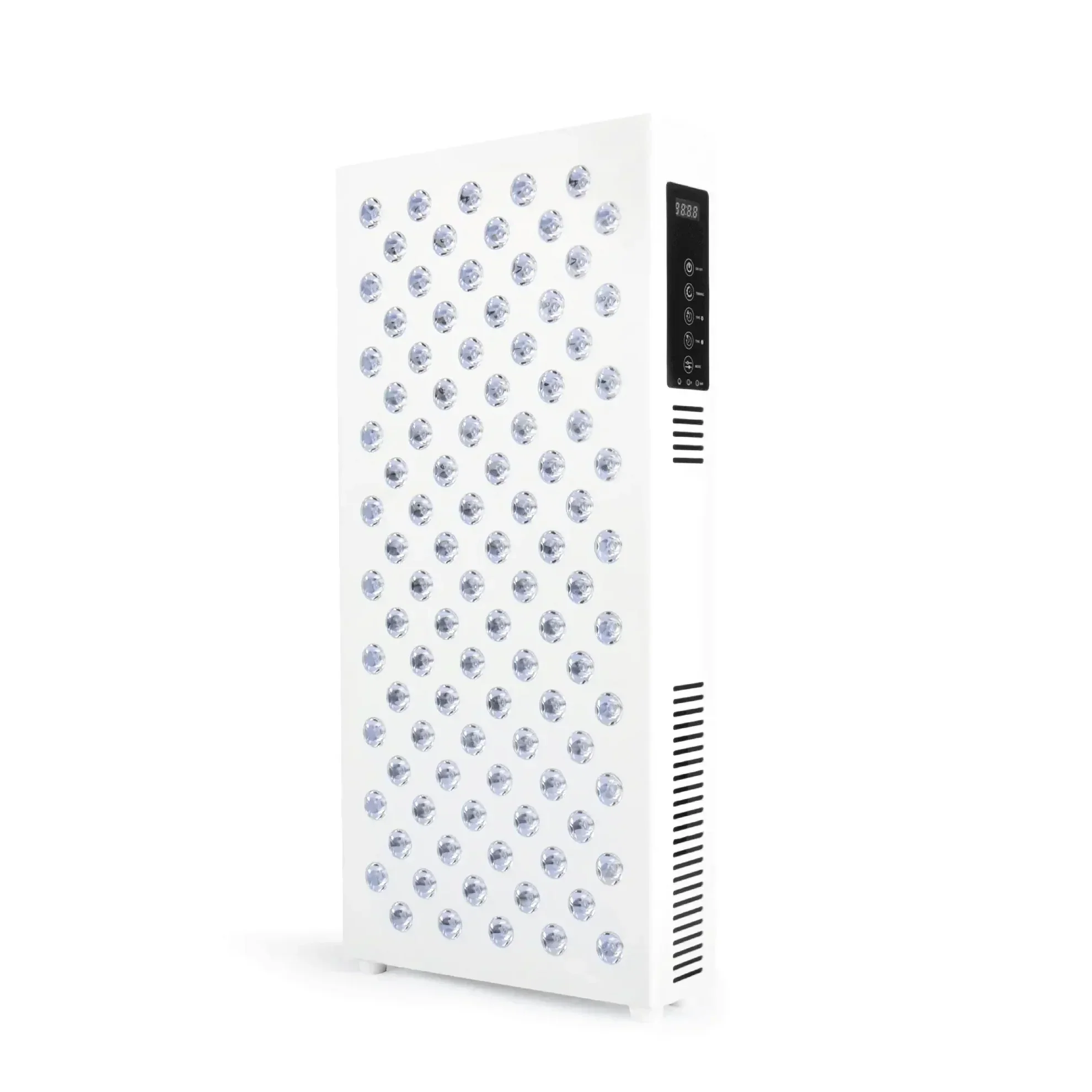
Valo Beam Targeted Panel
- Only full-body panel under $1,500 with genuine head-to-toe coverage in one standing position
- Stand included — not a $100+ add-on like competitor panels
- HSA/FSA eligible — effective cost ~$790 in a 24% bracket
- 3-year warranty — best in class at this price tier
- Affirm financing from $25/month
- Requires dedicated permanent floor space
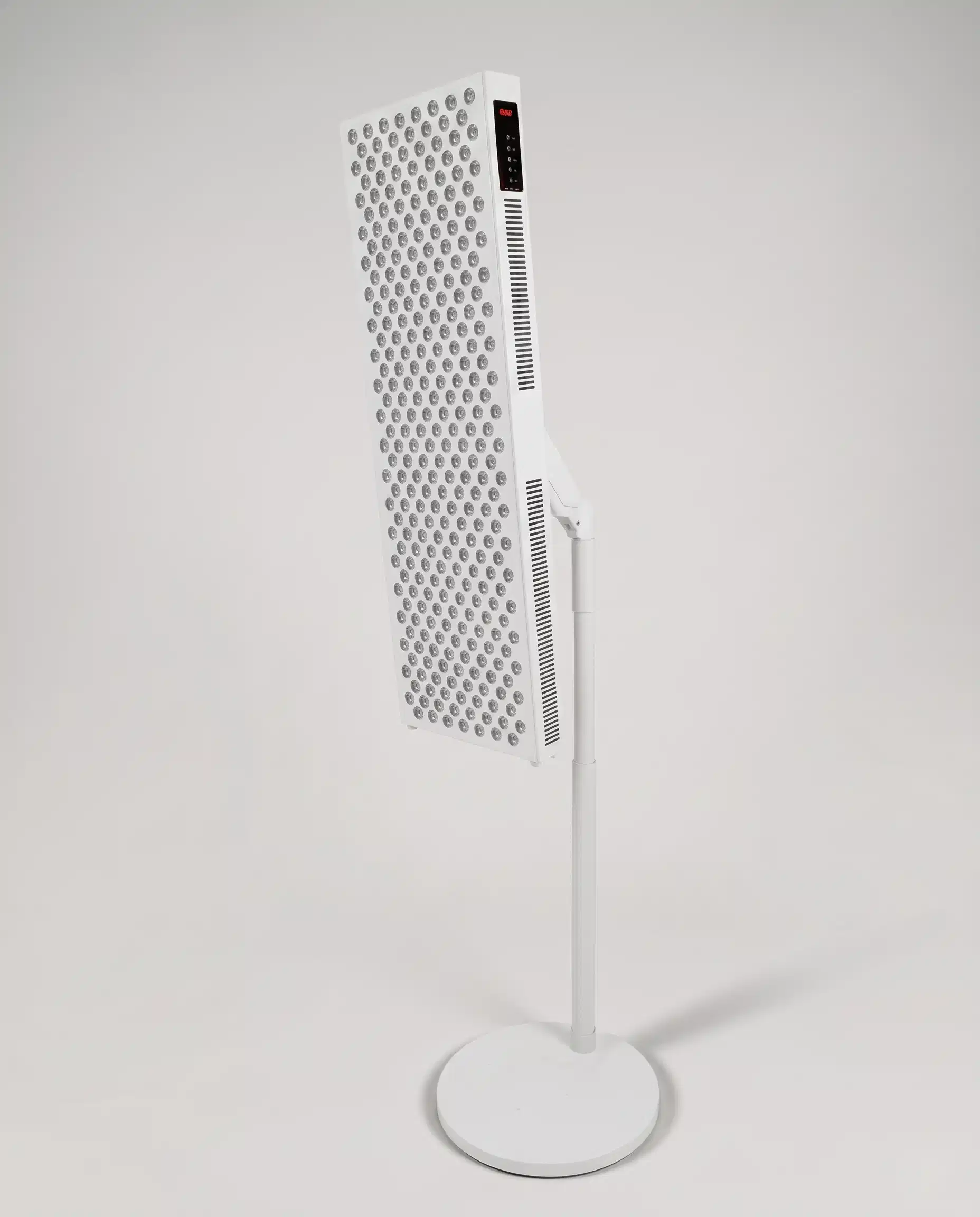
Valo Blaze Full-Body Panel
- Only full-body panel under $1,500 with genuine head-to-toe coverage in one standing position
- Stand included — not a $100+ add-on like competitor panels
- HSA/FSA eligible — effective cost ~$790 in a 24% bracket
- 3-year warranty — best in class at this price tier
- Affirm financing from $25/month
- Requires dedicated permanent floor space
- No app or Bluetooth — if smart protocol tracking matters, Joovv has it
Full Valo Lineup Comparison Table
Protocol Data
| Device | Price (20% off) | Effective HSA/FSA Cost* | Category | Coverage | Best For |
|---|---|---|---|---|---|
| Valo Spark | $240 | ~$182 | Portable | Single zone | Beginners, travel, targeted |
| Valo Glow | $240 | ~$182 | LED face mask | Face | Anti-aging + acne |
| Valo Beam | $499 | ~$379 | Targeted panel | Half-body | Serious targeted treatment |
| Valo Blaze | $1,200 | ~$790 | Full-body panel | Full body, 1 position | Athletes, multi-area pain |
| Valo Halo | $14,400 | – | Full-body bed | 360°, both sides | Professional/clinical home |
Effective cost assumes 24% federal tax bracket using pre-tax HSA/FSA dollars. Actual savings vary by bracket. Always confirm HSA/FSA eligibility with your plan administrator before purchasing.
At-Home vs Clinic: The Real Cost Comparison
This is where most people’s intuition about “just going to a spa” falls apart once you run the actual numbers.
At-Home vs Clinic Cost Over 12 Months
| Scenario | Setup Cost | Monthly Cost | 12-Month Total | Notes |
|---|---|---|---|---|
| Clinic/Spa (3x/week) | $0 | $520–$960 | $6,240–$11,520 | $40–$80/session × 12/month |
| Clinic/Spa (1x/week) | $0 | $160–$320 | $1,920–$3,840 | Same per-session rate |
| Valo Spark at home | $240 | ~$2 (electricity) | $264 | Daily use, any frequency |
| Valo Beam at home | $499 | ~$3 (electricity) | $535 | Daily use, any frequency |
| Valo Blaze at home | $1,200 | ~$5 (electricity) | $1,250 | Daily use, full-body |
Key takeaway: Even the most expensive at-home option (Valo Blaze) costs less over 12 months than 6 months of once-weekly clinic sessions. Against 3x/week clinic use, the Blaze breaks even in about 6 weeks.
The important caveats: This comparison is against spa/wellness LED sessions, which use similar consumer-grade LED equipment to what you’d buy at home. In-office medical photobiomodulation (Class IV laser, cold laser therapy) uses different, higher-powered equipment. That’s a different product category and a different price comparison — for chronic pain conditions where a clinician is supervising your treatment, the clinic option may be appropriate regardless of at-home cost.
Hidden Costs: What Actually Adds to Your Total
Stand: Most panels advertise a price that doesn’t include the stand. At $50–$150 for a quality adjustable stand, this is a real addition to compare honestly. Valo Blaze and Beam include the stand. PlatinumLED BIO-900 does not — add $50–$100 to their advertised price for apples-to-apples comparison.
Electricity: Minimal in practice. A 60W portable device running 20 minutes daily costs roughly $0.50/month at US average electricity rates. A full-body panel at 1,000W for 30 minutes daily runs about $5/month. Neither is a meaningful operating cost.
Eye protection: Most quality devices include goggles. If yours doesn’t — or if you want an upgrade from the basic included version — aftermarket red/NIR blocking goggles run $15–$40. Worth checking what your device includes before purchasing separately.
Accessories: Mounting brackets, extended-height stands, timers — these are optional add-ons, not requirements. Budget $0–$100 if you want to optimize your home setup.
H2 — HSA/FSA Eligibility: How to Use Pre-Tax Dollars
This section is worth understanding before you pay retail price for any device in the $500+ range.
What HSA/FSA means for your actual cost:
Your HSA (Health Savings Account) or FSA (Flexible Spending Account) lets you pay with pre-tax dollars — money that never gets taxed before being spent. The effective savings equal your marginal tax rate:
HSA/FSA Savings by Tax Bracket
| Tax Bracket | Valo Spark ($240) | Valo Glow ($240) | Valo Beam ($499) | Valo Blaze ($1,200) |
|---|---|---|---|---|
| 22% bracket | $192 effective | $192 effective | $389 effective | $811 effective |
| 24% bracket | $182 effective | $182 effective | $379 effective | $790 effective |
| 32% bracket | $163 effective | $163 effective | $339 effective | $707 effective |
| 37% bracket | $151 effective | $151 effective | $314 effective | $655 effective |
Which Valo devices qualify: All devices in the Valo lineup are listed as HSA/FSA eligible. Always confirm with your specific plan administrator before purchasing, as individual FSA plan rules vary.
Which competitor devices do NOT qualify: Mito Red Light panels and PlatinumLED panels are not HSA/FSA eligible — this is a real, meaningful cost difference when comparing a $1,039 Blaze (HSA-eligible) against a $1,399 Mito Red (not eligible). The Blaze is cheaper in absolute terms AND qualifies for an additional 22–37% reduction through your health account.
How to use it: Most HSA/FSA accounts come with a debit card. Simply purchase directly using that card. If you don’t have the card handy, you can often pay out of pocket and submit for reimbursement with a receipt.
Is Red Light Therapy Worth the Investment? The ROI Framing
“Is it worth it” is a question about what you’re comparing it against, not just what it costs in isolation.
Compared to clinic sessions: If you’d use RLT 3× per week consistently, any at-home device under $500 pays for itself within weeks against spa-rate sessions. The math is unambiguous.
Compared to other recovery/wellness investments: A quality at-home full-body panel ($1,040) costs roughly the same as 4–6 massage therapy sessions, 2–3 months of a gym membership in a major city, or 6–10 chiropractic visits. Unlike those options, it’s available daily, at home, with no scheduling. For people with chronic pain who use these modalities regularly, the comparison often favors the one-time device investment.
Compared to doing nothing: For specific, well-supported applications — chronic back pain, tendonitis, skin aging — the evidence base is real. The question isn’t “will this do something” for these goals; it’s “is the cost of the device worth the convenience and frequency of access.”
The honest caveat: For people who haven’t confirmed RLT produces results for their specific goal, starting with a portable device ($240) rather than a full-body panel ($1,040) is the rational approach. Validate first, upgrade if it works.
Which Price Tier Makes Sense for You?
Recommendation
| Your Situation | Recommended Device | Price | Reason |
|---|---|---|---|
| First time trying RLT | Valo Spark | $240 | Validate before committing more |
| Face-only goals (skin, acne, anti-aging) | Valo Glow | $240 | Purpose-built for facial treatment |
| Serious targeted treatment (back, joints) | Valo Beam | $499 | Higher power, larger coverage than portable |
| Athletes / multi-area pain / daily protocol | Valo Blaze | $1,200 | Full-body simultaneous coverage |
| Professional/clinical home setup | Valo Halo | $14,400 | 360° simultaneous, both sides |
Every Valo Device — 20% OFF Auto-Applied
All HSA/FSA eligible · 3-year warranty · Free US shipping · Affirm financing available
- Valo Spark — $240 (was $299) — Best entry point, portable, 660+850nm → Get Valo Spark
- Valo Glow — $240 (was $299) — Best LED face mask, 4 wavelengths, acne + anti-aging → Get Valo Glow
- Valo Beam — $499 (was $599.99) — Best mid-range panel, serious targeted treatment → Get Valo Beam
- Valo Blaze — $1,200 (was $1,499) — Best full-body panel, stand included → Get Valo Blaze
- Valo Halo — $14,400.00 — Professional full-body bed, 360° simultaneous → Learn More
Frequently Asked Questions
Sources
Evidence-based consensus on the clinical application of photobiomodulation
Mechanisms and applications of the anti-inflammatory effects of photobiomodulation