Red Light Therapy (RLT), also known as photobiomodulation, is a non-invasive treatment that uses low-level wavelengths of red and near-infrared light to stimulate mitochondrial energy production (ATP).
Unlike tanning beds, it does not use UV radiation. Instead, it is clinically proven to reduce inflammation, improve skin health (collagen production), and accelerate tissue repair.
By targeting mitochondria — the structures responsible for producing ATP — red light therapy may help improve skin health, support tissue repair, and reduce inflammation. Unlike ultraviolet light, it does not tan the skin or damage DNA, which is why it’s commonly used in clinical settings, athletic recovery, and at-home wellness devices.
Editor’s Take: As a biohacking enthusiast, I have been using red panels of different spectra for two years now. Personally, it helps me fall asleep faster and recover my muscles more quickly after training. Below, I will discuss this topic in more scientific detail, explaining how and why it works, rather than just talking about my feelings. To learn more about my personal experience, you can go here.
Understanding Red Light Therapy in Practice
Red light therapy is often discussed in theory, but its real-world application depends on measurable parameters like wavelength and exposure. I tested multiple RLT setups using a professional spectrometer to better understand how the therapy works in practice.
Open Red Light Hub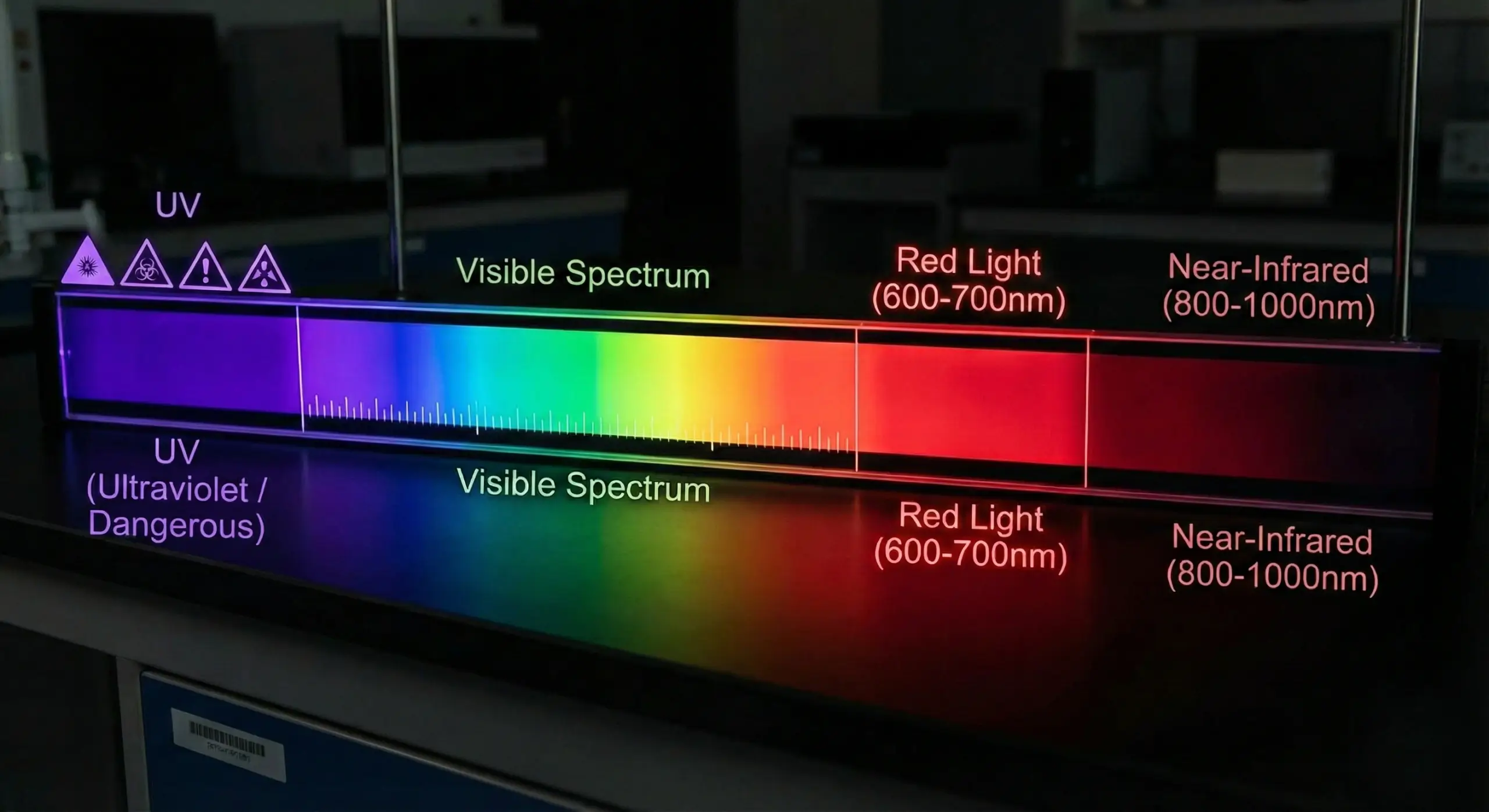
The Science Behind Red Light Therapy: How It Works
Red light therapy acts at the cellular level and, unlike ultraviolet light, does not damage the skin but causes beneficial biological reactions. This therapy involves delivering specific red waves and near-infrared light directly to the tissues.
Light Absorption by Cells
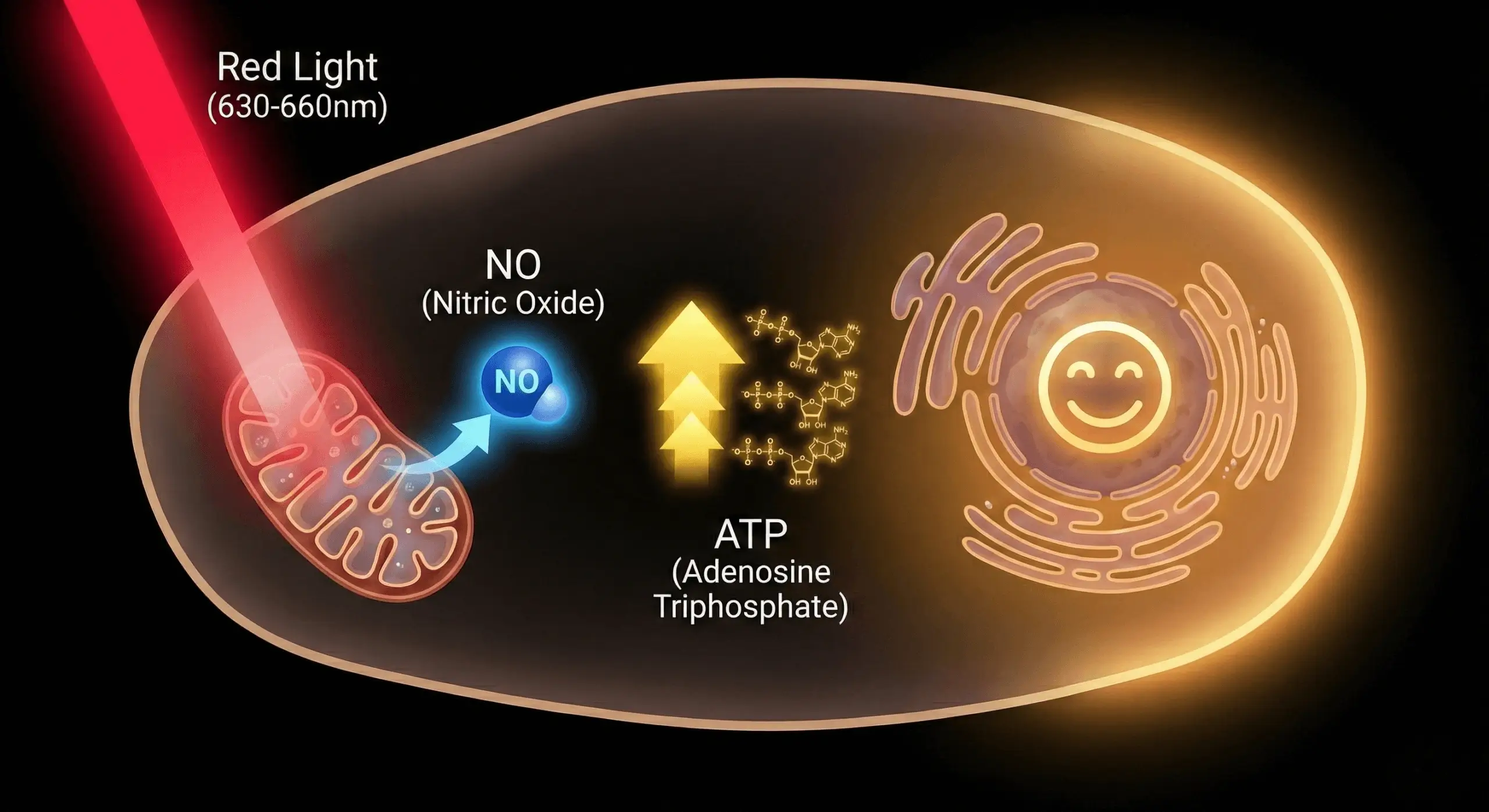
When red or near-infrared light is absorbed, it can temporarily displace nitric oxide from cytochrome c oxidase in the mitochondrial respiratory chain, allowing electron transport and ATP production to proceed more efficiently under certain conditions.
Energy Production in Our Cells
After such activation, our mitochondria can produce more ATP (adenosine triphosphate). ATP is a molecule that fuels virtually all processes in our cells. Increased ATP availability is associated with improved cellular function in laboratory and clinical studies, although the magnitude of this effect varies and does not guarantee the same outcome across all tissues or conditions.
This light also increases the potential of cell elements such as mitochondrial membranes, which in turn enhances the overall functionality of these centers. In practical terms, improved mitochondrial efficiency may support cellular repair processes and stress recovery. However, these effects depend heavily on dosage, wavelength, and treatment consistency — factors that vary widely between devices and study protocols.
Mitochondria are often described as the cell’s energy factories. When exposed to specific red and near-infrared wavelengths, their efficiency appears to increase, allowing cells to produce energy more effectively under certain conditions. This is one reason red light therapy is being studied for recovery-related applications rather than acute medical treatment.
Is Red Light Therapy Safe? What You Should Know
Red light therapy is generally considered safe when used correctly. Here’s what you need to know about safety and potential side effects.
Non-thermal and UV-free: Unlike tanning beds, red light therapy doesn’t heat your tissue or emit harmful UV radiation. The treatment is non-invasive and doesn’t damage skin cells.
Rare side effects: Most people experience no negative effects. In rare cases, temporary redness or mild irritation can occur, usually from overuse or sitting too close to the device.
Eye protection: Keep your eyes closed during treatment or wear protective goggles. Direct exposure to bright LED lights can potentially damage your retina over time.
Special considerations: People with photosensitivity disorders should consult a doctor before starting treatment. If you’re undergoing cancer treatment, talk to your oncologist first.
As with any health treatment, it’s wise to talk with your healthcare provider if you have underlying conditions.
Stop Guessing Your Session Time
10 minutes on a weak panel is nothing. 10 minutes on a pro panel is an overdose. Calculate your exact personalized dose.
Who Should Use Red Light Therapy (And Who Should Not)
Before investing in a device or visiting a clinic, it’s important to understand if your goals align with what RLT can actually do. While it is a versatile tool, it serves specific biological purposes.
✅ Ideal Candidates (Who Benefits Most)
- Skin Health Enthusiasts: Anyone looking to naturally increase collagen, reduce fine lines, treat acne scars, or improve overall skin tone without surgery.
- Athletes & Active People: If you need faster muscle recovery, reduced delayed onset muscle soreness (DOMS), or help with tendonitis.
- Chronic Pain Sufferers: People managing arthritis, joint inflammation, or general systemic pain who want a drug-free option.
- Biohackers & Sleep Optimizers: Those using red light to support circadian rhythms and improve deep sleep quality.
⚠️ Who Should Be Cautious (Contraindications)
- Photosensitivity: If you are taking medication that increases light sensitivity (e.g., Accutane, Tetracycline, or certain diuretics), consult your doctor first.
- Active Cancer Patients: While research is ongoing, stimulating blood flow and cellular energy in active tumors is generally not recommended without oncologist supervision.
- Recent Lasik Eye Surgery: While red light is generally safe for eyes, bright LEDs can be uncomfortable or too intense immediately after eye procedures.
Fred’s Note: “Think of Red Light Therapy as a ‘battery charger’ for your cells. It works best for people who are consistent. If you are looking for a magic pill that works in one 10-minute session, this isn’t it. But if you want long-term structural improvement, you are in the right place.”
Key Red Light Therapy Wavelengths (Explained Simply)
Red light therapy uses two main types of light, each with different benefits depending on how deep they penetrate your tissue.
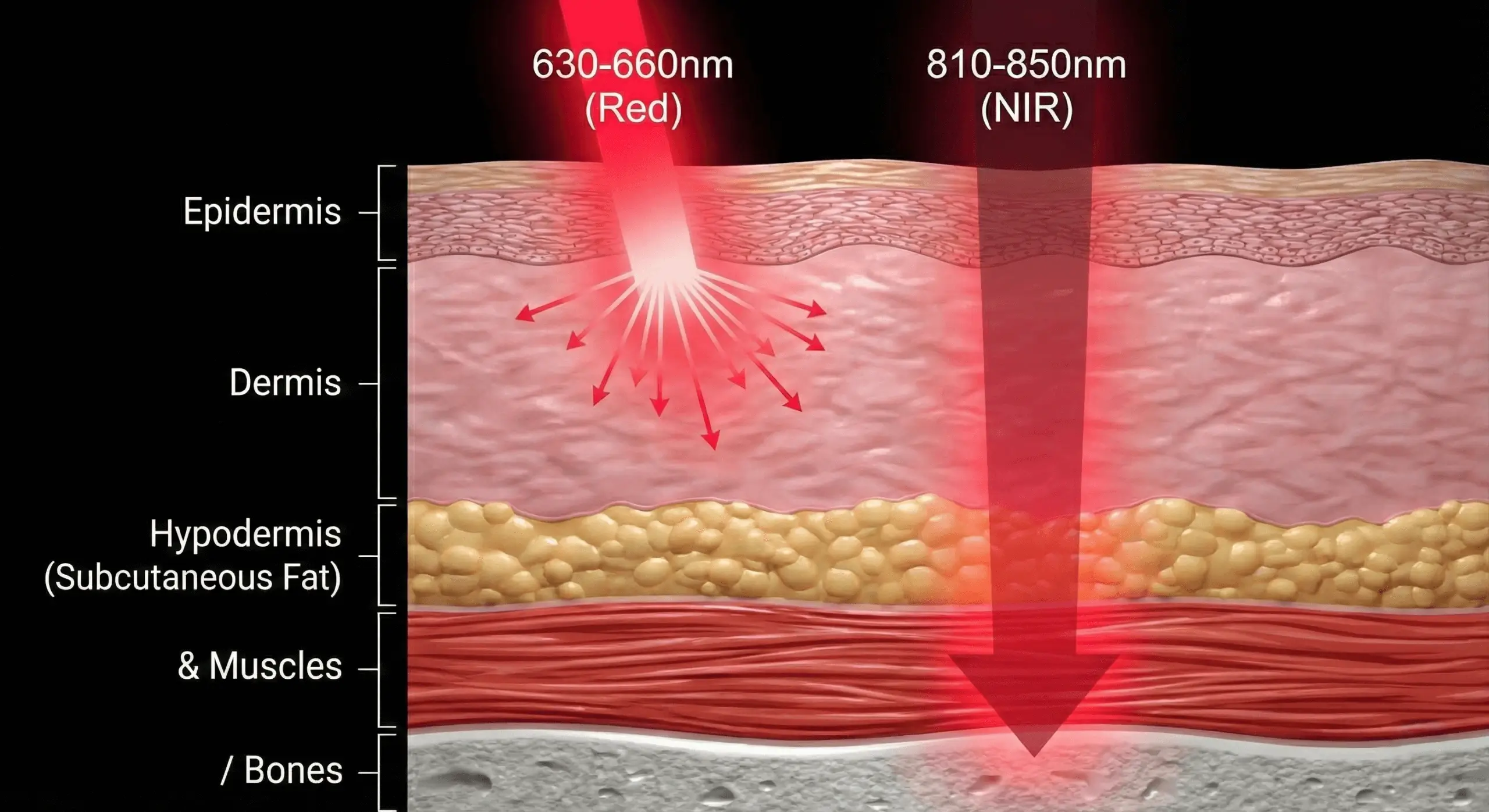
Red Light (630-670nm Range)
This type of light works more on the upper part of the tissues because it penetrates approximately 4-8 millimeters deep. This depth of penetration makes red light particularly suitable for skin-related applications, where most biological targets are located within the superficial dermal layers. Studies suggest that it can support collagen production by stimulating fibroblasts. Fibroblasts are cells responsible for creating skin structure.
This wavelength is commonly used in treatments for fine lines, wrinkles, acne scars, and overall skin texture. The light stimulates cellular activity in the dermal layers where collagen synthesis occurs.
Near-Infrared Light (810-850nm Range)
Near-infrared (NIR) light penetrates more deeply than visible red light, with estimated penetration depths ranging from 20–40 millimeters depending on tissue type and device output. Unlike visible red light, it can penetrate to the level of muscles, joints, tendons, and some organs. Based on LLLT (low-level laser therapy) research, NIR can be used to relieve pain, restore muscles, and reduce inflammation in deeper structures.
Although you cannot see NIR light with the naked eye (it is just outside the visible spectrum), it works on the same biological principle as red light, namely stimulating the mitochondria we already know about, only in deeper layers of tissue.
Most devices combine both wavelengths for broader use. Red light acts on the skin in the same way as watering the leaves of a plant — near-infrared works deeper, like watering the roots.
To learn more about the research and better understand how it works, you can read a comprehensive review of photobiomodulation mechanisms.
| Wavelength Range | Light Type | Approximate Penetration* | Common Applications | Evidence Strength |
|---|---|---|---|---|
| 630–660 nm | Red Light | ~2–8 mm | Skin health, wrinkles, scars | Moderate–Strong |
| 810–830 nm | Near-Infrared | ~20–30 mm | Muscle recovery, joint discomfort | Moderate |
| 840–850 nm | Near-Infrared | Up to ~40 mm | Deep tissue, inflammation support | Emerging–Moderate |
What Can Red Light Therapy Help With? (Overview)
The research we have reviewed suggests that red light therapy may support several areas of health, although results vary from person to person. Here is what the current data shows.
Skin Health
Studies indicate red light therapy may improve the appearance of wrinkles and fine lines by stimulating collagen production in skin cells. Some research also shows potential benefits for acne scars and overall skin texture. The U.S. Food and Drug Administration has granted FDA clearance for specific indications, such as temporary cosmetic wrinkle reduction, for certain red light therapy devices.
Clinical studies have shown improvements in skin texture and wrinkle depth following repeated exposure to red light wavelengths in the 630–660 nm range.
Pain and Inflammation
Low-level light therapy is used in some physical therapy and pain management settings, with evidence showing modest but statistically significant pain reduction in certain musculoskeletal conditions.
One FDA-cleared application is for oral mucositis — painful mouth sores that develop during cancer treatment.
Photobiomodulation is used in supportive cancer care settings, based on clinical practice guidelines for managing treatment-related oral complications.
Other Emerging Areas
Researchers are exploring red light therapy for hair growth in people with androgenic alopecia, athletic recovery enhancement, and even neurological applications.
However, many of these uses are still in early-stage trials. More research is needed to confirm effectiveness and establish optimal protocols.
While promising, red light therapy isn’t a cure-all. Always consult a healthcare provider before trying it for medical conditions.
Red Light Therapy Device Features (What to Look For)
Red light therapy devices vary widely in design and capability. Here are the key features that affect how they work.
Wavelength Type: Devices may emit red light only, near-infrared only, or both combined. Combination devices offer more versatility since you can target both surface and deep tissue concerns. The specific wavelengths determine what depth of tissue the light reaches.
Power Output (Irradiance): Measured in milliwatts per square centimeter (mW/cm²), irradiance indicates how much light energy hits your skin. Higher power output may shorten treatment time needed to reach an effective dose. Clinical devices typically have higher output than home units, which affects session duration.
Treatment Area Size: Panels cover large areas and can treat your full body or back. Face masks target specific facial concerns. Handheld units allow you to focus on small spots like a knee or shoulder. Larger treatment areas mean fewer sessions to cover your whole body.
FDA Clearance: Some devices have FDA clearance for specific uses, such as temporary wrinkle reduction or minor pain relief. However, clearance for one condition doesn’t guarantee effectiveness for all conditions. It simply means the device met safety standards for its intended use.
Light Quality: LED devices are most common in red light therapy. Avoid devices that emit UV light or generate excessive heat, as these can damage skin. Quality devices should emit pure red or NIR light without unwanted wavelengths.
Device choice depends on your goals and budget. Research specific models before purchasing.
Red Light Therapy vs Blue Light vs UV Light
Red light therapy is often confused with other light-based treatments. Here’s how they differ.
Red Light Therapy
Red light therapy uses wavelengths in the 630-850nm range (red and near-infrared). Its primary purpose is cellular repair — supporting skin health, pain relief, and tissue recovery. The treatment is non-thermal, meaning it doesn’t heat tissue, and it contains no UV radiation.
Blue Light Therapy
Blue light operates at 400-495nm wavelengths. It works at the surface level only and is primarily used for acne treatment. Blue light kills acne-causing bacteria (C. acnes) on the skin but doesn’t penetrate deeply enough to affect muscles or joints. It’s a different mechanism and application than red light.
UV Light (Tanning Beds)
UV light falls in the 280-400nm range and includes both UVA and UVB rays. While used medically for conditions like psoriasis under controlled circumstances, UV exposure from tanning beds can damage skin cells and increase skin cancer risk over time. UV light tans skin by triggering melanin production — a protective response to potential DNA damage.
Photodynamic therapy (PDT) is a separate medical procedure that combines red light with a photosensitizer drug to treat certain types of skin cancer. This is a specialized treatment performed in clinical settings, not the same as general red light therapy.
Red light therapy is fundamentally different from tanning — it doesn’t use UV rays and is considered safer for skin. If you’re worried red light therapy is like a tanning bed, it’s not — completely different technology.
Basic Usage Guidelines (Overview)
Here are general guidelines for using red light therapy safely and effectively.
Session Length: Typical sessions last 10-20 minutes per treatment area. More is not better. Red light therapy follows a biphasic dose response — meaning too much light can cancel out the benefits. Stick to the recommended times.
Distance from Skin: Most devices work best positioned 6-12 inches from your body. Closer placement increases light intensity but may cause discomfort in some people. Too far away reduces the effective dose. Check your device manual for recommended positioning.
Frequency: A common schedule is 3-5 times per week for best results. Some people use red light daily, while others find 3 sessions sufficient. Consistency matters more than intensity — regular use over weeks produces better outcomes than sporadic intensive sessions.
Eye Protection: Keep your eyes closed during treatment or wear protective goggles if your device emits high-intensity light. Avoid looking directly at the LED source, especially from close range, as this can potentially damage your retina over time.
Patience Required: Results typically appear after several weeks of regular use. One session won’t produce noticeable changes. Like exercise or dietary changes, red light therapy requires consistency to see benefits build over time.
These are general guidelines — specific protocols vary by condition and device. Consult your device manual or healthcare provider for personalized advice.

The Bottom Line: Does Red Light Therapy Really Work?
The evidence for red light therapy varies depending on the application. Here’s what research currently shows.
What We Know: Strong clinical evidence supports red light therapy for skin rejuvenation, particularly collagen stimulation and wrinkle reduction. Studies consistently show improvements in skin texture and appearance with regular use. There’s also solid evidence for wound healing and moderate evidence for certain types of pain relief, including arthritis and muscle soreness. The FDA has cleared specific devices for these uses, indicating they meet safety and efficacy standards.
What We Don’t Know: Optimal dosing protocols remain unclear for many conditions. While we know red light therapy works through mitochondrial stimulation, the ideal wavelength combinations, treatment duration, and frequency for specific conditions are still being researched. Long-term safety data beyond a few years is limited, though no serious adverse effects have been documented in studies to date.
Emerging applications like hair growth, athletic performance enhancement, and neurological benefits show promise in preliminary research, but large-scale clinical trials are needed to confirm effectiveness.
Red light therapy shows promise for several conditions backed by scientific mechanisms and clinical evidence. However, it’s not a miracle cure for everything. If you’re considering red light therapy for a medical condition, discuss it with your healthcare provider first — especially if you have underlying health issues or are undergoing other treatments.
Like exercise or nutrition, red light therapy is a tool — not a magic bullet. Realistic expectations and consistent use are key to seeing results.
Frequently Asked Questions
Does Red Light Therapy cause cancer or skin damage?
No. Red light therapy uses wavelengths in the visible red and near-infrared spectrum. It contains no UV (ultraviolet) rays, which are responsible for tanning and DNA damage. RLT is considered safe for regular use and is non-ionizing.
Can I do Red Light Therapy through clothes?
No. Fabrics block the light waves from reaching your skin cells. For the therapy to be effective, the light must shine directly on bare skin. Even thin clothing can reflect or absorb the necessary wavelengths.
Do I need to wear goggles during the session?
It depends on the device. For bright panels, eye protection is recommended to prevent eye strain. However, red light itself is not toxic to the eyes. Always follow the manufacturer’s guidelines provided with your specific device.
How long does it take to see results?
Results vary by goal. Acute pain relief or muscle recovery can sometimes be felt after 1–3 sessions. Structural changes, such as collagen production for wrinkles or hair growth, typically require consistent use for 8–12 weeks.
Can I use it every day?
Yes, but more is not always better. Most protocols recommend 3–5 sessions per week to allow your cells time to process the energy. Overusing high-powered devices can lead to a diminishing return effect known as the “biphasic dose response.”
Scientific References & Citations
This article is based on peer-reviewed research and FDA regulatory data. Below is the list of primary sources used:
- Mechanisms of Photobiomodulation
Focuses on cytochrome c oxidase and mitochondrial respiratory chain activation.
View Study (PubMed) - Low-level laser (light) therapy (LLLT) in skin: stimulating, healing, restoring
Seminars in Cutaneous Medicine and Surgery. Discusses cellular function and tissue repair.
View Full Text (PMC) - A Controlled Trial to Determine the Efficacy of Red and Near-Infrared Light Treatment
Study on patient satisfaction, reduction of fine lines, wrinkles, and collagen density (630–660 nm range).
View Study (PubMed) - Efficacy of Low-Level Laser Therapy in Pain Management
Clinical evidence regarding pain reduction in musculoskeletal conditions.
View Study (PubMed) - Research on Deep Tissue Penetration and LLLT Applications
Investigating the effects of NIR wavelengths on deeper structures like muscles and joints
View Source - U.S. Food & Drug Administration (FDA)
Medical Devices: Products and Procedures – Device Approvals and Clearances
Visit FDA.gov