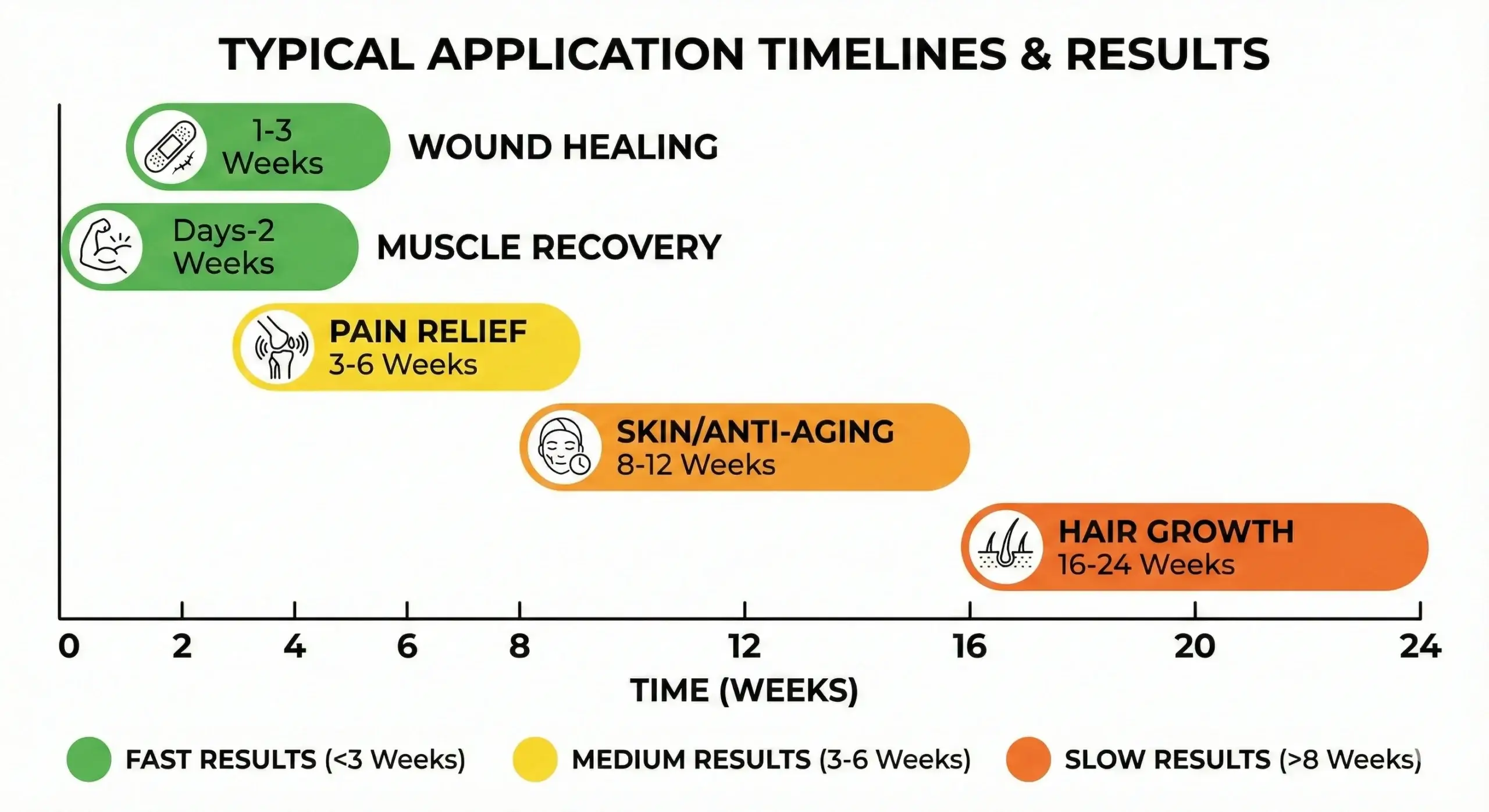
Red light therapy typically takes 4-12 weeks to produce noticeable results, depending on what you’re treating. Skin improvements usually appear around week 8-10, while pain relief may occur sooner at 2-4 weeks. Wound healing shows the fastest response, often within days to weeks.
The timeline varies based on your treatment goal, consistency of use, proper dosing, and individual biological factors. Cellular changes begin immediately, but visible or felt results require sustained use over weeks as collagen synthesis, tissue remodeling, and anti-inflammatory effects accumulate.
This guide breaks down exact timelines for different applications, based on clinical research and two years of personal testing.
⏳ Realistic Timeline (Quick Look)
- 💪 Muscle Recovery: 1–3 days (Fastest)
- 🩹 Wound Healing: 3–7 days
- 🦵 Joint Pain: 2–4 weeks
- ✨ Skin & Anti-Aging: 8–12 weeks (Slowest)
Understanding Red Light Therapy in Practice
Red light therapy is often discussed in theory, but its real-world application depends on measurable parameters like wavelength and exposure. I tested multiple RLT setups using a professional spectrometer to better understand how the therapy works in practice.
Open Red Light HubRealistic Results Timeline (Cheat Sheet)
Before we dive into the cellular mechanisms, here is a quick reference guide on how long it typically takes to see results for the most common goals:
| Goal | First Signs | Full Effect |
|---|---|---|
| Muscle Recovery | 24–48 hours | Consistent daily use |
| Pain & Inflammation | 3–7 days | 4–6 weeks |
| Sleep Optimization | 3–7 days | 2–3 weeks |
| Skin (Texture/Glow) | 2–4 weeks | 8–12 weeks |
| Hair Growth | 8–10 weeks | 6+ months |
Note: These timelines assume you are using the correct dose. Now, let’s look at why your body reacts at these specific speeds.
The Science Behind Red Light Therapy’s Timeline
When people ask “how long does it take to work,” they’re really asking two different questions: when do cellular changes start, and when will I actually notice something? These are very different timelines.
Let me explain why red light therapy isn’t an instant fix, and why that’s actually a good thing.
What Happens at the Cellular Level (Minutes to Hours)
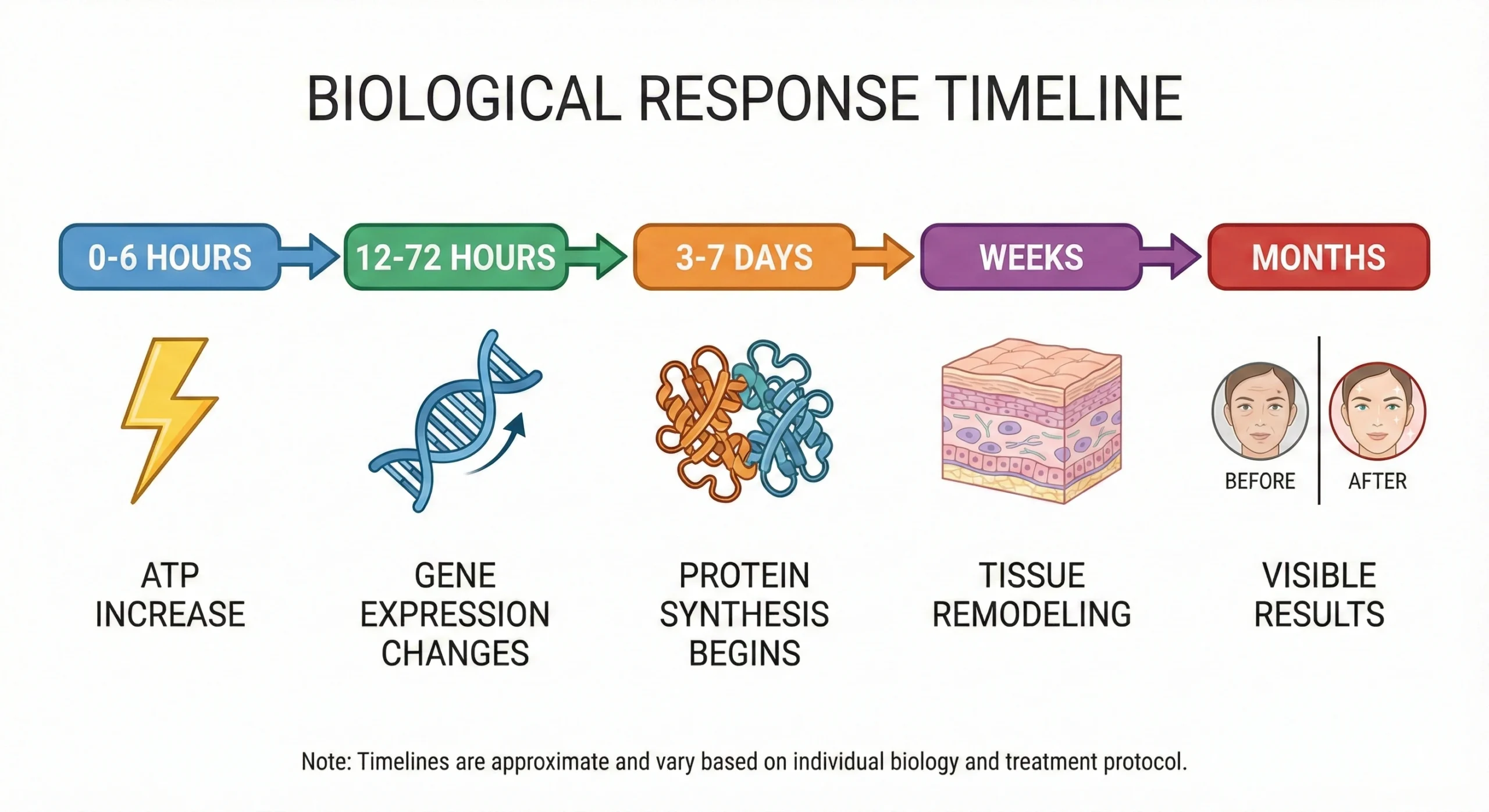
The moment red or near-infrared light hits your skin, biological processes begin. Your mitochondria absorb photons and start producing more ATP — the energy currency your cells use for everything. Research shows that mitochondrial ATP synthesis increases within minutes of exposure and peaks around 3-6 hours after treatment.
This immediate ATP boost is real and measurable in laboratory settings. Scientists can detect it using specialized equipment. But here’s the catch: you won’t feel it. Your body doesn’t have “ATP sensors” that tell your brain “hey, we’re making more energy right now.”
Within the first few hours after treatment, your cells also experience increased blood flow. Nitric oxide gets released from mitochondria and causes blood vessels to widen temporarily. Studies document 20-35% increases in local circulation that last 2-4 hours post-session. Again, this is happening whether you notice it or not.
My experience: I remember sitting in front of my panel the first week thinking “I should feel SOMETHING, right?” I didn’t. No tingling, no instant glow, no miraculous energy surge. Just sitting there under a red light wondering if I’d wasted $300 on a fancy lamp. The biological changes were happening — I just couldn’t perceive them yet.
This is why the first week feels like nothing is working. The machinery is turning on, but the output isn’t visible yet.
Gene Expression Changes (Hours to Days)
After the initial ATP increase, something more significant begins: your cells start changing which genes they express. This means they’re producing different proteins than they normally would.
Red light exposure has been shown to upregulate genes related to collagen production, antioxidant enzyme activity, and anti-inflammatory signaling. A study using gene microarray analysis found that fibroblasts exposed to 660nm red light showed significant changes in gene expression within 24 hours, particularly genes involved in extracellular matrix remodeling.
Think of it like this: the ATP boost is the spark that starts the engine. Gene expression changes are the engine actually running and producing something useful. But you still can’t see the car moving yet.
This phase takes roughly 12-72 hours after each session. The changes are cumulative — each session reinforces these genetic signals. This is why consistency matters so much. One session creates a small blip in gene expression. Regular sessions create sustained changes that actually build new tissue.
What this means practically: Don’t expect results from sporadic use. Your body needs repeated signals to maintain elevated gene expression. Using red light once, then not again for a week, is like trying to build muscle by doing one workout per month. The signal isn’t strong enough or sustained enough to create lasting change.
Protein Synthesis and Tissue Building (Days to Weeks)
Once genes are activated, your cells start producing new proteins. For skin applications, this primarily means collagen — the structural protein that gives skin its firmness and elasticity. For muscle recovery, this includes repair proteins and anti-inflammatory molecules.
Protein synthesis doesn’t happen overnight. Cells need to transcribe DNA, translate it into proteins, and then assemble those proteins into functional structures. This biological process takes days at minimum, and weeks for meaningful accumulation.
Research on collagen synthesis shows that even with optimal stimulation, measurable increases in collagen density require 4-8 weeks of consistent treatment. One study found that dermal collagen increased by 31% after 12 weeks of twice-weekly red light sessions, but no significant increase was detected before week 6.
This is the phase where people quit. Weeks 2-5 feel like a black box. You’re doing the work, spending the time, but seeing zero return. Your skin looks the same, your pain hasn’t improved, and you’re questioning whether this is all placebo or pseudoscience.
My personal wall: Week 4 was my lowest point. I’d been consistent — 5 sessions per week, proper dosing, tracking everything. My skin looked identical to day one. I almost sold my panel on Facebook Marketplace. The only reason I didn’t was stubbornness and the fact that I’d already told my partner I was “testing this for science.” Pride kept me going more than logic.
Here’s what I didn’t understand then but know now: my cells were actively building new collagen. I just couldn’t see it yet because the old surface layer of skin was still there. New collagen was forming in the dermis, but it takes weeks for that to translate to visible surface changes as skin cells turn over.
Tissue Remodeling and Visible Results (Weeks to Months)
This is the phase where people finally see or feel something. Enough new collagen has accumulated that skin texture changes. Enough anti-inflammatory molecules have been produced that pain decreases. Enough cellular repair has occurred that wounds close faster.
But even here, the timeline varies dramatically based on what you’re treating. Skin has a natural turnover cycle of 28-40 days depending on age. This means even if you’re producing new collagen in week 4, you might not see surface changes until week 8 when newer skin cells reach the surface.
Clinical trials consistently show visible results in the 8-12 week range for cosmetic applications. Pain studies show faster response — sometimes 2-4 weeks — because pain perception can change with relatively small reductions in inflammation. Wound healing is fastest because the biological priority of closing an open wound overrides normal cellular timelines.
The research timeline for different goals:
Skin rejuvenation and anti-aging: Studies show that significant improvements in wrinkle depth, skin roughness, and collagen density require 8-12 weeks of consistent treatment, typically with 2-3 sessions per week. Some participants report subtle texture improvements around week 6, but dramatic changes happen later.
Pain and inflammation: Clinical trials on chronic pain conditions found that patients using near-infrared light therapy experienced measurable pain reduction starting around week 3-4, with maximum benefit at 6-8 weeks. Acute pain or post-workout soreness responds faster, sometimes within days.
Wound healing: This is the fastest application. Studies on diabetic ulcers and post-surgical wounds show accelerated healing beginning within the first week, with complete closure 40-60% faster than controls. The biological imperative to close wounds means cellular resources get prioritized here.
The research timeline for different goals:
- Week 1-3: Nothing. Zero. Nada.
- Week 4: Skin maybe felt slightly smoother when washing face? Or placebo?
- Week 7: My partner asked if I was using a new moisturizer. First external validation.
- Week 10: Clear visible difference in skin texture when comparing to before photos
- Week 12: Noticeable reduction in fine lines around eyes. This is when I became a believer.
- Month 6+: Results plateau. Continued use maintains improvements rather than creating new ones.
The frustrating truth: the first month is biological groundwork. The second month is where visible changes emerge. The third month is where results become obvious to others, not just you staring at your face in the mirror every day.
How Long Does Red Light Therapy Take to Work For…?
Different conditions respond at different speeds because the underlying biology is different. Here’s a breakdown of realistic timelines for the most common uses, based on clinical research and what I’ve observed personally.
Skin Health and Anti-Aging (8-12 Weeks)
What you’re treating: Fine lines, wrinkles, skin texture, age spots, overall skin tone
Why it takes this long: You’re fundamentally trying to increase collagen density in the dermis. Collagen is a large structural protein that takes time to synthesize and organize into functional networks. Your skin also has a natural cell turnover cycle of about 28-40 days, which means even newly produced collagen takes time to manifest as visible surface improvements.
Clinical timeline: A meta-analysis of 23 studies on red light therapy for photoaging found that visible improvements in wrinkle depth and skin texture became statistically significant at the 8-week mark, with maximum benefits observed at 12 weeks of consistent use.
Session frequency in successful studies: 2-3 times per week minimum. Daily use showed slightly faster results in some trials, but the difference was marginal. Consistency mattered more than frequency.
Early signs (Week 4-6): Some people report subtle changes before the 8-week mark. These include skin feeling slightly firmer to the touch, minor improvements in texture (less roughness), and possibly better makeup application. These are real but easily missed if you’re not paying attention.
Obvious changes (Week 8-12): This is when you and others actually notice something. Fine lines look softer, skin appears more even-toned, texture is noticeably smoother. If you take before and after photos (which you absolutely should), the difference becomes clear.
My timeline: I started seeing subtle texture improvements around week 6. My skin felt different when I washed my face — smoother, slightly firmer. But I didn’t see visible wrinkle reduction until week 10. By week 12, the crow’s feet around my eyes were noticeably softer, and my overall skin tone was more even. Not dramatic “10 years younger” results, but real, measurable improvement.
Important caveat: If you’re in your 20s with minimal skin damage, you might not see dramatic results simply because there wasn’t much to fix. Red light works best on moderate photoaging — think 30s-50s age range with visible fine lines and texture issues.
Pain and Inflammation (2-6 Weeks)
What you’re treating: Chronic joint pain (arthritis, tendinitis), muscle soreness, inflammation-related discomfort
Why it’s faster than skin: Pain perception can change with relatively small reductions in inflammatory markers. You don’t need complete tissue remodeling to feel better — just enough reduction in pro-inflammatory cytokines and enough increase in blood flow to reduce discomfort.
Clinical timeline: Studies on chronic musculoskeletal pain show that patients typically experience initial pain reduction around week 3-4, with maximum benefit at 6-8 weeks. The effect is usually modest — a 25-40% reduction in pain scores rather than complete elimination.
Session frequency in successful studies: Daily or near-daily use (5-7 times per week) showed better results than sporadic use. For chronic pain, consistency is even more critical than for cosmetic applications.
Acute vs chronic pain: If you’re using red light for post-workout muscle soreness (acute pain), the timeline is much faster. Some studies show reduced delayed onset muscle soreness (DOMS) when red light is used within 2 hours after exercise. The anti-inflammatory effect kicks in within hours to days, not weeks.
For chronic pain conditions like osteoarthritis or chronic lower back pain, expect a longer timeline. Your body has been in an inflammatory state for months or years — it takes sustained treatment to shift that baseline.
My experience with pain: I don’t have chronic pain conditions, so I can’t speak to that timeline personally. But I’ve used red light on my neck and shoulders for tension-related discomfort from sitting at a desk all day. I noticed reduced stiffness after about 10 days of daily 15-minute sessions. Not dramatic, but noticeable enough that I keep doing it.
A friend who has chronic knee pain from an old sports injury reported that around week 4, he started having “better days” more frequently. By week 7, his baseline pain level had dropped noticeably. He still has pain, but it’s more manageable. That seems to match what the literature shows — improvement, not cure.
Realistic expectations: Red light isn’t as powerful as pharmaceutical pain relievers for immediate symptom management. But unlike NSAIDs or opioids, it doesn’t come with side effects or diminishing returns over time. Think of it as a complementary approach, not a replacement for medical treatment.
Wound Healing (Days to 3 Weeks)
What you’re treating: Surgical incisions, diabetic ulcers, burns, cuts, abrasions
Why it’s fastest: Wound healing is a biological priority. Your body throws resources at closing open wounds because they’re potential entry points for infection. Red light accelerates this existing process rather than trying to create something new from scratch.
Clinical timeline: Studies on post-surgical wounds show that red light therapy can reduce healing time by 25-35% compared to standard care alone. For diabetic foot ulcers, research found that complete closure occurred 40-60% faster with photobiomodulation therapy, often within 3-6 weeks compared to 8-12 weeks for controls.
Session frequency in successful studies: Daily treatment in hospital settings, or twice-daily for at-home use. Wound healing protocols tend to be more intensive than cosmetic protocols.
Timeline breakdown:
- First 3-5 days: Reduced inflammation around wound edges, possibly less pain
- Week 1-2: Faster epithelialization (new skin cell growth over wound)
- Week 2-4: Accelerated collagen deposition and wound closure
Important safety note: Red light therapy should be used as an adjunct to proper wound care, not a replacement. Clean wounds, appropriate dressings, and medical oversight are still essential. Never use red light on infected wounds without medical guidance.
Why I can’t speak from personal experience here: I haven’t had any significant wounds to treat during my two years of using red light. But the clinical evidence for wound healing is actually stronger than for cosmetic applications — more controlled studies, clearer endpoints (wound closure is objective), and consistent results across multiple trials.
If you’re considering red light for wound healing, especially for chronic wounds like diabetic ulcers, work with your doctor. Many wound care centers now incorporate photobiomodulation into their protocols, so this is increasingly becoming standard care rather than alternative medicine.
Hair Growth (16-24 Weeks)
What you’re treating: Androgenetic alopecia (male or female pattern baldness)
Why it takes so long: Hair growth cycles are slow. Hair follicles that have miniaturized due to androgenetic alopecia need to be reactivated and gradually increase in diameter. This doesn’t happen quickly. The anagen phase (active growth phase) of hair lasts months, which means you need sustained treatment throughout multiple hair cycles to see results.
Clinical timeline: Studies on low-level light therapy for hair loss show that noticeable increases in hair density typically appear around the 16-week mark, with continued improvement through 24-26 weeks of treatment. One study found that participants using 655nm red light devices 3 times per week showed a 37% increase in hair count after 26 weeks compared to baseline.
Session frequency in successful studies: 3-5 times per week, typically 15-25 minutes per session. Some FDA-cleared devices recommend daily use for faster results, but compliance drops significantly with daily requirements.
What “results” actually means: We’re talking about increased hair count per square centimeter and increased hair shaft diameter. Not complete reversal of baldness. Expectations need to be realistic — if you’re completely bald in an area, red light probably won’t bring hair back. But if you have thinning hair with visible miniaturization, you might see measurable improvement.
My perspective: I don’t have hair loss, so I haven’t tested this application. But friends who’ve tried it report that around month 4-5, they noticed less hair in the shower drain and slightly fuller appearance. Nothing dramatic, but measurable. The challenge is that 6 months of consistent 3x-weekly use requires serious commitment. Most people quit before the timeline even allows for results.
FDA clearance: Multiple red light devices have FDA clearance specifically for androgenetic alopecia, which means they had to submit clinical data showing effectiveness. This is one of the better-researched applications, but it requires patience.
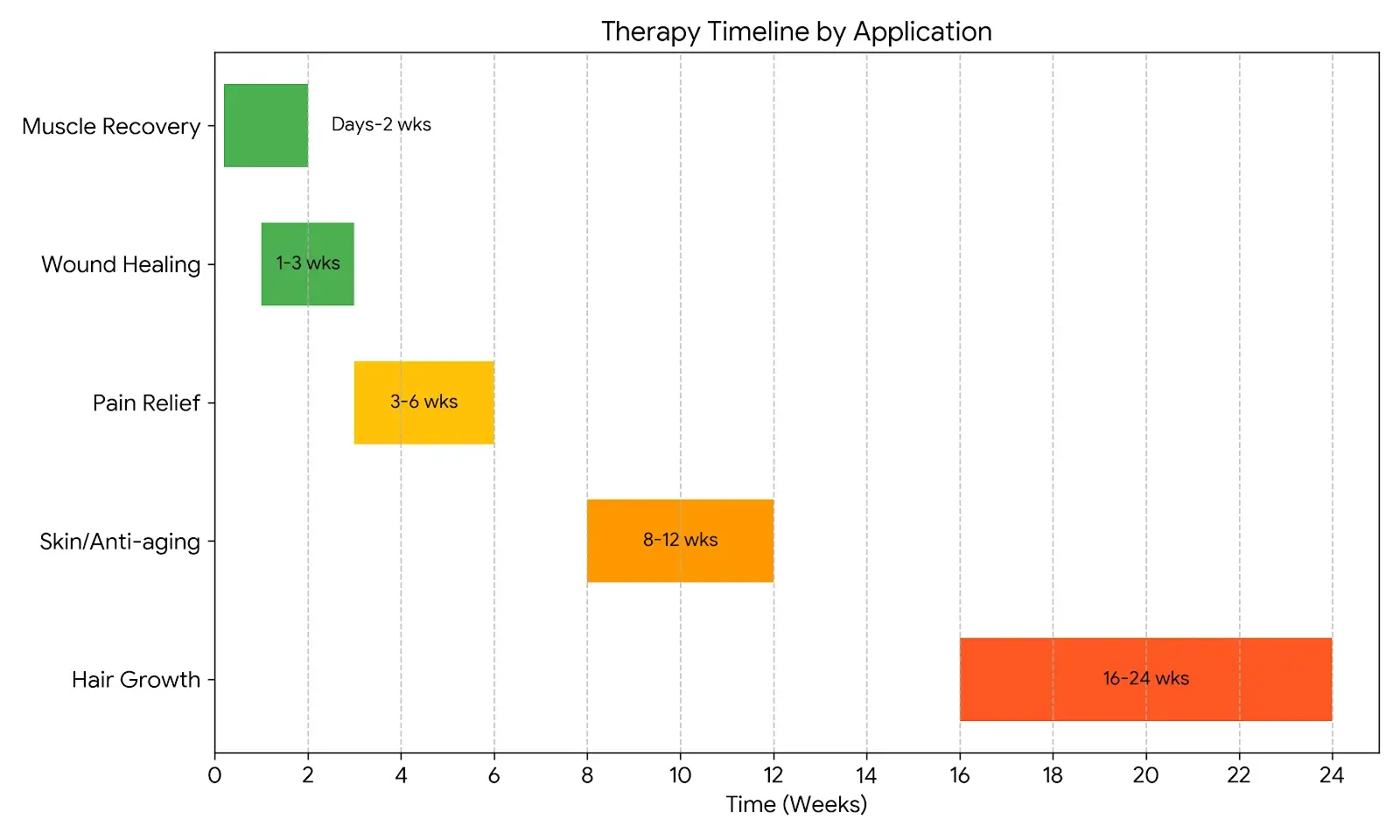
Muscle Recovery and Athletic Performance (Days to 2 Weeks)
What you’re treating: Post-workout soreness, muscle fatigue, recovery between training sessions
Why it’s relatively fast: You’re not trying to build new tissue permanently — you’re accelerating natural recovery processes that already happen quickly. Muscles repair relatively fast on their own; red light just speeds up the timeline slightly.
Clinical timeline: Research on athletes using red light therapy shows mixed but generally positive results. A meta-analysis found that when used immediately before or after exercise, red light therapy reduced delayed onset muscle soreness (DOMS) by 20-30% and lowered creatine kinase levels (a marker of muscle damage) within 24-72 hours post-exercise.
Session frequency in successful studies: Pre-workout use (15-20 minutes before training) or post-workout use (within 1-2 hours after training). Some athletes use both. Daily use during heavy training periods is common.
Acute vs cumulative effects: Unlike skin applications where benefits accumulate over months, muscle recovery benefits are more acute and session-dependent. Using red light after Monday’s workout helps with Monday’s recovery, but doesn’t necessarily compound into long-term performance gains. Though some studies suggest cumulative benefits to mitochondrial function with regular use.
Real-world application: Professional sports teams increasingly use red light therapy in recovery protocols. NBA, NFL, and Olympic athletes have incorporated it. Whether the effect is large enough to matter at elite levels is debated, but the safety profile is excellent, so there’s little downside to trying it.
My experience: I’m not an elite athlete by any stretch, but I lift weights 3-4 times per week. I started using red light on my legs and shoulders after heavy training days. Around week 2 of this protocol, I noticed I was slightly less sore the next day. Not dramatically — maybe I’d rate my soreness as 6/10 instead of 8/10. Enough that I kept doing it, but not enough that I’d swear it wasn’t placebo.
The bigger benefit I noticed was in recovery between sessions. I was able to train the same muscle groups with shorter rest periods without feeling overtrained. That showed up around week 3-4 of consistent post-workout use.
Realistic expectations: Don’t expect red light to turn you into a superhuman. Think of it as a marginal gain — maybe 5-10% faster recovery. In professional sports, that margin matters. For casual gym-goers, it’s nice to have but not game-changing.
Why Your Results Might Be Faster or Slower Than Average
Not everyone follows the textbook timeline. Some people see results faster than expected, others take longer. Here are the main factors that influence how quickly red light therapy works for you specifically.
Consistency and Frequency (The Biggest Factor)
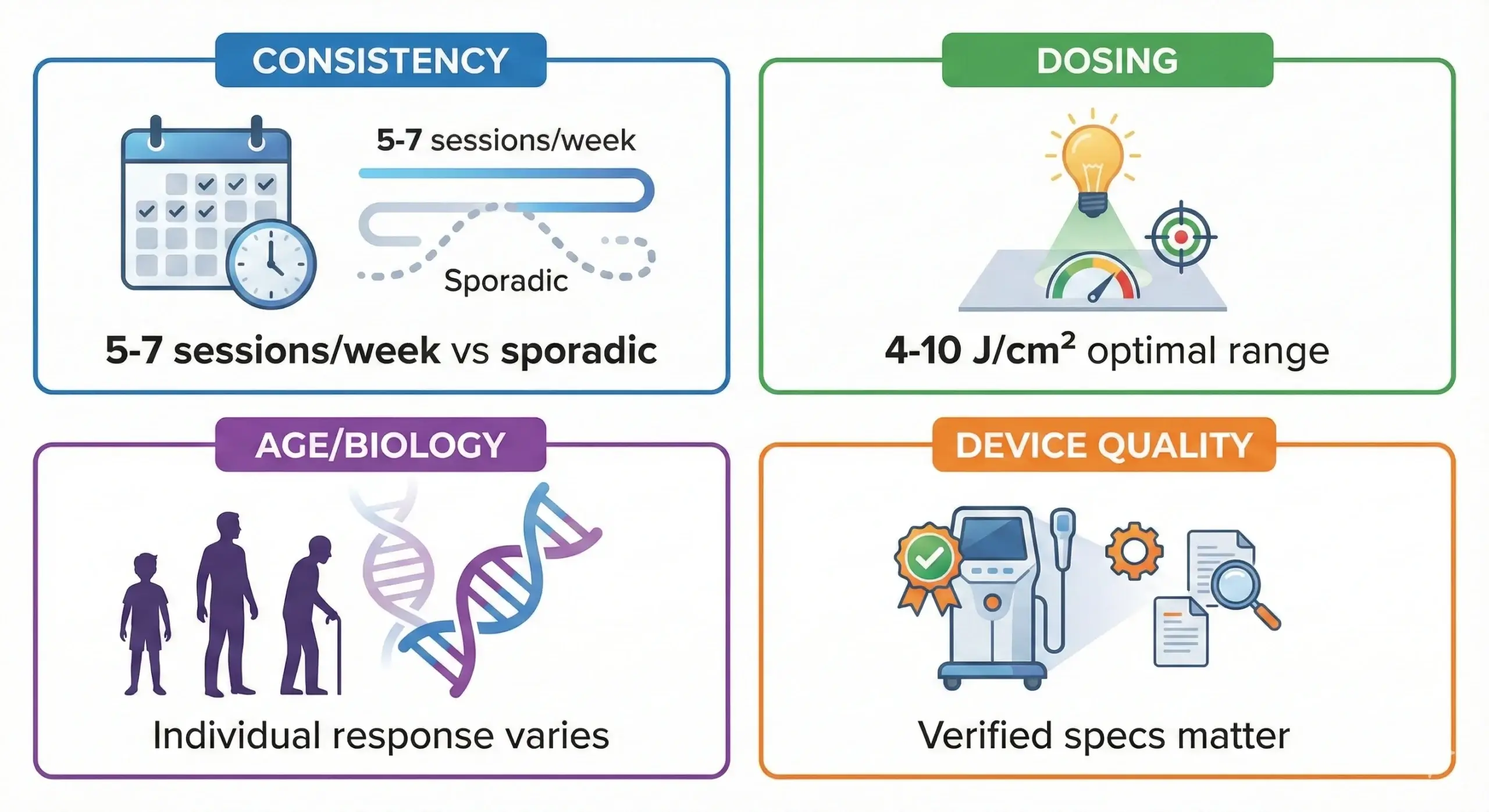
This is the single most important variable. All the clinical timelines assume consistent use at the frequency specified in the studies. If research shows results at 8 weeks with 3 sessions per week, that means 24 total sessions. If you’re only doing 1-2 sessions per week sporadically, your timeline extends proportionally.
The biology behind this: Gene expression changes are temporary without sustained stimulus. Each red light session turns on genes related to collagen production, antioxidant activity, and repair processes. But if you only stimulate this once per week, those genes turn back off between sessions. You never build enough momentum for cumulative effects.
Think of it like watering a plant. Water it consistently and it grows. Water it once, then not again for two weeks, and it barely survives. Red light therapy requires regular “watering” of your cellular processes.
My biggest lesson: Months 1-2, I was doing 3-4 sessions per week. Saw minimal results. Month 3, I committed to 5 sessions per week, never missing more than one day in a row. That’s when I started seeing actual changes. Same device, same dosing, just better consistency.
I tracked this obsessively in a spreadsheet because I’m annoying like that. The correlation between consistent weeks (5+ sessions) and visible progress was obvious in hindsight. Sporadic weeks showed no progress.
Minimum effective frequency: Based on the research, 3 sessions per week seems to be the floor for most applications. Below that, you’re probably not providing enough stimulus for sustained cellular changes. 5-7 sessions per week appears optimal for faster results, though daily use beyond 5-6 sessions shows diminishing returns in many studies.
Proper Dosing (Power and Time)
Not all red light sessions are equal. A 5-minute session with a weak device isn’t the same as a 15-minute session with a clinical-grade panel. Dosing matters enormously, and incorrect dosing is probably the second most common reason people don’t see results on expected timelines.
The critical equation: Dose (J/cm²) = Power (mW/cm²) × Time (seconds) ÷ 1000
Research consistently shows that the optimal dose range is 4-10 J/cm² per session for most applications. Too little (under 3 J/cm²) won’t trigger sufficient biological response. Too much (over 15 J/cm²) can actually reduce effectiveness due to the biphasic dose-response curve.
If your device outputs 50 mW/cm² at 12 inches and you’re only using it for 5 minutes, you’re getting 2.5 J/cm² — below therapeutic threshold. This explains why some people use red light for months and see nothing.
Conversely, if you have a high-powered device (150 mW/cm²) and you’re sitting 4 inches away for 20 minutes, you’re potentially overdosing at 18 J/cm², which could be reducing effectiveness.
My dosing evolution: My first device had no verified specs. I was probably underdosing for months without knowing it. When I upgraded to a device with third-party tested output (100 mW/cm² at 6 inches), I could actually calculate my dose. I target 6 J/cm² for face, which means 10 minutes at 10 inches. Once I dialed this in, my results timeline matched what research predicts.
How to verify your dose:
- Find your device’s actual power output (not marketing claims — look for third-party testing)
- Measure your distance from the panel
- Calculate dose using the formula above
- Adjust time or distance to hit 4-10 J/cm² range
If you can’t find reliable specs for your device, that’s a problem. You’re flying blind. Consider upgrading to a device with verified output.
Age and Baseline Skin Condition
Your age affects how quickly you’ll see results, particularly for skin applications. This isn’t fair, but it’s biology.
Why age matters: Younger skin produces collagen faster naturally. Someone in their 30s will see faster results than someone in their 60s because their cellular machinery is more efficient. Additionally, younger skin typically has less sun damage and oxidative stress to repair, so the starting point is better.
Studies on red light therapy for photoaging show that participants in their 40s-50s tend to see the most dramatic improvements because they have visible damage to improve but still-functional repair mechanisms. People in their 20s might not see much because there’s little damage to fix. People in their 70s+ might see slower results because collagen production naturally declines with age.
Baseline condition also matters: If you have severe photoaging, deep wrinkles, and significant skin damage, you might need longer than 12 weeks to see substantial improvement. Conversely, if you’re starting with mild concerns, you might see faster results.
For pain applications, baseline matters too. Someone with mild arthritis might respond faster than someone with severe degenerative joint disease. The extent of inflammation and tissue damage influences how quickly anti-inflammatory treatments can shift the baseline.
My situation: I started using red light at age 38 with moderate sun damage from years of outdoor activities without sunscreen (stupid younger me). My skin condition was probably ideal for seeing results — enough damage to improve, but not so severe that repair was overwhelmed. Someone in their late 20s with perfect skin might have been disappointed using the same protocol.
Wavelength and Device Quality
Not all red light devices emit the same wavelengths, and wavelength matters for penetration depth and cellular absorption. Devices emitting 660nm target surface skin effectively. Devices emitting 850nm penetrate deeper for muscle and joint applications. Combination devices offer both.
If you’re using a 660nm-only device for deep tissue pain relief, you might not see results on the expected timeline because the light isn’t reaching your target tissue. Similarly, an 850nm-only device might be less effective for facial anti-aging because you want surface-level stimulation.
Device quality variables:
- Actual wavelength (cheap devices sometimes emit outside therapeutic range)
- Power output consistency (does it deliver rated power throughout the session?)
- LED quality and lifespan (cheap LEDs degrade faster)
- Irradiance uniformity (is power consistent across the treatment area?)
A $50 Amazon panel claiming “clinical results” probably doesn’t deliver the same photon density as a $400 device with third-party testing. This affects your timeline directly. Underpowered devices require longer sessions or more frequent use to achieve the same dose.
My device journey: I started with a cheap panel. No results for 8 weeks. Switched to a reputable brand with verified specs. Started seeing results around week 6 with the new device. The difference wasn’t placebo — it was actual photon delivery.
If you’ve been using red light consistently for 12+ weeks at proper frequency and seeing zero results, your device might be the problem. Check actual specs, not marketing claims. If specs aren’t available, that’s your answer.
Individual Biological Variation
Even with perfect consistency, proper dosing, and quality devices, some people respond faster than others. This is true for every biological intervention — medications, exercise, diet changes. Red light therapy isn’t an exception.
Why people respond differently:
- Genetic differences in mitochondrial function
- Baseline inflammatory state
- Overall health and metabolic rate
- Hormonal factors
- Skin type and melanin content (darker skin absorbs some red light, potentially requiring slightly longer sessions)
- Existing medical conditions
There’s no way to predict ahead of time if you’ll be a fast or slow responder. You just have to try it consistently for the full timeline and see.
The frustrating reality: Two people can follow identical protocols and see results at different speeds. One might notice improvements at week 6, the other at week 10. Both are having real biological responses — the timelines just differ.
My observation: I’ve helped three friends set up their red light routines. Same device model, same protocol (5x/week, 12 minutes, 8 inches distance). Friend A saw visible skin improvements at week 7. Friend B at week 9. Friend C at week 11. All eventually saw results, but the timelines varied by a month despite identical protocols.
This is why the “8-12 week” timeline is a range, not a guarantee. Most people fall somewhere in that window, but outliers exist.
Early Signs of Progress (Week 2-6)
The hardest part of red light therapy is the void between starting and seeing obvious results. You’re doing the work, spending the time, but nothing seems different. This is where most people quit.
But there are subtle early indicators that biological changes are happening, even if you can’t see dramatic improvements yet. Learning to recognize these signs can help you stay motivated through the tough middle weeks.
Subtle Skin Texture Changes
Before you see wrinkle reduction or tone improvements, you might notice your skin feels different. This is one of the earliest signs and it’s easy to miss if you’re not paying attention.
What to notice:
- Skin feels slightly smoother when washing your face
- Makeup applies more evenly (if you wear makeup)
- Skin feels slightly firmer to the touch, less “loose”
- Pores might appear slightly smaller
These changes happen because collagen production has begun, but there’s not enough new collagen yet to visibly change wrinkle depth. Think of it as the foundation being built before the visible structure appears.
My experience: Around week 5, I noticed my moisturizer absorbed differently — it seemed to sit on my skin less and absorb faster. I also noticed my skin felt tighter when I moved my face, in a good way, not in a dry/uncomfortable way. I almost dismissed it as imagination, but I’d read that texture changes come before visual changes, so I noted it in my tracking log.
Looking back, this was the first real sign that something was happening at the cellular level. I just couldn’t see it yet.
Improved Healing of Minor Injuries
If you get a small cut, scrape, or pimple during your red light therapy routine, pay attention to how fast it heals compared to usual. This can be an early indicator that your cellular repair processes are enhanced.
Red light’s effect on wound healing is well-documented and tends to show up faster than cosmetic improvements. So even if you’re using red light primarily for anti-aging, faster healing of minor injuries suggests the therapy is working at a cellular level.
What to watch for:
- Cuts or scrapes heal 1-2 days faster than usual
- Acne lesions resolve faster
- Post-procedure healing (if you get facials, microneedling, etc.) seems quicker
- Bruises fade faster
My observation: I’m clumsy and frequently get small cuts while cooking. Around week 4-5 of consistent red light use, I noticed these were healing noticeably faster. A cut that would normally take 5-6 days to fully close was healing in 3-4 days. This wasn’t dramatic enough to be life-changing, but it was measurable and gave me confidence that biological effects were real.
Better Sleep or Energy (Anecdotal but Common)
This one isn’t well-documented in research, but many users report improved sleep quality or slightly better daytime energy when using red light consistently, particularly morning sessions. The mechanism might be related to circadian rhythm effects of light exposure or mitochondrial function improvements.
I’m cautious about this because it’s subjective and highly prone to placebo. But it’s common enough in user reports that it’s worth mentioning.
What people report:
- Falling asleep slightly easier
- Feeling more refreshed in the morning
- Less mid-afternoon energy crash
- Better overall sense of well-being
My experience: I do morning sessions specifically because I feel like it helps me wake up. Is this real or placebo? Honestly, I don’t know. I tried switching to evening sessions for a week and felt groggier in the mornings, so I switched back. Could be coincidence. Could be real. I err on the side of “if it helps me stay consistent, it doesn’t matter if it’s placebo.”
The point is: if you notice these subtle improvements, they might be early signs that the therapy is affecting your cellular function, even if skin changes aren’t visible yet.
Reduced Inflammation Markers (Pain Applications)
If you’re using red light for pain or inflammation, you might notice subtle improvements before major pain relief occurs. These early signs suggest anti-inflammatory effects are beginning.
What to watch for:
- “Better days” become more frequent (you don’t feel worse, not dramatically better yet)
- Stiffness upon waking is slightly reduced
- You can move through a fuller range of motion with less discomfort
- Pain levels are more stable (fewer severe flare-ups)
These changes are subtle and you might dismiss them as “good days” rather than treatment effects. But if you’re tracking pain levels consistently (which you should be), you might notice the baseline is slowly shifting down.
Friend’s experience: My friend with chronic knee pain kept a daily pain journal (0-10 scale). First 3 weeks: average 6.5-7/10 with lots of variation. Weeks 4-5: average dropped to 6/10, less variation. Week 6-7: average 5/10. He didn’t wake up one day suddenly pain-free. It was a gradual downward trend that only became obvious when looking at the data over weeks.
If you’re treating pain, track it. Your memory is unreliable. Numbers don’t lie.
Troubleshooting: You’ve Hit Week 12 and Nothing Has Changed
You’ve been consistent. You followed the protocol. It’s been 12 weeks or more and you see zero improvement. This is frustrating and unfortunately not uncommon. Let’s troubleshoot systematically
Verify Your Actual Consistency
Be brutally honest. How many sessions have you actually completed?
Most people think they’re more consistent than they actually are. Pull up your tracking log (you are tracking, right?) and count. If the studies show results with 3 sessions per week for 12 weeks, that’s 36 total sessions. Have you actually completed 36 sessions or did you miss weeks here and there?
Reality check questions:
- Did you skip entire weeks when you were busy or traveling?
- Did you do shorter sessions than intended?
- Were some sessions at the wrong distance or with incorrect positioning?
- Did you stop for a week or two and then restart?
If your actual session count is below 30 over 12 weeks, you haven’t hit the minimum threshold most studies used. You need to extend your timeline proportionally.
My honest assessment: When I review my first 12 weeks, I realized I only completed about 24 sessions, not the 36-40 I thought I’d done. I remembered the sessions I did, not the ones I skipped. This explained why my results lagged behind research timelines.
Fix: Actually track every session in a calendar or app. If you miss a day, note it. Be accountable to the data, not your memory.
Check Your Dosing Math
Pull out a calculator and verify your actual dose per session. This is where most “non-responders” discover the problem.
Step-by-step verification:
- What’s your device power output at your specific distance? (Not the max output at 6 inches — the actual output at YOUR distance)
- How many seconds are you using it per session?
- Calculate: (Power × Seconds) ÷ 1000 = Dose
If your dose is under 4 J/cm², you’re underdosing. If it’s over 15 J/cm², you might be overdosing and hitting the biphasic curve’s downslope.
Common dosing errors:
- Using manufacturer’s specs without accounting for distance (power drops with distance)
- Assuming “more is better” and overdosing
- Not knowing device specs at all and just guessing
My friend’s mistake: She bought a device claiming “high power” but it only output 40 mW/cm² at 12 inches (her preferred distance). She was doing 8-minute sessions, thinking that was enough. Her actual dose: 3.2 J/cm² — below therapeutic threshold. We increased her session to 12 minutes (4.8 J/cm²) and within 4 weeks she started seeing the changes she’d expected months earlier.
Fix: Calculate your actual dose. Adjust time or distance to hit 4-10 J/cm² sweet spot. If you can’t calculate it because specs aren’t available, your device might be the problem.
Evaluate Your Device Quality
If consistency and dosing are both correct and you’re still not seeing results, the device itself might be faulty or low-quality.
Red flags that suggest device issues:
- No third-party verified specs
- Device gets excessively hot during use
- LEDs have uneven brightness or flickering
- Device is suspiciously cheap (<$100 for large panels)
- Brand has no reputation or history
Cheap devices sometimes emit wavelengths outside the therapeutic range (630-670nm or 810-850nm). If your device is emitting 600nm or 700nm, it’s not going to produce the documented effects, regardless of consistency or dosing.
How to check:
- Contact manufacturer and ask for third-party testing reports (reputable brands have these)
- Look for spectral analysis showing actual wavelength output
- Check for FDA registration (not approval, but registration shows basic compliance)
If the manufacturer can’t or won’t provide this information, that’s your answer. The device probably isn’t delivering therapeutic wavelengths at therapeutic doses.
My upgrade: I spent the first 8 weeks with a cheap device and saw nothing. Upgraded to a device that cost 5x more but had published spectral analysis and third-party power testing. Within 5 weeks of using the quality device, I saw changes I never got from the cheap one. The difference wasn’t marginal — it was night and day.
Fix: If you suspect device quality issues, consider upgrading. Yes, it’s expensive. But spending months using an ineffective device is wasting even more — your time and effort.
Assess Your Treatment Goals vs Device Specs
Are you using the right wavelength for your goal?
If you’re trying to treat deep joint pain with a 660nm-only device, the light isn’t penetrating deep enough to reach the target tissue. You need 810-850nm near-infrared for deep tissue applications.
Conversely, if you’re using an 850nm-only device for facial anti-aging, you’re missing the surface-level benefits of 660nm red light that stimulate dermal collagen production.
Match wavelength to goal:
- Facial skin, anti-aging, wrinkles → 660nm primary (850nm bonus but not essential)
- Deep tissue pain, joints, muscles → 850nm primary (660nm won’t reach deep enough)
- General wellness, recovery → combination 660nm + 850nm ideal
Many people buy a device without understanding wavelength specificity, then get frustrated when it doesn’t work for their particular goal.
Friend’s error: She bought an 850nm-only panel for facial anti-aging because it was on sale. Used it consistently for 14 weeks with proper dosing. Saw minimal results. Why? The 850nm was penetrating past her facial skin into deeper tissue, not stimulating the dermal fibroblasts where collagen production happens. She needed 660nm for surface-level effects.
Fix: Verify your device wavelength matches your treatment goal. If there’s a mismatch, you either need to change goals or get a different device.
Consider That You Might Be a Slow Responder
If everything above checks out — consistency, dosing, device quality, wavelength match — and you’re still not seeing results at 12 weeks, you might simply be a slower biological responder.
This sucks to hear, but it’s reality. Some people need 16-20 weeks to see what others see at 8-10 weeks. Biological variation is real.
Before giving up:
- Extend to 16 weeks with perfect consistency
- Take before/after photos (your perception might be wrong)
- Get external feedback (ask someone close to you if they notice changes)
- Try increasing frequency (if you’re doing 3x/week, try 5x/week)
If you hit 20 weeks with verified consistency, proper dosing, quality device, and still see absolutely nothing, it’s possible red light therapy just doesn’t work for you. This is rare, but outliers exist in every biological intervention.
When to actually give up: 20+ weeks with verified protocol adherence and zero measurable change (not just “not as dramatic as I hoped,” but literally zero change) means you’re likely a non-responder. At that point, stopping is reasonable.
But most people never reach this point. Most “non-responders” are actually “non-adherents” or “under-dosers” who never gave it a fair trial.
What Happens After You See Results? (Maintenance Phase)
You hit week 12, you’re seeing real improvements, and you’re happy. Now what? Do you keep using red light at the same frequency forever? Can you cut back? Will results disappear if you stop?
Let me share what research shows and what I’ve learned from 2+ years of use.
Results Plateau, Then Require Maintenance
After 12-16 weeks of consistent use, most people notice results plateau. Improvements stop getting more dramatic with additional sessions. This is normal and expected.
Why plateaus happen: You’ve reached the maximum improvement possible given your biology and the extent of your starting condition. Red light enhanced your collagen production, reduced inflammation, and optimized cellular function. But there’s a ceiling — you can’t produce infinite collagen or become biologically 20 years younger.
At this point, continued use maintains your improvements rather than creating new ones. Think of it like strength training. Initial months produce noticeable gains. After a year, you’re maintaining strength more than building new capacity.
Research on maintenance: Studies that extend beyond 12 weeks show that benefits persist with continued use but don’t continue increasing proportionally. One study on skin improvements found that participants who continued treatment for 6 months maintained their week-12 results but didn’t see dramatic further improvement beyond that point.
My experience: Weeks 8-14 showed continuous improvement. Weeks 14-20 showed minimal additional change. I’d hit my plateau. My skin wasn’t going to get dramatically better with more sessions. But when I tried cutting back to 1x per week, I noticed results slowly diminishing over 4-6 weeks. When I returned to 3-4x per week, improvements came back.
The plateau isn’t a problem — it means you’ve optimized your response. Maintenance becomes the new goal.
Cutting Back Frequency (Finding Your Maintenance Dose)
Once you’ve achieved your desired results, you can typically reduce frequency while maintaining benefits. But how much you can cut back varies individually.
Common maintenance schedules:
- 3-4 sessions per week (down from 5-7 during treatment phase)
- 2-3 sessions per week (for those who respond strongly and maintain well)
- 1-2 sessions per week (rare, but some people maintain on minimal frequency)
There’s no one-size-fits-all maintenance schedule. You need to experiment and find your personal minimum effective frequency.
How to find your maintenance frequency:
- Once you hit plateau (week 12-16), stay at current frequency for 2 more weeks
- Reduce by 1-2 sessions per week
- Monitor for 4-6 weeks (take photos, track metrics)
- If results hold steady, that’s your maintenance frequency
- If results start declining, add back 1 session per week
My maintenance protocol: I started at 5x/week during treatment phase. Hit plateau around week 14. Reduced to 3x/week at week 16. Monitored for 2 months — results held steady. Tried dropping to 2x/week — noticed slight decline in skin texture after 6 weeks. Went back to 3x/week, which seems to be my sweet spot.
For body/recovery work, I’m more sporadic — 2-3 sessions per week when I’m training hard, sometimes skipping weeks when I’m less active. This seems fine because I’m not trying to maintain cumulative structural changes like collagen, just supporting acute recovery.
What Happens If You Stop Completely?
This is a common question and the answer depends on what you were treating.
For skin/anti-aging: Results gradually diminish but don’t disappear immediately. The collagen you built doesn’t vanish overnight — it has a natural turnover cycle. Studies suggest that visible skin improvements start declining around 4-8 weeks after stopping treatment, with results eventually returning to baseline over 3-6 months.
Think of it like exercise. If you stop working out, you don’t instantly lose all muscle. It takes months of inactivity to return to pre-training baseline. Same principle with red light-induced collagen improvements.
For pain/inflammation: Benefits tend to fade faster. Anti-inflammatory effects are more dynamic and require ongoing stimulus to maintain. Most pain management studies show that benefits decrease within 2-4 weeks of stopping treatment, with full return to baseline by 6-8 weeks.
For wound healing: This is acute, not maintenance. Once the wound is healed, there’s no “maintenance” needed.
My experience: I took a full month off red light during a trip abroad (didn’t bring my panel, didn’t have access to devices). By week 3-4 of the break, I noticed my skin texture regressing slightly — not dramatically, but noticeably less smooth than during active treatment. Fine lines looked slightly more pronounced. Within 2 weeks of restarting my 3x/week maintenance schedule, I was back to baseline.
This taught me that red light results are semi-permanent but require some ongoing maintenance to sustain. It’s not “do 12 weeks and you’re fixed forever.” It’s more “do 12 weeks to build improvements, then maintain with reduced frequency.”
The Truth About Red Light Therapy Timelines
After 2+ years of personal use, helping friends, and reading hundreds of studies, here’s what I wish someone had told me on day one about timelines and expectations.
It’s Not Fast, But It’s Real
The timeline sucks. 8-12 weeks feels like forever when you’re spending 10-20 minutes daily in front of a glowing panel, seeing zero visible progress for the first month.
But the slowness is actually part of why it works. You’re triggering natural biological processes — collagen synthesis, cellular repair, gene expression changes. These things take time in every context. A medication that instantly produced 30% more collagen would be a pharmaceutical miracle (or dangerous). Red light does it the slow, sustainable way.
The trade-off: No instant gratification, but also no side effects, no systemic impacts, no risk of tolerance or dependence. The biological changes are real and measurable, they just happen on cellular timelines, not marketing timelines.
My perspective: After wanting to quit multiple times in the first 6 weeks, I’m now glad it took that long. The changes I saw at month 3 have been sustained for almost 2 years with maintenance. Fast results might not have been lasting results. Patience was frustrating but ultimately worthwhile.
Improvements Are Modest, Not Miraculous
Let’s be honest about what “results” actually means. We’re talking about 20-35% reduction in wrinkle depth, not elimination. 25-40% pain reduction, not complete cure. 40-60% faster wound healing, not instantaneous regeneration.
These are meaningful improvements — measurable, noticeable, valuable. But they’re not “look 10 years younger” or “completely pain-free” transformations. Red light therapy is a tool, not magic.
Why this matters: If you go into red light therapy expecting dramatic, life-changing results, you’ll probably be disappointed even if the therapy is working as documented in research. You need realistic mental models of what success looks like.
A 30% reduction in wrinkle depth won’t make you look like a different person. But it might make you look slightly more refreshed, give your skin a smoother appearance, and make you more comfortable with your appearance. That’s real value, just not the Instagram-filter transformation some marketing implies.
Before/after photos help: This is why I harp on taking photos. Your brain adapts to gradual changes. You see yourself every day, so you don’t notice slow improvements. Photos taken 12 weeks apart show the objective difference. Without them, you might dismiss real results as “nothing changed.”
I look at my week 1 vs week 12 photos regularly. The difference is clear — better skin texture, softer lines around eyes, more even tone. But if you’d asked me at week 12 if anything changed without showing me the photos, I probably would have said “maybe a little?” Photos don’t lie.
It Requires Commitment, Not Just Time
12 weeks sounds manageable until you’re living it. It’s not just 12 weeks of time passing — it’s 12 weeks of active, consistent effort. Setting up the device, positioning correctly, protecting your eyes, cleaning the panel, tracking sessions. It’s work.
This is why I emphasize building it into an existing routine. If red light feels like an extra burden, you’ll skip sessions. If it’s part of your morning routine (for me: shower → red light → coffee → start day), it becomes automatic.
The mental game: Weeks 2-6 are the hardest. You’re putting in effort and seeing nothing. This is where “sunk cost fallacy” actually helps — you’ve already invested time and money, so you push through. Once results start appearing (week 7-9 typically), continuing becomes easy because you have visible motivation.
My hack: I put the panel in my bathroom and do red light sessions while listening to podcasts. This way it doesn’t feel like “wasted” time — I’m learning something while treating my skin. If I had to just sit there staring at the wall for 12 minutes, I would have quit months ago.
Find a way to make it enjoyable or at least neutral, not a chore. Otherwise, you won’t make it to the timeline where results appear.
Individual Variation Means Your Timeline Might Differ
I’ve given you the research-backed timelines: 8-12 weeks for skin, 3-6 weeks for pain, etc. But these are averages. You might be faster or slower.
If you’re at week 10 with good consistency and proper dosing and not seeing results yet, don’t panic. Give it to week 14-16. Some people are just slower biological responders. If you’re at week 6 and already seeing improvements, congratulations, you’re a fast responder.
The timelines are guideposts, not guarantees. Use them to set expectations and evaluate whether you’re on track, but allow for individual variation.
The only way to know: Try it properly (good device, correct dosing, consistent frequency) for the full timeline. There’s no shortcut to finding out if you’re a responder or what your personal timeline is.
How Long Does It Really Take? (My Honest Answer)
After all this research, personal experience, and observation, here’s my straight answer:
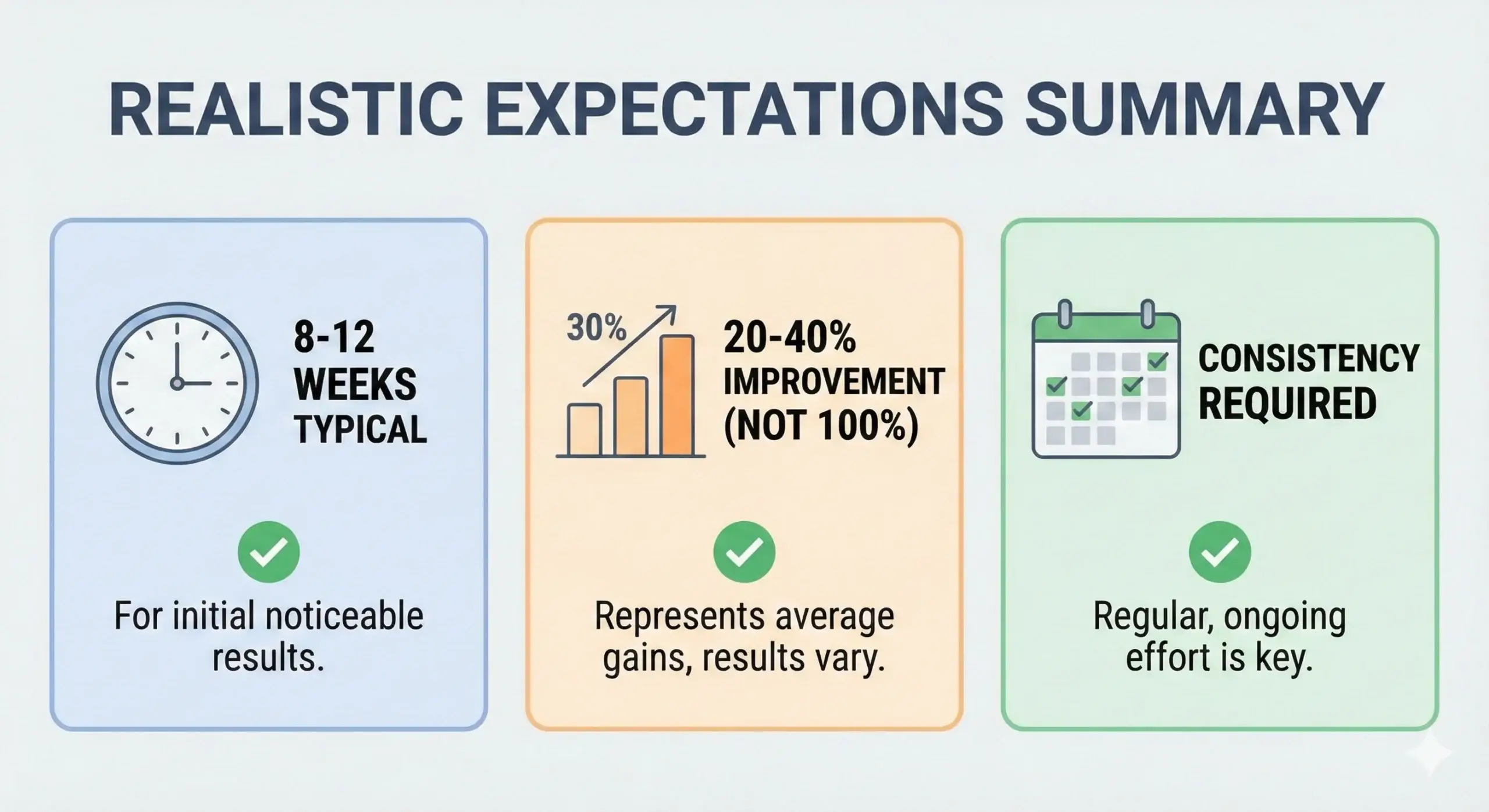
For most people, noticeable results appear around week 8-10 with consistent use (4-5 sessions per week) at proper dosing. Some applications respond faster (pain relief at 3-4 weeks, wound healing within days), others slower (hair growth at 16-24 weeks).
The first month is frustrating because cellular changes are happening but aren’t visible or felt. The second month is when subtle signs appear. The third month is when results become obvious to you and others.
My timeline: Week 7 is when I first noticed real changes. Week 10 is when my partner commented without prompting. Week 12 is when I looked at before photos and thought “okay, this actually works.”
What I’d tell someone starting today:
- Commit to 12 weeks minimum before judging results
- Take before photos (seriously, do this)
- Track every session so you know your actual consistency
- Calculate your dose properly — don’t guess
- Invest in a quality device with verified specs
- Build it into a routine that’s sustainable long-term
The timeline sucks. The middle weeks are boring and discouraging. But if you make it to week 10-12 with proper consistency and dosing, you’ll likely see the documented benefits research promises.
Is it worth the wait? For me, yes. The improvements I’ve maintained for 2 years justify the initial 3-month commitment. Your mileage may vary, but if you follow the protocol, you’ll know within 3 months whether red light therapy works for your biology.
For more detailed information on proper usage protocols, see our guide on how to use red light therapy at home.
Frequently Asked Questions
Can you see results after one session?
Generally, no. While cellular changes (ATP boost) happen instantly, visible results require accumulation. The only exception is acute muscle recovery or reducing inflammation from a fresh injury, which can sometimes be felt within 24 hours.
What happens if I stop?
The benefits of red light therapy are not permanent. Like exercise, if you stop stimulating the mitochondria, your skin and cells will slowly return to their baseline aging rate. Maintenance (2-3x week) is required to keep results.
Reference
This article is based on peer-reviewed research and FDA regulatory data. Below is the list of primary sources used:
- Karu T, Pyatibrat L, Kolyakov S, Afanasyeva N. Absorption measurements of a cell monolayer relevant to phototherapy: reduction of cytochrome c oxidase under near IR radiation.
View Study (PubMed) - Avci P, Gupta A, Sadasivam M, et al. Low-level laser (light) therapy (LLLT) in skin: stimulating, healing, restoring.
View Study (PubMed) - Wunsch A, Matuschka K. A controlled trial to determine the efficacy of red and near-infrared light treatment in patient satisfaction, reduction of fine lines, wrinkles, skin roughness, and intradermal collagen density increase.
View Study (PubMed) - Barolet D, Roberge CJ, Auger FA, Boucher A, Germain L. Regulation of skin collagen metabolism in vitro using a pulsed 660 nm LED light source: clinical correlation with a single-blinded study.
View Study (PubMed) - Bjordal JM, Johnson MI, Iversen V, Aimbire F, Lopes-Martins RA. Low-level laser therapy in acute pain: a systematic review of possible mechanisms of action and clinical effects in randomized placebo-controlled trials.
View Study (PubMed) - Mathes SH, Ruffner H, Graf-Hausner U. The use of skin models in drug development.
View Study (PubMed) - Jimenez JJ, Wikramanayake TC, Bergfeld W, et al. Efficacy and safety of a low-level laser device in the treatment of male and female pattern hair loss: a multicenter, randomized, sham device-controlled, double-blind study.
View Study (PubMed)