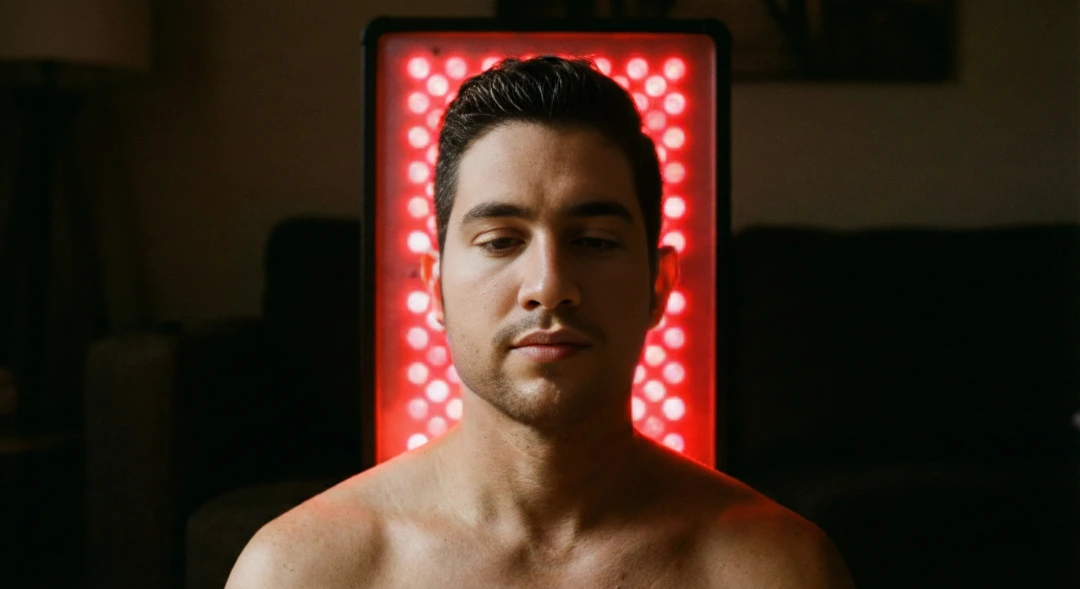
Red light therapy works by delivering red and near-infrared light (630-850nm) to your cells. When mitochondria absorb this light, they produce more ATP (cellular energy). This energy boost helpscells repair damage, reduce inflammation, and function better.
Unlike UV light, red light doesn’t damage DNA or heat tissue. Instead, it triggers natural biological processes already happening in your body — just more efficiently.
Editor’s Take: As a biohacking enthusiast, I think of it simply: depth dictates effect. Red light treats the surface (skin), while Near-Infrared targets the ‘engine’ underneath (muscles and mitochondria). That’s why I personally only use dual-chip panels that fire both wavelengths simultaneously—you get full-stack recovery in one session.
You can learn more about RLT in this article.
Understanding Red Light Therapy in Practice
Red light therapy is often discussed in theory, but its real-world application depends on measurable parameters like wavelength and exposure. I tested multiple RLT setups using a professional spectrometer to better understand how the therapy works in practice.
Open Red Light HubThe Basic Mechanism (3 Steps)
Step 1 — Light Reaches Your Cells
- Red light (660nm) penetrates ~5-8mm (skin level)
- Near-infrared (850nm) penetrates ~20-40mm (muscle, joints)
- Both reach mitochondria inside cells
Step 2 — Mitochondria Absorb the Light
- Mitochondria = “power plants” of your cells
- They contain a molecule called cytochrome c oxidase
- This molecule absorbs red/NIR light like a solar panel
Step 3 — Cells Produce More Energy (ATP)
- Light triggers mitochondria to make more ATP
- ATP = fuel for all cellular processes
- More ATP = better cell function, faster repair
What is the result? Cells produce more collagen, which has a positive effect on them. Muscles also recover faster. And thanks to this radiation, immune cells become less inflamed and the body is not overloaded.
Why These Specific Wavelengths Work
It’s all very simple and can be explained using the simple diagram below. For a better understanding, I also suggest reading all my researches.
660nm (Red Light)
Works on surface (skin)
Best for: wrinkles, scars, skin texture
850nm (Near-Infrared)
Penetrates deeper (muscle, joints)
Best for: pain, recovery, inflammation
Why not other colors?
Blue light: doesn’t penetrate (stays on surface)
UV light: damages cells
Green/yellow: not absorbed by mitochondria
| Wavelength | Depth | Best For |
| 660nm | Surface (~5mm) | Skin health |
| 850nm | Deep (~30mm) | Muscle, joints |
The Dose Matters (Goldilocks Principle)
As a user of such a device, I can say that the appropriate dose is individual for each person, and it is still worth consulting with your doctor. But I can tell you how I and many others I work with use RLT devices and approximately how much they use them.
How to calculate (keep it practical)
Most manufacturers of such devices say that 10-20 minutes at a distance of 6-12 inches is sufficient for a positive effect. However, devices may vary, so follow your device instructions — they’ve done the math for you.
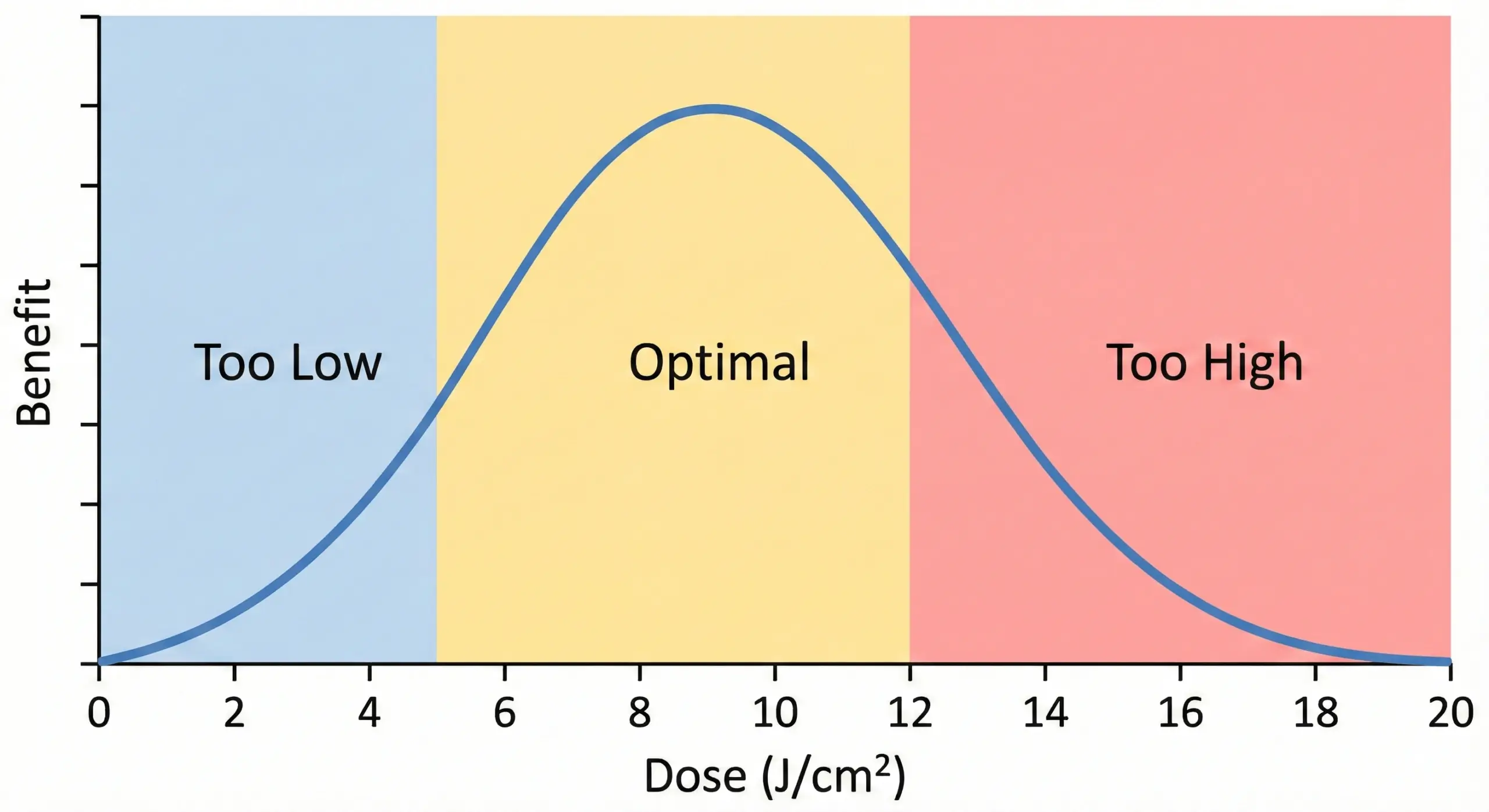
The approximate time still depends on the device, but I can say that when I experimented with my photobiomodulation device, too little light = no effect. When I started using the device as recommended by the manufacturer, because all devices have the approximate usage time written on them, the right amount = maximum benefit. I can also say that excessive use of such a lamp does not help at all and does not produce the desired effect, and that, logically, too much = diminishing returns.
What Happens After the Light Hits Your Cells?
Once your mitochondria start producing more ATP from red light exposure, that’s just the beginning. The real benefits come from what happens next — a chain reaction of biological effects that explain why people see improvements in skin, pain, and recovery.
Your Blood Vessels Open Up
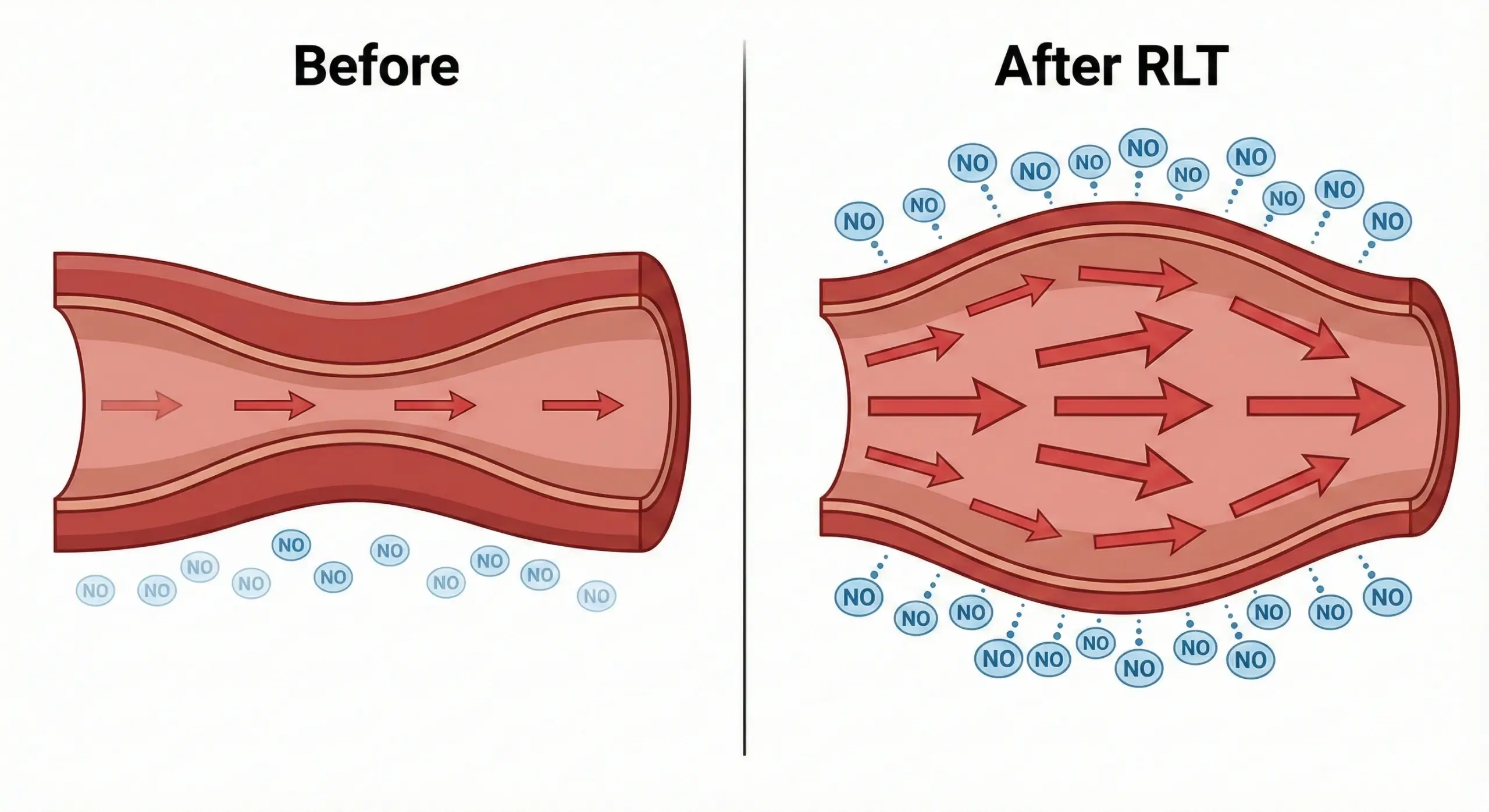
When red light hits mitochondria, it kicks out a molecule called nitric oxide (NO) that’s normally stuck to an enzyme inside. This NO doesn’t just disappear — it moves into nearby blood vessels and causes them to relax and widen.
Studies show this can boost local blood flow by 20-35% for a few hours after treatment. More blood flow means more oxygen and nutrients reaching your cells, plus faster removal of waste products. This is particularly useful for wound healing and muscle recovery — your body can deliver what it needs and clear out what it doesn’t.
The effect is local, not systemic. You’re not getting a cardio workout here. It’s just better circulation in whatever area you’re treating.
A Little Stress That Makes You Stronger
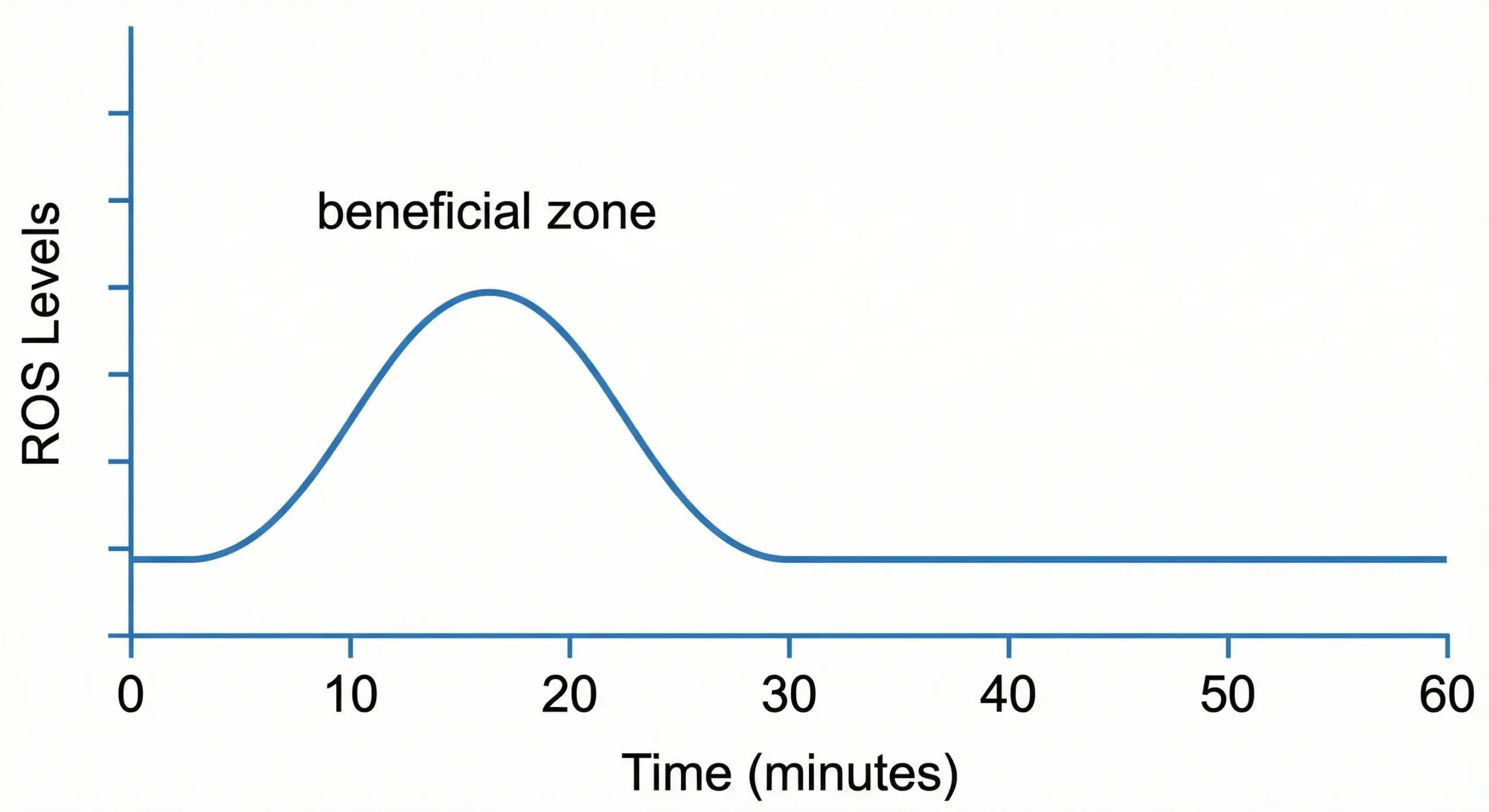
Here’s something counterintuitive: red light briefly increases reactive oxygen species (ROS) in your cells. ROS usually get a bad rap as “free radicals” that damage things, but a small, temporary spike is actually beneficial.
It’s called hormesis — the same principle behind exercise. Brief stress → your body adapts and gets stronger. In this case, the mild ROS bump activates your cells’ natural defense systems. Research found a 25-40% increase in antioxidant enzymes like SOD and catalase after red light exposure.
Your cells essentially get better at handling oxidative stress in the future. The spike lasts minutes, not hours, so you get the signaling benefit without the damage.
| ROS Level | Duration | What It Does |
| High (chronic) | Hours-Days | Damages cells (UV, pollution) |
| Low (brief) | Minutes | Triggers adaptation (RLT, exercise) |
| None | N/A | No stimulus, no change |
Your Cells Start Making Different Proteins
The ATP and ROS changes tell your DNA to turn on certain genes and turn off others. This is where the long-term effects come from.
Red light has been shown to increase genes for:
- Collagen (skin structure)
- Anti-inflammatory signals
- Antioxidant production
- Tissue repair factors
One study found that skin cells exposed to 660nm light made 160% more collagen than untreated cells. But this doesn’t happen overnight. Gene changes take hours, protein production takes days, and visible tissue changes take weeks.
This timeline explains why you need consistency. One session won’t do much because you need sustained gene expression changes to see results.
| Timeframe | What’s Happening | What You Notice |
|---|---|---|
| Minutes | ATP spike | Nothing |
| Hours | Genes turn on/off | Nothing yet |
| Days | New proteins being made | Maybe less inflammation |
| Weeks | Tissue actually changing | Skin looks better, less pain |
| Months | Structural remodeling | Significant improvements |
Less Inflammation
Red light affects the inflammatory signals your cells send to each other. Research shows it can drop pro-inflammatory markers (TNF-α, IL-6) by 30-45% while boosting anti-inflammatory IL-10 by about 25%.
This isn’t as powerful as taking ibuprofen, but it’s sustained and doesn’t come with side effects. It’s more like turning down the volume on chronic inflammation rather than hitting the mute button.
Quick comparison:
- Ibuprofen: Strong, fast, temporary, can mess with your stomach
- Red light: Moderate effect, builds over time, sticks around, minimal side effects
Does the Science Actually Work?
The cellular mechanism is real, but does it actually translate to benefits you can see or feel? Let’s be honest about what the research shows.
Where the Evidence Is Solid
Skin and Anti-Aging
This has the most research backing it. A 2014 review looked at 23 studies on red light for wrinkles and aging. The results were consistent:
- 20-36% reduction in wrinkle depth
- 15-30% improvement in skin roughness
- 31% increase in collagen density
The protocol that worked: 660nm wavelengths, 4-6 J/cm² per session, 2-3 times weekly for 8-12 weeks.
The FDA has actually cleared devices for “temporary improvement in wrinkles,” which means they had to submit clinical data showing it works.
Wound Healing
Pretty strong evidence here too, especially for diabetic ulcers and post-surgery wounds. A systematic review of 36 trials found:
- 40-60% faster healing for diabetic foot ulcers
- 25-35% quicker healing for surgical wounds
- Significant pain and inflammation reduction for burns
This makes sense given the mechanism — more ATP, better blood flow, more active repair cells. Some hospitals use it as an add-on to standard wound care.
Where Results Are Mixed
Pain Relief
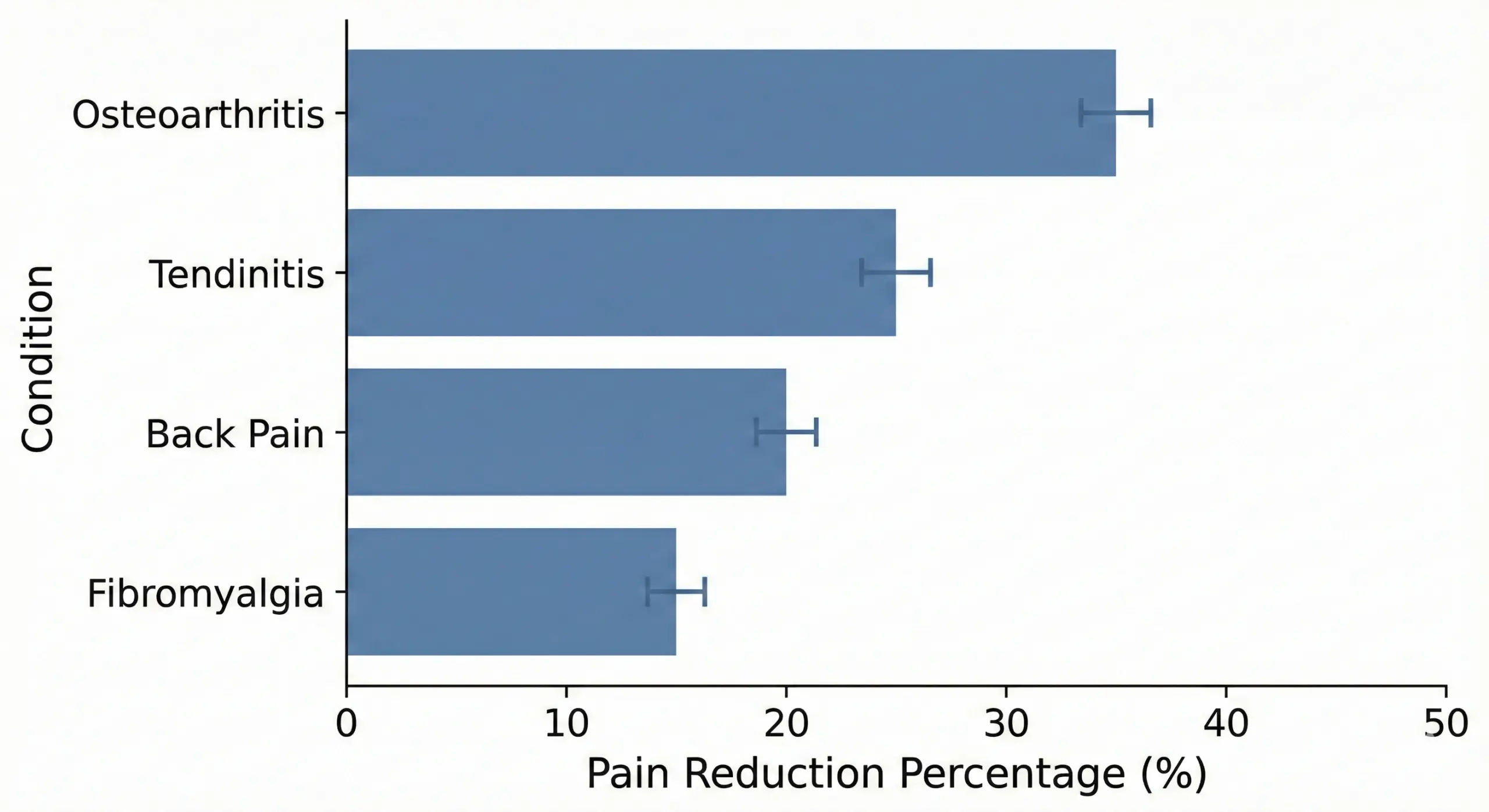
The research here is all over the place. A 2020 review of 47 pain studies found:
- Osteoarthritis: 25-40% pain reduction in most studies
- Tendinitis: worked in about 60% of trials
- Lower back pain: effective in roughly half the studies
The inconsistency probably comes from dosing differences and device quality. Studies using near-infrared (810-850nm) at higher doses (8-10 J/cm²) tended to show better results.
Worth noting: this isn’t instant relief like popping a pill. It’s more for chronic pain management where you’re looking for gradual improvement without medication side effects.
| Method | How Fast | How Long It Lasts | Downsides |
|---|---|---|---|
| NSAIDs | 30-60 min | 4-6 hours | Stomach issues |
| Opioids | 15-30 min | 4-12 hours | Addiction risk |
| Red light | Days-weeks | Cumulative | Takes patience |
Muscle Recovery
Athletes use this a lot, and there’s some decent research. A 2019 review of 29 studies found:
- 20-30% less muscle soreness (DOMS) when used around workouts
- 15-25% lower creatine kinase (a marker of muscle damage)
- 5-10% improvement in time to exhaustion in some trials
The mechanism fits — more ATP should help recovery. But whether to use it before or after workouts is still debated.
Early-Stage Stuff
Some applications are being studied but don’t have enough solid data yet:
Hair Growth: Small trials show 30-40% more hair density after 16-24 weeks with 650nm light. FDA has cleared some devices for this, but we need bigger studies.
Brain Function: Very early research on traumatic brain injury and cognitive decline. A few pilot studies (20-40 people) showed improvements, but that’s too small to draw conclusions.
Sleep: Some emerging data on morning red light affecting circadian rhythms, but the mechanism is different from the mitochondrial stuff we’ve been discussing.
When Studies Show Nothing
About 30% of published studies on red light show no effect. Usually it’s because:
- Wrong wavelengths (600nm or 900nm instead of the therapeutic range)
- Too weak (under 2 J/cm²)
- Bad devices (claimed specs don’t match actual output)
- Doesn’t make sense mechanistically (like using it for infections)
This is why device quality and proper protocols matter.
Common Myths About How It Works
Let’s clear up some misconceptions.
It Works by Heating Your Tissue
Not true. Red light therapy is non-thermal — it doesn’t heat you up like a sauna or heating pad.
Thermal imaging shows that 10-20 minutes of red or near-infrared light only raises skin temperature by 0.5-1.5°C. That’s way below what you’d need for heat therapy (usually 4°C+ increase).
Infrared saunas use far-infrared wavelengths (3,000-10,000nm) specifically designed to generate heat. Red light therapy uses 630-850nm, which gets absorbed by mitochondria instead of converting to heat.
If your device feels warm, that’s the LED housing, not the therapeutic effect.
You Need Expensive Lasers
Nope. LEDs work just as well for this.
The difference between lasers and LEDs is coherence — lasers emit focused, synchronized light while LEDs scatter it. For mitochondrial stimulation, coherence doesn’t matter. What matters is:
1.Right wavelength (630-670nm or 810-850nm)
2.Enough power (>30 mW/cm²)
3.Correct dose (4-10 J/cm²)
A 2017 study directly compared lasers and LEDs at the same wavelengths and doses — no significant difference in ATP production or outcomes.
Lasers are useful in medical settings when you need precision (like targeting a specific point), but for treating large areas like your face or back, LED panels work fine and they’re safer.
It Oxygenates Your Blood
Not how it works. Red light doesn’t add oxygen to your blood. Your blood oxygen level comes from your lungs and hemoglobin, not light.
What it does is improve blood flow via nitric oxide release (covered earlier). Better circulation means the oxygen already in your blood gets delivered more efficiently.
Think of it like improving your plumbing — you’re not adding more water, just making it flow better.
More Is Always Better
Wrong. Red light follows a dose-response curve where too much actually reduces effectiveness.
This has been documented repeatedly. Doubling the therapeutic dose often cuts effectiveness by 20-40%. Why?
1.Too much ROS becomes oxidative stress instead of a beneficial signal
2.Cells get overwhelmed and can’t process the stimulus
3.Temporary reduction in mitochondrial function (photoinhibition)
Most research uses 4-10 J/cm² per session. Going past 15 J/cm² rarely helps and can hurt. Optimal beats excessive.
How to Actually Use This Info
Now that you understand the mechanism, here’s how to apply it.
Quick Checklist:
Pick the right wavelength:
- Skin stuff → focus on 660nm
- Muscle/joint pain → focus on 850nm
- General use → get a combo device
Get the dose right:
- Skin: 4-6 J/cm²
- Deeper tissue: 6-10 J/cm²
- Formula: Dose = (Power × Time in seconds) ÷ 1000
Position matters:
- Usually 6-12 inches from your skin
- Bare skin only (clothes block light)
- Closer = more intense but covers less area
Be consistent:
- Minimum 3 times per week
- Better: 5-7 times per week for the first 2-3 months
- Then 3x weekly for maintenance
Give it time:
- Take before photos if treating skin
- Log your pain levels if that’s your goal
- Wait 8-12 weeks before deciding if it’s working
What Actually Matters
Based on how the mechanism works:
Wavelength precision isn’t optional. Your device needs to emit 630-670nm or 810-850nm. Other wavelengths won’t activate cytochrome c oxidase efficiently. If the manufacturer won’t tell you the exact wavelengths, skip it.
Dosing is everything. Studies that show results use 4-10 J/cm². Under 2 J/cm² probably won’t trigger the cascade. Over 15 J/cm² runs into the biphasic curve problem.
Be patient. The timeline from ATP boost to visible results is:
- ATP increase: minutes (you won’t notice)
- Gene changes: 24-72 hours
- Protein production: days
- Tissue remodeling: weeks to months
Daily beats intensive. Research shows 10 minutes daily works better than 30 minutes twice weekly, even if the weekly total is similar. Regular stimulation keeps gene expression elevated.
When to Expect Results
| What You’re Treating | How It Works | Realistic Timeline |
|---|---|---|
| Skin/wrinkles | Collagen production | 8-12 weeks |
| Wounds | Faster cell growth | 2-6 weeks |
| Pain | Less inflammation | 2-8 weeks |
| Muscle soreness | ATP + reduced inflammation | Days to 2 weeks |
| Hair growth | Follicle activation | 16-24 weeks |
When It Probably Won’t Work
The mechanism also shows limitations:
- Bacterial infections — red light doesn’t kill bacteria
- Deep organs — light can’t reach 10+ cm deep
- Conditions needing medication — this isn’t a drug substitute
- Instant relief — onset is gradual, not immediate
Red light enhances your body’s natural processes. It doesn’t replace them or override them. If you have a medical condition, talk to your doctor.
Bottom Line
Red light therapy works through real biology — ATP production, blood flow, gene expression. It’s not magic or placebo.
The key is doing it right: correct wavelengths, proper dose, consistent use, realistic expectations. When those align, the cellular changes translate into actual benefits.
Reference
This article is based on peer-reviewed research and FDA regulatory data. Below is the list of primary sources used:
- Hamblin MR. Mechanisms and applications of the anti-inflammatory effects of photobiomodulation. AIMS Biophys.
View Study (PubMed) - Huang YY, Chen AC, Carroll JD, Hamblin MR. Biphasic dose response in low level light therapy. Dose Response.
View Study (PubMed) - Avci P, Gupta A, Sadasivam M, et al. Low-level laser (light) therapy (LLLT) in skin: stimulating, healing, restoring. Semin Cutan Med Surg.
View Study (PubMed) - Chung H, Dai T, Sharma SK, et al. The nuts and bolts of low-level laser (light) therapy. Ann Biomed Eng.
View Study (PubMed) - Wunsch A, Matuschka K. A controlled trial to determine the efficacy of red and near-infrared light treatment in patient satisfaction, reduction of fine lines, wrinkles, skin roughness, and intradermal collagen density increase. Photomed Laser Surg.
View Study (PubMed)