Does it work for anti-aging? Yes — 630–660nm red light stimulates fibroblast activity and collagen synthesis with consistent evidence across multiple RCTs. Visible improvement in fine lines and skin texture appears after 8–12 weeks of consistent use.
Best wavelength for face: 630–660nm as the primary target. Near-infrared (850nm) penetrates deeper than necessary for surface skin goals — useful for dual-wavelength devices, but not the priority for facial anti-aging.
Protocol: 10–15 minutes daily, 4–6 inches from skin (or mask contact distance), 5–7 days per week.
Timeline: Texture and tone improvements visible around week 4–6. Fine line depth reduction measurable at week 8–10. Firmness and laxity — 12–16 weeks minimum.
What it won’t do: Eliminate decades of UV damage in a month. Replace retinoids or sunscreen. Fix volume loss from fat redistribution. Red light works at the cellular level and produces real, measurable results — but it operates on biology’s timeline, not marketing’s.
The thing most guides miss: Face skin is significantly thinner than body skin. This means 660nm penetrates proportionally deeper relative to the target tissue — the dermis, where fibroblasts live and produce collagen. You don’t need 850nm to reach collagen-producing cells on the face the way you need it for lumbar muscle treatment. The protocol is different, the wavelength priority is different, and so is the device format that makes the most sense here.
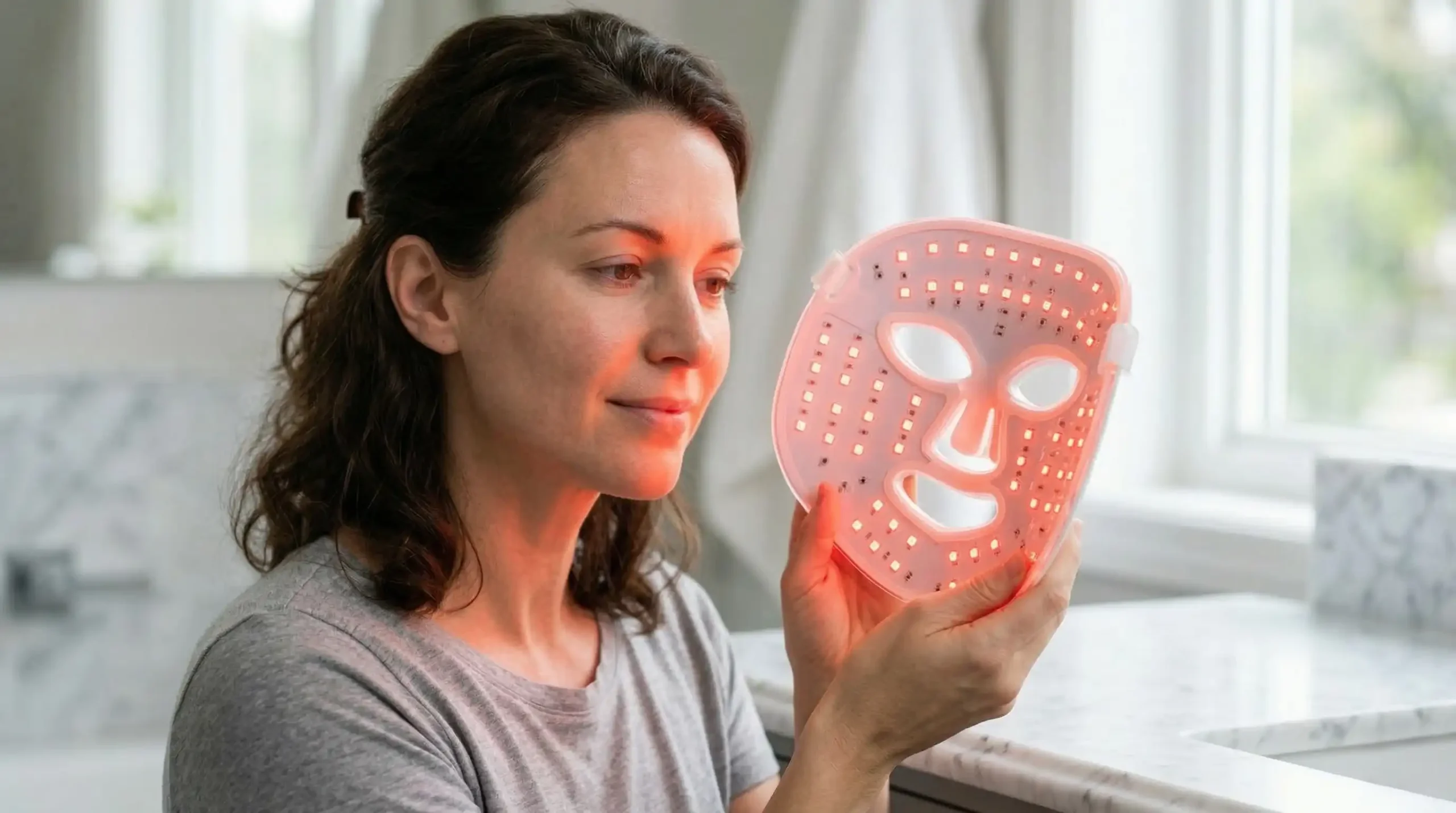
Understanding Red Light Therapy in Practice
Red light therapy is often discussed in theory, but its real-world application depends on measurable parameters like wavelength and exposure. I tested multiple RLT setups using a professional spectrometer to better understand how the therapy works in practice.
Open Red Light HubHow Red Light Affects Aging Skin at the Cellular Level
Skin aging is largely a collagen story. Collagen makes up roughly 70–80% of your skin’s dry weight, is produced by fibroblasts in the dermis, and its production declines approximately 1% per year after age 20. By your 40s, the structural scaffold that keeps skin firm and smooth is measurably degraded — and UV exposure, smoking, and chronic inflammation accelerate this degradation significantly faster than age alone.
Red light at 630–660nm does something specific and well-documented to fibroblasts: it activates them.
When red photons hit cytochrome c oxidase in fibroblast mitochondria, cellular energy production increases. More ATP means more active fibroblasts. More active fibroblasts means more collagen, more elastin, and more hyaluronic acid synthesis. The downstream effects — improved skin density, reduced fine line depth, more even texture — are the visible result of upregulating this cellular activity over consecutive weeks.
The four core mechanisms:
Collagen Type I and III synthesis: Multiple studies confirm increased expression of collagen-related genes in dermal fibroblasts following 630–660nm exposure. Both structural collagen types respond — Type I for tensile strength, Type III for elasticity. The Arndt-Schulz principle applies here: moderate doses upregulate synthesis, excessive doses can paradoxically inhibit it. Protocol precision matters.
MMP downregulation: Matrix metalloproteinases are enzymes that degrade collagen. UV exposure and chronic inflammation upregulate MMP-1 and MMP-3. Red light has been shown to suppress their expression in skin cells — meaning it simultaneously increases collagen synthesis and reduces the rate of breakdown. This dual action is more powerful than topical interventions that only work on one side of the equation.
Improved microcirculation: Near-infrared component (if present in your device) triggers nitric oxide release, dilating capillaries and improving oxygen and nutrient delivery to dermal tissue. You may notice a mild flush immediately after treatment — this is normal vasodilation, not irritation.
Inflammaging interruption: Chronic subclinical inflammation is one of the primary drivers of accelerated skin aging. The anti-inflammatory cascade from photobiomodulation — reduced IL-1β, IL-6, TNF-α — directly counters this mechanism. Particularly relevant for rosacea-prone or reactive skin types.
The Research: What Clinical Studies Actually Show
The dermatological literature on photobiomodulation for skin rejuvenation is among the most consistent in the entire RLT space.
Research overview:
| Study | Design | Wavelength | Duration | Key Result |
|---|---|---|---|---|
| Barolet et al., J. Photochem. Photobiol. (2014) | RCT split-face | 633nm | 4 weeks / 12 sessions | Increased collagen density on histology, reduced wrinkle depth by profilometry vs untreated side |
| Wunsch & Matuschka, J. Cosmetic & Laser Therapy (2014) | RCT, 76 patients | 633nm + 830nm | 30 weeks | 91% improved skin tone, 87% reduced fine lines, confirmed by blinded photography |
| Lee et al., J. Dermatological Treatment (2018) | RCT, 36 patients | 660nm | 8 weeks | Significant increase in dermal collagen density vs control, improved Fitzpatrick wrinkle scale |
| Systematic review, Seminars in Cutaneous Med. & Surgery | 19 studies | 630–660nm | Varies | Consistent evidence for fine line, laxity, and photoaging improvement across skin types |
One pattern worth noting across these studies: devices with verified irradiance of 40–80 mW/cm² at treatment distance produce the results. Consumer devices vary enormously in actual output versus claimed specs. A device that advertises 660nm but doesn’t reach therapeutic irradiance will produce weaker results than the literature predicts — the research parameters need to translate to your actual device.
Protocol: Exactly How to Use Red Light for the Face
Device Format: Mask vs Panel
This decision has more practical impact on your results than most people realize.
| Factor | Face Mask | Panel |
|---|---|---|
| Distance consistency | Fixed (0–1 inch contact) | Variable — you manage this manually |
| Coverage | Full face simultaneously | Area-by-area |
| Hands-free | Yes | No (unless on stand) |
| Eye management | Built-in shielding on quality devices | Close eyes or use goggles |
| Versatility | Face only | Face + body |
| Best for | Dedicated facial anti-aging protocol | Multi-area use + face |
For a dedicated facial anti-aging protocol, masks win on consistency. The fixed distance eliminates the irradiance variability that comes from holding a panel slightly differently each session — and consistency of dose over 8–12 weeks is what the research is built on.
The Protocol
| Parameter | Value |
|---|---|
| Primary wavelength | 630–660nm |
| Secondary wavelength | 830–850nm (if dual-wavelength device available) |
| Distance — panel | 4–6 inches |
| Distance — mask | Contact / 0–1 inch |
| Session duration | 10–15 minutes |
| Frequency | Daily, minimum 5x per week |
| Minimum treatment period | 8 weeks for visible anti-aging results |
| Maintenance after 12 weeks | 3–4x per week |
Step-by-Step Session
1. Cleanse thoroughly. Remove all makeup, SPF, and skincare products before treatment. Any residue on skin creates a barrier between light and tissue. Use a gentle cleanser, pat completely dry. Nothing on the face before the session.
2. No actives before treatment. Retinoids and strong AHAs increase skin photosensitivity and permeability. Applying them before red light risks amplified irritation even in tolerant skin. Apply everything after.
3. Eye protection. For masks: quality FDA-cleared devices have built-in eye shielding — follow manufacturer guidance. For panels: close your eyes, or use provided goggles. The light is not ionizing and brief exposure isn’t dangerous, but prolonged direct LED exposure at close range is uncomfortable and unnecessary. Detailed breakdown in the eye safety guide.
4. Run your session. 10–15 minutes. Stay relaxed. The cellular response happens whether you feel warmth or nothing — sensation isn’t a reliable indicator of dose delivered.
5. Apply serums immediately after. There’s evidence that photobiomodulation temporarily increases transient skin permeability. Post-treatment is the optimal window for Vitamin C, niacinamide, hyaluronic acid, or your existing actives. Retinoids are fine here — just not before.
6. SPF for morning sessions. Red light doesn’t create photosensitivity, but you should be wearing SPF anyway — and if your fibroblasts are more actively rebuilding collagen, unprotected UV exposure is directly undermining that work.
Sequencing with Your Skincare Routine
| Skincare Element | Before RLT | After RLT | Notes |
|---|---|---|---|
| Cleanser | ✅ Required | — | Always cleanse before |
| Retinoids | ❌ | ✅ Wait 20–30 min | Reduces irritation risk |
| Vitamin C | ❌ | ✅ Immediately after | Enhanced absorption window |
| Niacinamide | ❌ | ✅ Immediately after | Compatible, complementary MMP effects |
| Strong AHAs/BHAs | ❌ | ⚠️ Same evening only | Don’t combine at close timing |
| SPF | ❌ | ✅ Required (AM) | Non-negotiable for collagen preservation |
Results by Skin Concern
Different aging concerns respond at different timelines and to different degrees. Setting specific expectations by concern prevents abandonment before the protocol has time to work.
| Skin Concern | Mechanism | Expected Timeline | Response Level |
|---|---|---|---|
| Redness and reactive skin | Anti-inflammatory cytokine reduction | 2–4 weeks | Strong |
| Texture and pore appearance | Improved cellular turnover, collagen surface remodeling | 4–6 weeks | Strong |
| Post-acne hyperpigmentation | Accelerated tissue repair, reduced inflammation | 6–8 weeks | Moderate–Strong |
| Fine lines (superficial) | Fibroblast upregulation, collagen Type I/III synthesis | 8–10 weeks | Moderate–Strong |
| Deep wrinkles (UV damage) | Partial collagen remodeling | 12–16 weeks | Moderate |
| Skin firmness and laxity | Structural collagen remodeling | 12–16 weeks | Moderate |
The fastest responders are texture, tone, and redness — because these are driven primarily by anti-inflammatory effects and superficial cellular turnover, which respond quickly. The slowest is firmness, because it requires actual structural collagen to be synthesized and cross-linked — a biological process with a fixed minimum timeline regardless of device power.
Stacking Red Light with Your Skincare
Red light works alongside most evidence-based actives — in some cases synergistically, targeting different parts of the same process.
Retinoids + RLT: A powerful pairing. Retinoids upregulate collagen synthesis via RAR nuclear receptors. Red light upregulates it via mitochondrial activation. Different pathways, additive effects. Sequence correctly: RLT first, retinoids after 20–30 minutes.
Vitamin C: Apply post-session. Vitamin C is a cofactor in collagen synthesis — specifically required for hydroxylation of proline and lysine residues during collagen assembly. With fibroblasts more active from photobiomodulation, adequate Vitamin C availability directly supports the increased synthesis. Post-treatment permeability may also improve absorption.
Niacinamide: Compatible and complementary. Niacinamide independently reduces MMP activity and strengthens the skin barrier — both align with RLT’s effects. No timing conflicts.
SPF: Non-negotiable. UV exposure directly degrades the collagen red light is helping your skin rebuild. These two work against each other without protection.
The biggest mistake in stacking is applying strong actives immediately before treatment. The common RLT mistakes guide covers this and six other protocol errors that silently undermine results.
Frequently Asked Questions
How soon will I see results on my face?
The first changes most people notice are in tone and texture — subtle evening of redness and smoother surface texture starting around week 4. Fine line depth reduction becomes measurable around week 8–10. Firmness and laxity take 12–16 weeks of consistent treatment. Full realistic timelines by concern are covered in the how long does RLT take to work guide.
Is 660nm or 850nm better for facial anti-aging?
660nm is the priority for facial skin — it targets the epidermis and superficial dermis precisely where collagen-producing fibroblasts are most active. 850nm penetrates 30–40mm, which is relevant for body applications like back muscle or joint pain but goes well beyond the target tissue for surface skin goals. Dual-wavelength devices offer both, and there’s evidence for synergy — but if you have to choose, 660nm for the face. Full breakdown in the 660nm vs 850nm guide.
Is it safe for all skin tones?
Yes. Photobiomodulation targets mitochondria, not melanin — unlike laser treatments that can cause hyperpigmentation in darker skin tones. Studies confirm comparable efficacy and safety across Fitzpatrick skin types I–VI. No increased risk from higher melanin content.
How does it compare to professional treatments like RF or microneedling?
Different mechanisms, different timelines, different cost points. RF (radiofrequency) and microneedling create controlled injury to trigger repair — faster initial collagen response, more downtime, more cost. Red light works by stimulating existing cell function without injury — slower visible results, no downtime, repeatable daily at home. Many dermatologists use them in combination rather than substituting one for the other.
🔴 The Device That Makes This Protocol Practical
Valo Glow Face Mask — Built for Exactly This Protocol
Dedicated 660nm + additional wavelength LED mask. FDA-cleared. Fixed contact distance eliminates the irradiance consistency problem that undermines home panel protocols for the face.
What it gets right: four wavelengths verified, built-in eye shielding, hands-free design that makes daily 10–15 minute sessions actually sustainable over the 8–12 weeks this protocol requires.
The full technical breakdown — wavelengths verified, irradiance measurements, direct comparison against Omnilux and CurrentBody — is in the review.
→ Read the Valo Glow Face Mask Review
Internal Links
- Red Light Therapy: The Definitive Guide (2026)
- 660nm vs 850nm — Which Wavelength Do You Actually Need?
- The Simple Dosing Guide (No Math Required)
- Red Light Therapy for Acne: Protocol, Evidence & Results
- 7 Red Light Therapy Mistakes Killing Your Results
- How Long Does Red Light Therapy Take to Work?
- Red Light Therapy Eye Safety Guide
- Valo Glow Face Mask Review: Worth $300?
Sources
- Barolet D. et al. — Journal of Photochemistry and Photobiology B, 2014. Split-face RCT: 633nm red light, increased dermal collagen density and reduced wrinkle depth vs untreated control.
- Wunsch A., Matuschka K. — Journal of Cosmetic and Laser Therapy, 2014. 76 patients, 633nm + 830nm, 30 weeks: 91% improved skin tone, 87% fine line reduction confirmed by blinded photography.
- Lee S.Y. et al. — Journal of Dermatological Treatment, 2018. RCT: 660nm, 8 weeks, significant increase in dermal collagen density vs control group.
- Avci P. et al. — Seminars in Cutaneous Medicine and Surgery, 2013. Systematic review of 19 studies on LED phototherapy for photoaged skin.

1 thought on “Red Light Therapy for Face & Anti-Aging: Protocol, Evidence & Results (2026)”