⚡ Quick Summary (TL;DR)
- ⏱ Typical Time: 10–20 minutes per area.
- 📏 Distance: 6–12 inches (15–30 cm).
- 📅 Frequency: 3–5 times per week (Daily for acute pain).
- 💡 Key Rule: Skin needs less energy (further distance) than deep muscles.
“If you just bought a red light therapy panel and you’re staring at it wondering ‘how long do I actually stand here?’—I get it. The internet is full of contradictory advice. Manufacturers tell you one thing, Reddit tells you another, and nobody seems to agree.”
The Short Answer:
For most home devices (panels with irradiance >80mW/cm²), the optimal dose is generally defined as 10–20 minutes per session at a distance of 6–12 inches. However, the specific “recipe” depends entirely on your goal.
Understanding Red Light Therapy in Practice
Red light therapy is often discussed in theory, but its real-world application depends on measurable parameters like wavelength and exposure. I tested multiple RLT setups using a professional spectrometer to better understand how the therapy works in practice.
Open Red Light HubWhy Dosing Matters: The Biphasic Dose Response (Simplified)
Red light therapy follows what scientists call a “biphasic dose response.” Think of it like watering a plant.
- Too little water? The plant doesn’t grow.
- Just right? It thrives.
- Too much water? You drown the roots and kill it.
Light works the same way on your cells. There’s a “Goldilocks Zone” where your mitochondria get energized, collagen production ramps up, and inflammation drops. Go below that zone, nothing happens. Go above it, and you actually inhibit the beneficial effects.
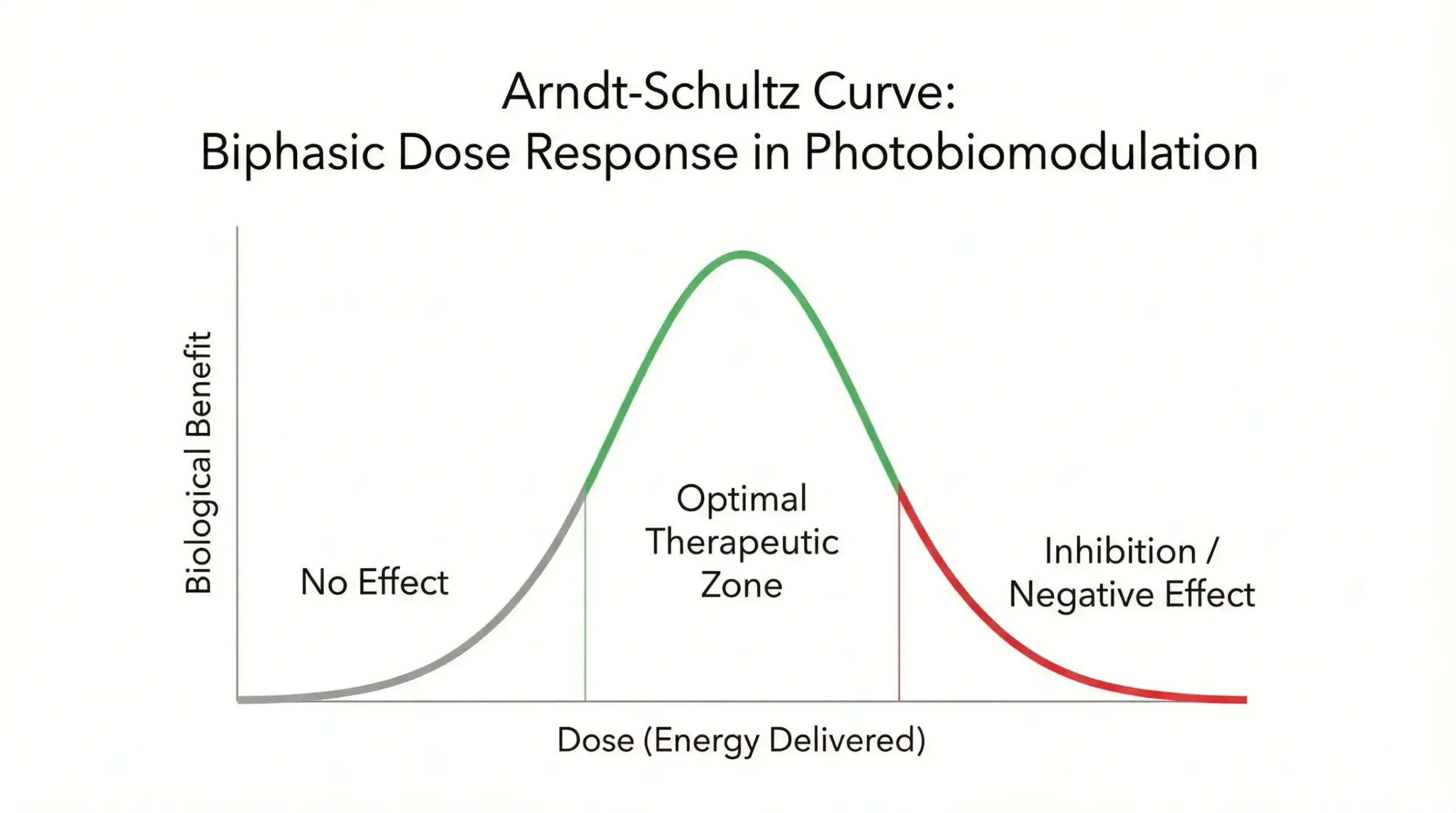
This isn’t just my opinion—it has been demonstrated across a large body of published research. The tricky part is that your “zone” depends on three things: your device’s real power output, distance from the panel, and session length.
Most manufacturers lie about power. I’ve measured $800 panels that claim 100mW/cm² but deliver only 60mW/cm² at 6 inches. That’s why following the manual blindly can lead to disappointing results.
Rule-of-Thumb Usage Table
Instead of complex math, here are the ranges used by most experts and practitioners.
| Goal | Distance | Time | Frequency |
|---|---|---|---|
| Skin Health / Anti-Aging | 12–18 inches | 5–10 mins | 3–5x per week |
| Muscle Recovery | 6–12 inches | 10–15 mins | Daily or Post-workout |
| Joint Pain / Inflammation | 6 inches | 10–20 mins | 4–7x per week |
| Hair Growth | 6–12 inches | 10–15 mins | 3–4x per week |
It is well-documented that longer wavelengths (near-infrared) penetrate deeper into tissue compared to visible red light, which is why we stand closer for muscle recovery.
Fred’s Note: These are estimates based on standard panels (100–150W total power, mixed 660nm/850nm). Individual responses vary, and comfort levels can differ between users. If your skin feels uncomfortably warm during a session, move back.
Why Doses Are Different: Skin vs. Deep Tissue
You might notice in the table above that deep tissue issues (like knee pain) require significantly more energy than skin issues (like wrinkles). Here is the logic:
- Targeting Skin (Surface): Your skin cells absorb light very easily. They only need a “whisper” of energy (about 3–15 Joules). If you blast your face for 20 minutes at close range, you might actually diminish the benefits due to the overdose effect. Less is often more here.
- Targeting Muscles & Joints (Deep): Red light loses power as it travels through body tissue. To get enough photons all the way down to a knee joint or a sore back muscle, you need a stronger “shout” of energy. This is why we increase the time or move the panel closer (6 inches) for deep tissue work.
Want Exact Numbers?
For a precise calculation based on your specific device’s power output, use our RLT Calculator here. Plug in your panel’s specs (or measured irradiance), and it’ll give you an exact target time.
Does Power Output Matter? (My Lab Measurements)
Yes. Massively.
Here’s the problem: companies advertise “total solar power” (like 300W) because it sounds impressive. What actually matters is irradiance—the power density hitting your skin, measured in milliwatts per square centimeter (mW/cm²).
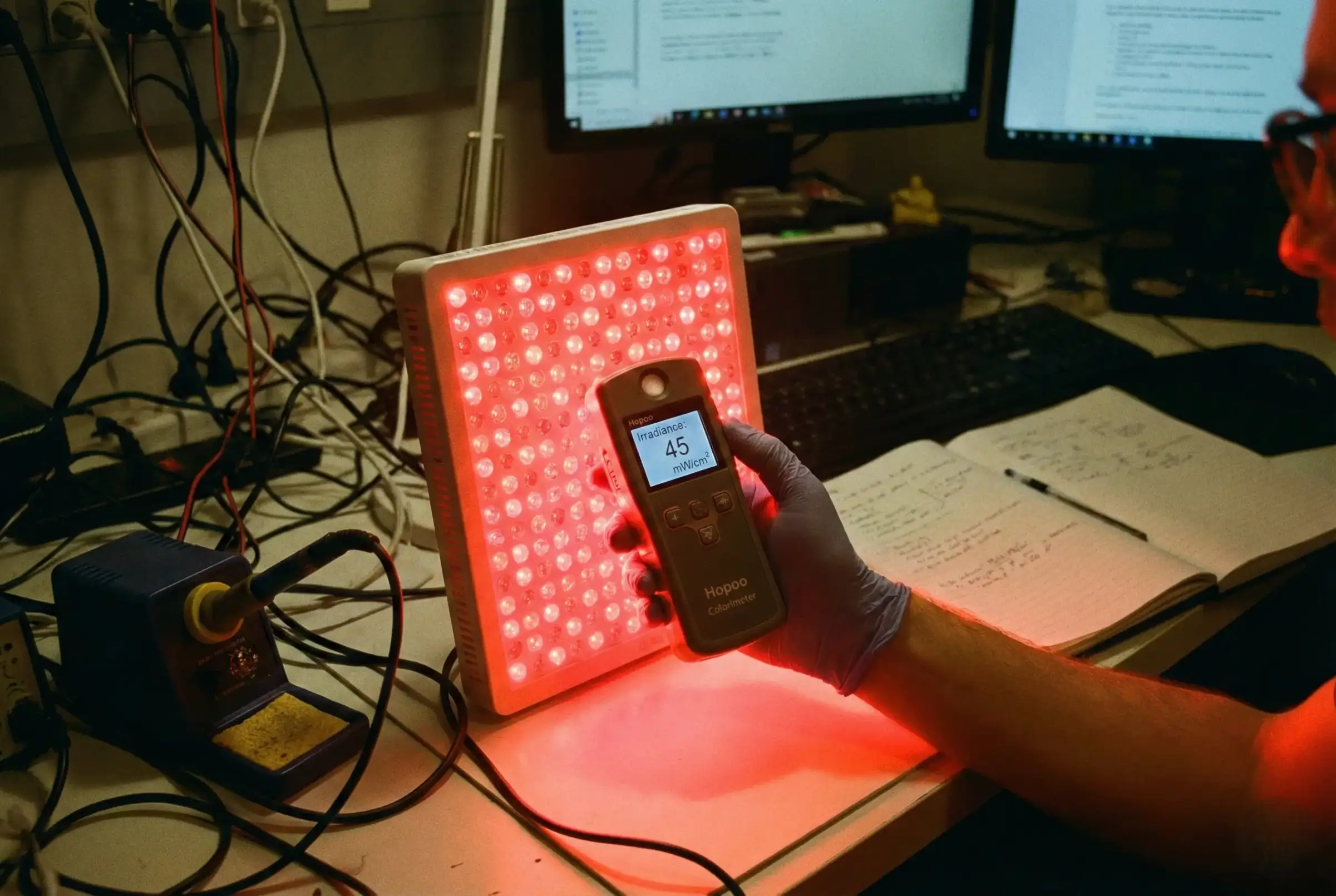
I use a professional spectrometer to test panels. Last month I measured a popular panel that advertised “5-minute sessions.” Real irradiance at the recommended distance? 42mW/cm² instead of the claimed 100mW/cm². If you followed their timer, you’d get less than half the intended dose.
This is why I always say: if the box says 5 minutes, you might actually need 7-8 minutes because real power is often 30-40% lower than claimed.
The Importance of Distance (Inverse Square Law)
Moving your body just a few inches can drastically change the dose. This is due to the Inverse Square Law. In simple terms: moving just a few inches closer or farther can dramatically change the dose.
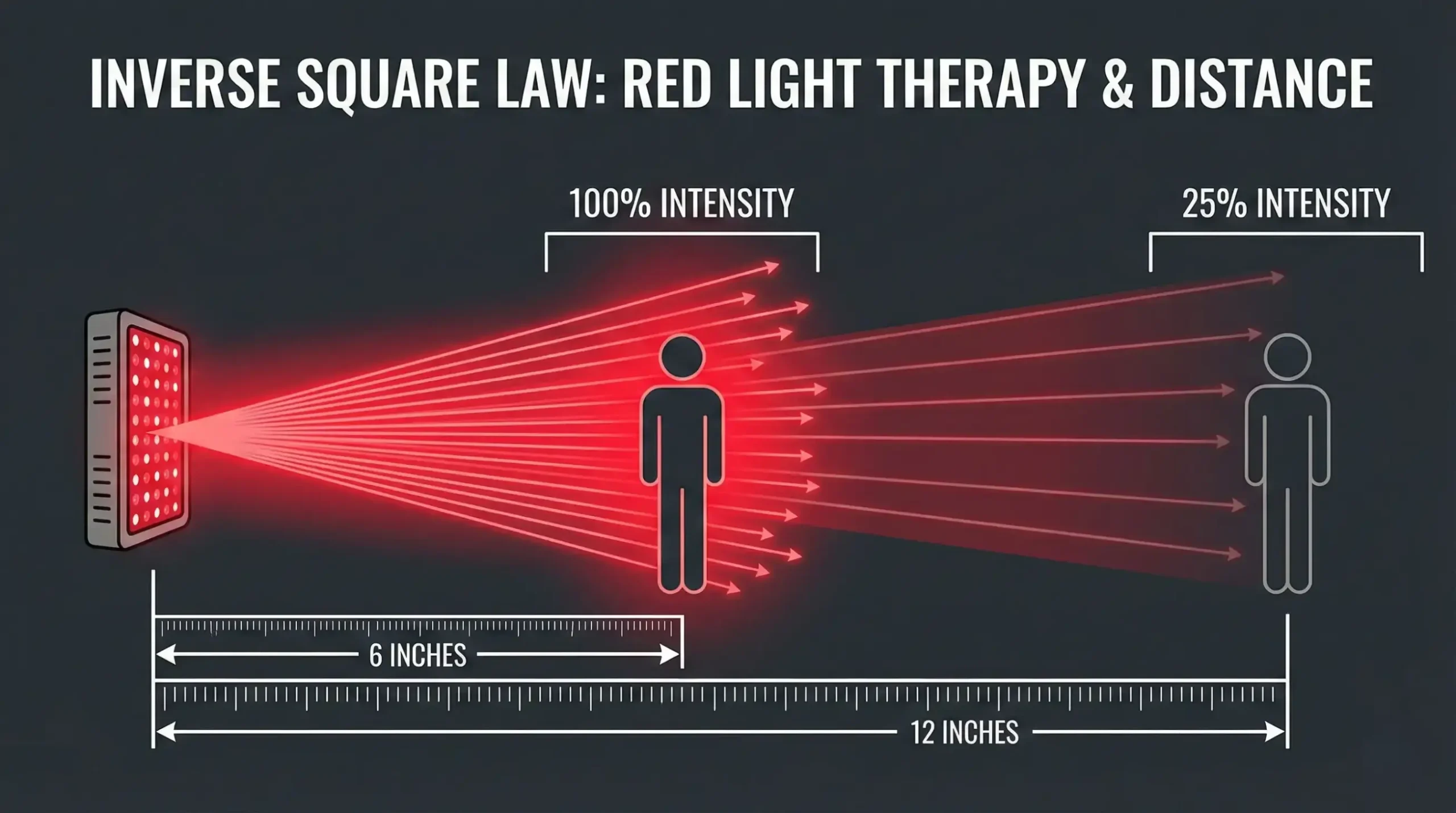
If you are treating deep tissue issues, stay within the 6-12 inch range to ensure enough photons reach the target.
Pro Tip: The “Contact Method” for Joints
While keeping a distance of 6–12 inches is standard for large panels, there is an exception. If you are using a smaller handheld device or a torch for arthritis or specific joint pain, you can use the Contact Method (placing the device directly against the skin).
By touching the skin, you reduce “reflection loss”—meaning fewer photons bounce off your skin, and more penetrate deep into the tissue.
Note: Only do this if your device has low heat output (LEDs) to avoid burns. Never do this with hot incandescent heat lamps.
FAQ
Can I overdo it?
Yes. I’ve done it myself—tried a 25-minute session thinking “more is better.” Felt sluggish for two days. While RLT is generally safe, adhering to the therapeutic window is crucial to avoid inhibitory effects caused by excessive dosing.
Daily or a few times per week?
For many people, consistency beats intensity. Five minutes every single day often produces better results than 30 minutes twice a week.
Do I need to wear eye protection?
Generally, red light is considered safe for the eyes, and some studies suggest it may even be beneficial for declining vision. However, the LEDs are incredibly bright. For comfort, and to avoid temporary vision spots, I recommend wearing the blackout goggles included with your panel—especially if you are facing the light directly.
How long does it take to see results?
It depends on the goal. Acute pain relief (e.g., after a workout) can often be felt after just 1–3 sessions. Skin improvements (collagen production, wrinkle reduction) are a slower biological process and typically require 4–8 weeks of consistent use to become visible.