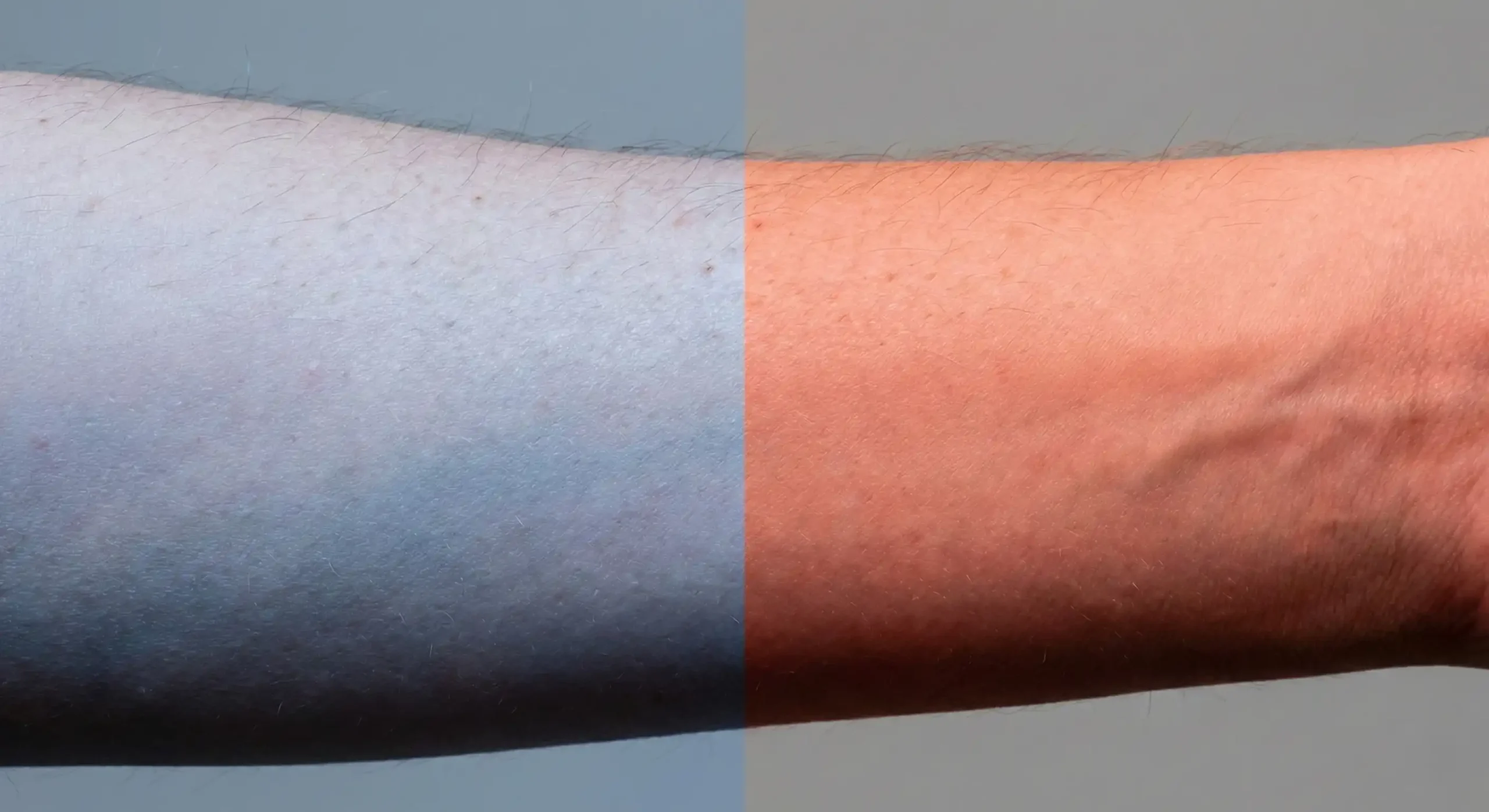
Blue light affects not only the eyes but also the skin.
Skin cells contain light-sensitive receptors that influence circadian rhythm, mitochondrial function, and nighttime recovery.
Want Better Sleep Stats?
Theory is good, but tools get results. See the exact stack (mask, tape, supplements) I use to get 2+ hours of Deep Sleep every night.
Open Sleep HubSkin Is a Circadian Organ
Human skin expresses melanopsin (OPN4) — a photoreceptor once believed to exist only in the retina.
This allows skin cells to respond directly to light.
Scientific reference: Melanopsin in human skin
Blue Light and Cellular Stress
Evening blue light exposure:
- Suppresses melatonin
- Increases oxidative stress
- Disrupts peripheral clocks
Scientific reference: Blue light and ROS
Why Blue Light Glasses Are Not Enough
Blocking blue light at the eyes helps central circadian signaling — but skin exposure still matters, especially under overhead LEDs.
Red Light as a Circadian-Safe Signal
Red and near-infrared light:
- Do not suppress melatonin
- Support mitochondrial repair
- Mimic sunset lighting conditions
Learn more:
What Is Red Light Therapy?
Evening Lighting Protocol
- Warm, low-intensity lighting after sunset
- Avoid overhead LEDs
- Limit screens 90 minutes before bed
- Use red-spectrum light when possible
FAQ
Does blue light affect skin directly?
Yes. Skin contains light-sensitive receptors.
Is red light safe before sleep?
Current evidence suggests it does not suppress melatonin.
Can red light improve sleep quality?
Indirectly, by supporting circadian alignment.
Do I need special devices?
Lighting choices matter more than gadgets.
Sources
- Melanopsin in skin
https://pubmed.ncbi.nlm.nih.gov/29941520/ - Blue light and oxidative stress
https://pubmed.ncbi.nlm.nih.gov/28734403/