Red Light Therapy for Hair Growth — Evidence, Protocols & Limits
Red light therapy may support hair growth by improving cellular energy and blood flow in hair follicles. Clinical studies suggest benefits in some cases of androgenetic alopecia, but results depend on wavelength, dose, consistency, and underlying cause of hair loss.
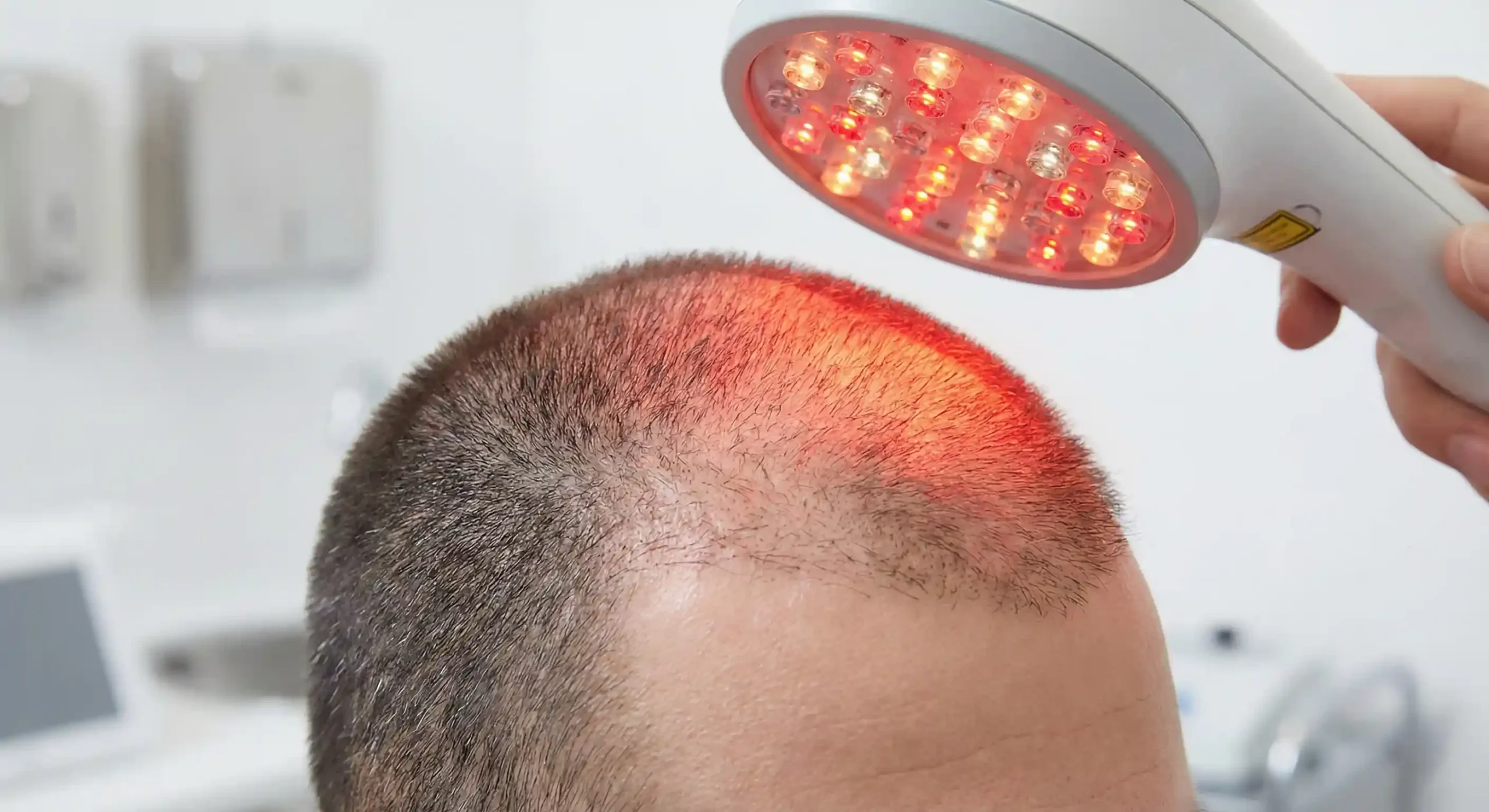
Understanding Red Light Therapy in Practice
Red light therapy is often discussed in theory, but its real-world application depends on measurable parameters like wavelength and exposure. I tested multiple RLT setups using a professional spectrometer to better understand how the therapy works in practice.
What Does Science Say About Hair Growth?
Low-level light therapy (LLLT) has been studied for hair density and thickness.
📄 Study Source: Efficacy of Low-Level Light Therapy for Hair Growth
🔬 Deep Dive: Understanding the Mechanism of Photobiomodulation
Best Wavelengths for Hair Loss
630–660nm (Primary)
- Targets scalp and follicles
- Most studied range for hair density
850nm (Secondary)
- Deeper penetration
- Supportive, not standalone
💡 Related Guide: How to Use Red Light Therapy for Scars & Stretch Marks
Dosing Is More Important Than Time
Hair follicles respond to biphasic dose response — too much light can reduce effectiveness.
Protocol reference: https://biohackingtested.com/red-light-therapy/dosing-guide/
Stop Guessing Your Session Time
10 minutes on a weak panel is nothing. 10 minutes on a pro panel is an overdose. Calculate your exact personalized dose.
Expected Results Timeline
- 1–2 months: reduced shedding
- 3–4 months: stabilization
- 6+ months: possible visible improvement
Results vary by genetics and condition.
FAQ
Is red light therapy FDA-approved for hair loss?
Some devices are FDA-cleared for cosmetic hair growth, not medical treatment.
Does it work for stress-related hair loss?
Evidence is limited; most data applies to androgenetic alopecia.
Can women use red light therapy for hair growth?
Yes, protocols are similar.
Should it replace medical treatment?
No — it may be supportive, not a replacement.
Resources
Screening for Chagas disease in pregnancy and newborns in Andalusia (Spain)
Effects of glutamine on the nuclear factor-kappaB signaling pathway of murine peritoneal macrophages
Interference with pre-B-cell receptor signaling offers a therapeutic option for TCF3-rearranged childhood acute lymphoblastic leukemia