Waking up between 3-4 AM is one of the most common sleep complaints, and it’s rarely random. This specific timeframe corresponds to critical transitions in your sleep architecture and circadian rhythm. Around 3-4 AM, your body reaches its lowest core temperature, experiences a natural dip in melatonin, and transitions from deep sleep to lighter REM-dominant cycles.
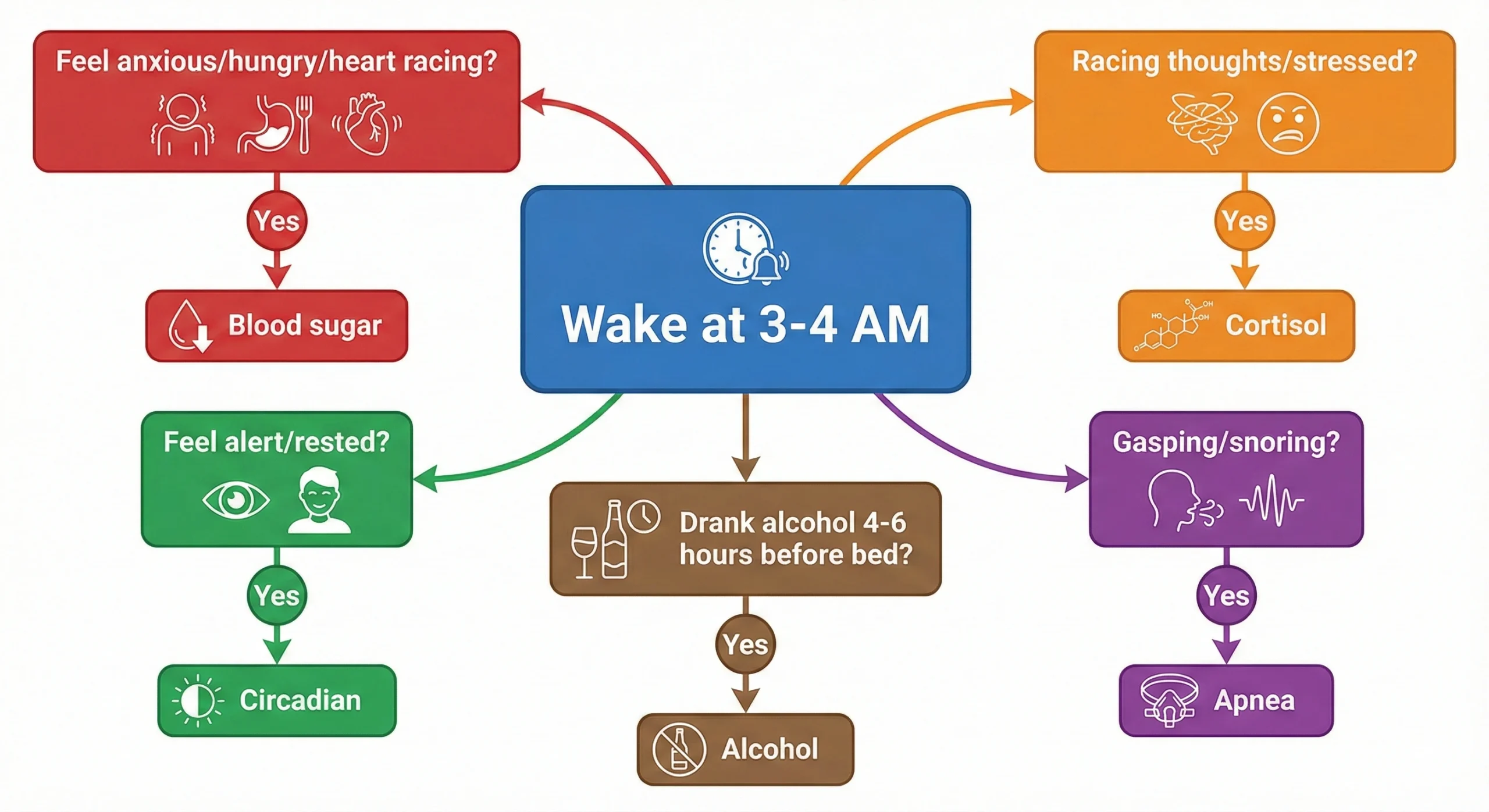
The most common causes include blood sugar crashes (hypoglycemia triggering cortisol release), circadian rhythm misalignment (your biological clock being off-schedule), elevated nighttime cortisol from chronic stress, and sleep maintenance insomnia (difficulty staying asleep despite falling asleep easily).
Unlike sleep onset insomnia, middle-of-night awakenings typically indicate specific physiological imbalances rather than general sleep hygiene issues. Understanding why you wake at this particular time — rather than 1 AM or 6 AM — reveals which system needs addressing.
⏰ Quick Answer: Why 3–4 AM?
Waking up specifically between 3 AM and 4 AM is rarely random. It typically signals a physiological trigger during your body’s most vulnerable transition phase:
- 📉 Blood Sugar Crash: A drop in glucose triggers a cortisol spike to “rescue” you, waking you up.
- 🧠 High Cortisol: Chronic stress flattens your cortisol curve, preventing the deep sleep dip.
- 🌗 Circadian Misalignment: Your biological “morning” signal is firing too early.
- 🧬 Sleep Cycle Shift: You are transitioning from deep sleep to lighter REM sleep, making you fragile to wake-ups.
Want Better Sleep Stats?
Theory is good, but tools get results. See the exact stack (mask, tape, supplements) I use to get 2+ hours of Deep Sleep every night.
Open Sleep HubWhat Makes 3-4 AM Special in Your Sleep Cycle
If you’re waking up in the middle of the night, there’s a good chance it’s happening around 3-4 AM rather than 1 AM or 5 AM. This isn’t coincidence — this timeframe represents a vulnerable transition point in your circadian rhythm and sleep architecture.
The Circadian Nadir (Your Body’s Lowest Point)
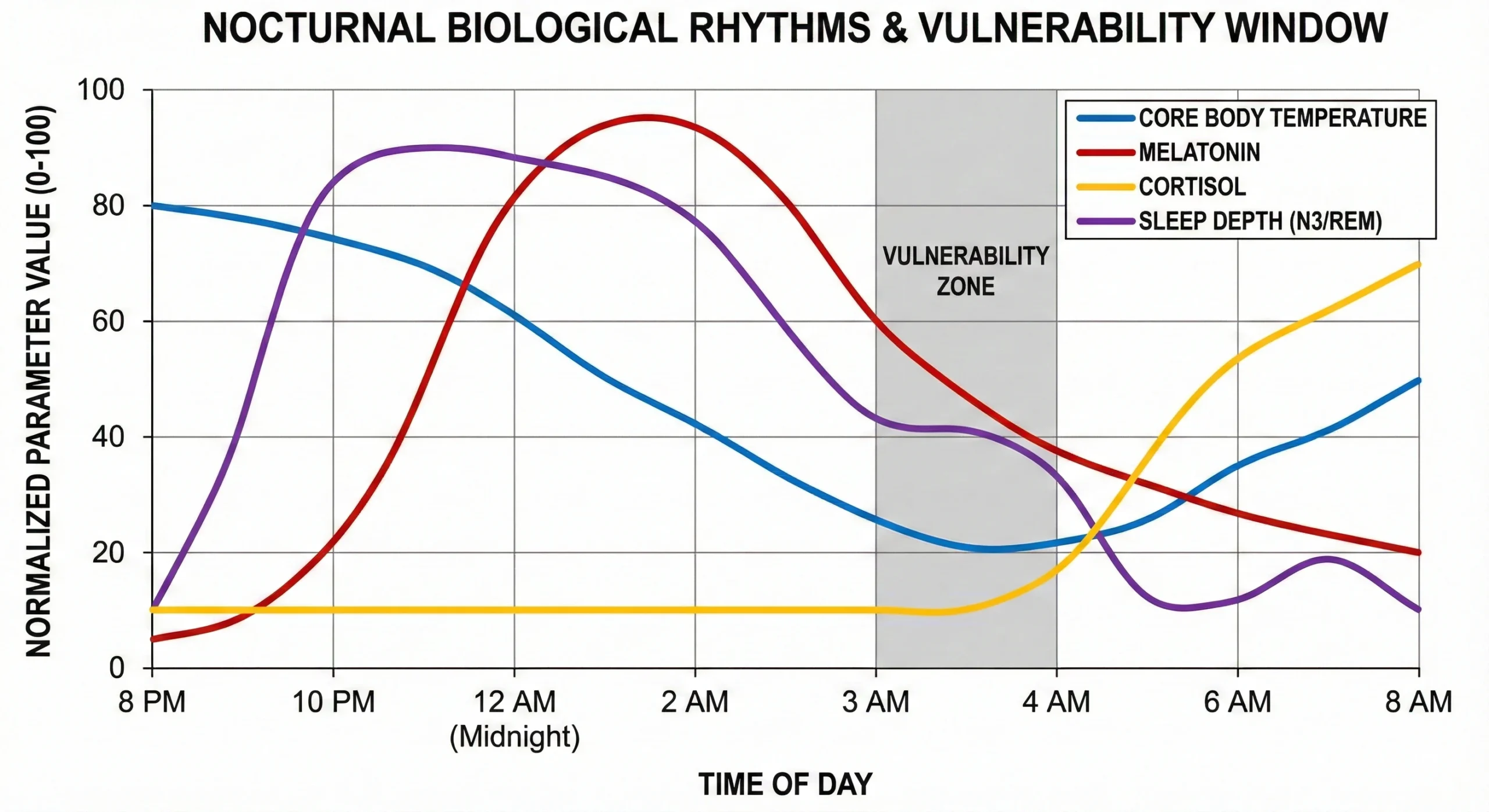
Around 3-4 AM, multiple physiological processes reach their nadir (lowest point) in the 24-hour cycle. Your body is at its most vulnerable state.
What’s happening at 3-4 AM:
- Core body temperature: Reaches its minimum (typically 97-97.5°F, about 1-2°F below daytime)
- Melatonin: Begins declining from its nighttime peak (typically peaked 1-2 hours earlier)
- Cortisol: Starts its natural pre-dawn rise (preparing your body for waking)
- Blood pressure: At its lowest point
- Blood sugar: Often at its lowest level after 6-8 hours of fasting
Research on circadian rhythms demonstrates that the circadian nadir around 3-5 AM represents the time of maximum physiological vulnerability, with increased mortality from cardiac events, asthma attacks, and other acute medical conditions occurring during this window.
Why this creates wake vulnerability:
Your body is transitioning from stable nighttime physiology to preparing for morning activation. Multiple regulatory systems are shifting simultaneously, creating instability. If any single system is slightly dysregulated — blood sugar too low, cortisol rising too early, temperature dropping too much — it can trigger a wake signal.
Think of it like a tightrope walker. At 3-4 AM, you’re walking the thinnest part of the rope with the least margin for error. Any small perturbation (stress hormone spike, blood sugar dip, temperature drop) can knock you off balance and wake you up.
The Sleep Architecture Shift
Around 3-4 AM, you’re also transitioning between sleep cycle types. The first half of the night (roughly 11 PM – 2 AM for most people) is dominated by deep slow-wave sleep. The second half of the night (3 AM – 7 AM) shifts to REM-dominant cycles.
What’s happening in your sleep cycles:
- Before 3 AM: Long blocks of deep N3 sleep (30-40 minutes), short REM periods (10-15 minutes)
- After 3 AM: Minimal deep sleep, long REM periods (30-60 minutes), more light N2 sleep
Studies on sleep architecture show that the transition from deep-sleep-dominant to REM-dominant cycles creates natural microarousals, brief moments of lighter sleep or partial waking that healthy sleepers quickly return to sleep from.
Why this matters for waking:
During deep sleep (first half of night), you’re very difficult to wake. Your arousal threshold is high. But once you transition to lighter sleep and REM (second half of night), your arousal threshold drops. You’re more susceptible to internal signals (hunger, temperature, stress hormones) and external signals (noise, light) triggering full wakefulness.
If you have an underlying issue (blood sugar instability, stress, pain), it’s more likely to wake you during the vulnerable 3-4 AM transition than during deep sleep at 1 AM.
My experience with this: For months, I would wake almost exactly at 3:20-3:40 AM every night. Not 2 AM, not 5 AM — consistently in that 20-minute window. Once I understood the circadian and sleep architecture transitions happening at that time, I realized my waking wasn’t random. Something was triggering arousal during my most vulnerable window.
Turned out to be blood sugar crashes (I was eating dinner at 6 PM, then fasting for 9-10 hours by 3 AM). Once I added a small bedtime snack with protein and fat, the 3 AM waking stopped within a week. The issue was always there, but it only woke me during the vulnerable transition window.
Why Not 1 AM or 6 AM?
Understanding why you wake at 3-4 AM specifically (versus other times) helps diagnose the cause.
If you wake at 1-2 AM:
- Too early in sleep cycle (still in deep sleep-dominant phase)
- More likely: sleep onset issues bleeding into early night, or extreme blood sugar crash
- Less likely: circadian misalignment (circadian nadir hasn’t started yet)
If you wake at 3-4 AM:
- Prime vulnerability window (circadian nadir + sleep architecture shift)
- Most likely: blood sugar regulation, stress hormone dysregulation, circadian timing issues
- This is the “classic” middle-of-night awakening time
If you wake at 5-6 AM:
- Late in sleep cycle, approaching natural wake time
- More likely: circadian phase advance (your rhythm thinks morning starts earlier than your alarm)
- Also possible: anxiety about upcoming day
The 3-4 AM waking is most commonly associated with physiological dysregulation rather than psychological factors, whereas 5-6 AM waking often has more psychological or circadian timing components.
Why You’re Waking Up (The Root Causes)H2: Why You’re Waking Up (The Root Causes)
Middle-of-night waking isn’t one problem — it’s a symptom with multiple possible causes. Here are the most common culprits, how to identify which one is yours, and what to do about it.
❓ Is Waking Up at 3 AM Normal?
Occasional (1-2 times/month): Yes. It’s a normal response to stress, alcohol, or a heavy meal.
Chronic (3+ times/week): No. This indicates a physiological dysregulation (blood sugar or circadian rhythm) that needs fixing.
Cause #1 — Blood Sugar Dysregulation (Most Common)
This is the single most common cause of 3-4 AM waking, yet it’s rarely the first thing people consider.
What’s happening:
When you sleep, you’re fasting. If your last meal was at 6-7 PM and you’re waking at 3 AM, you’ve gone 8-9 hours without food. For people with blood sugar regulation issues (insulin resistance, reactive hypoglycemia, inadequate glycogen stores), blood glucose can drop too low during this fasting window.
When blood sugar drops below a certain threshold, your body perceives this as an emergency. Your adrenal glands release cortisol and adrenaline to mobilize stored glucose (gluconeogenesis). This stress hormone surge is designed to save you from dangerous hypoglycemia, but it also triggers waking.
Research on nocturnal hypoglycemia found that blood glucose drops during sleep activate counter-regulatory hormones (cortisol, glucagon, growth hormone) that can cause arousal and fragmented sleep.
How to identify if this is your issue:
✅ You wake feeling anxious, heart racing, or “wired” (adrenaline response)
✅ You feel hungry when you wake (actual hunger, not just “might as well eat”)
✅ You ate dinner early (6-7 PM) and it’s been 8+ hours
✅ You eat low-carb or skip dinner (inadequate glycogen stores)
✅ You have history of blood sugar issues (prediabetes, reactive hypoglycemia, PCOS)
✅ You wake drenched in sweat (stress hormone surge symptom)
The fix:
- Eat a small snack (protein + fat) 30 mins before bed.
- Move dinner to 7:30–8:00 PM to shorten the fasting window.
- Avoid alcohol (it causes rebound hypoglycemia).
Immediate intervention (tonight):
- Eat a small bedtime snack 30-60 minutes before bed containing protein + fat + complex carbs
- Examples: Apple slices with almond butter, Greek yogurt with berries, small handful of nuts with a few crackers
- Target: 150-250 calories, 10-15g protein, some healthy fat
Long-term fixes:
- Dinner timing: Move dinner later (7:30-8 PM if bed at 10:30 PM) to shorten fasting window
- Dinner composition: Include adequate protein and complex carbs, not just vegetables
- Blood sugar stability: Evaluate daytime eating patterns (skipping meals, excessive refined carbs can worsen nighttime crashes)
- Consider continuous glucose monitor for 2 weeks to see actual patterns
My experience with this: This was my primary cause. I was eating dinner at 6 PM (healthy, but early), going to bed at 10:30 PM, and waking at 3:20 AM feeling anxious and sweaty. My fasting window was 9+ hours, and I’m lean with limited glycogen storage capacity.
I added a bedtime snack (2 tbsp almond butter on a slice of whole grain toast, ~200 calories, 8g protein, healthy fat, complex carbs) 30 minutes before bed. Within 3 nights, the 3 AM waking stopped. Within a week, it was completely resolved.
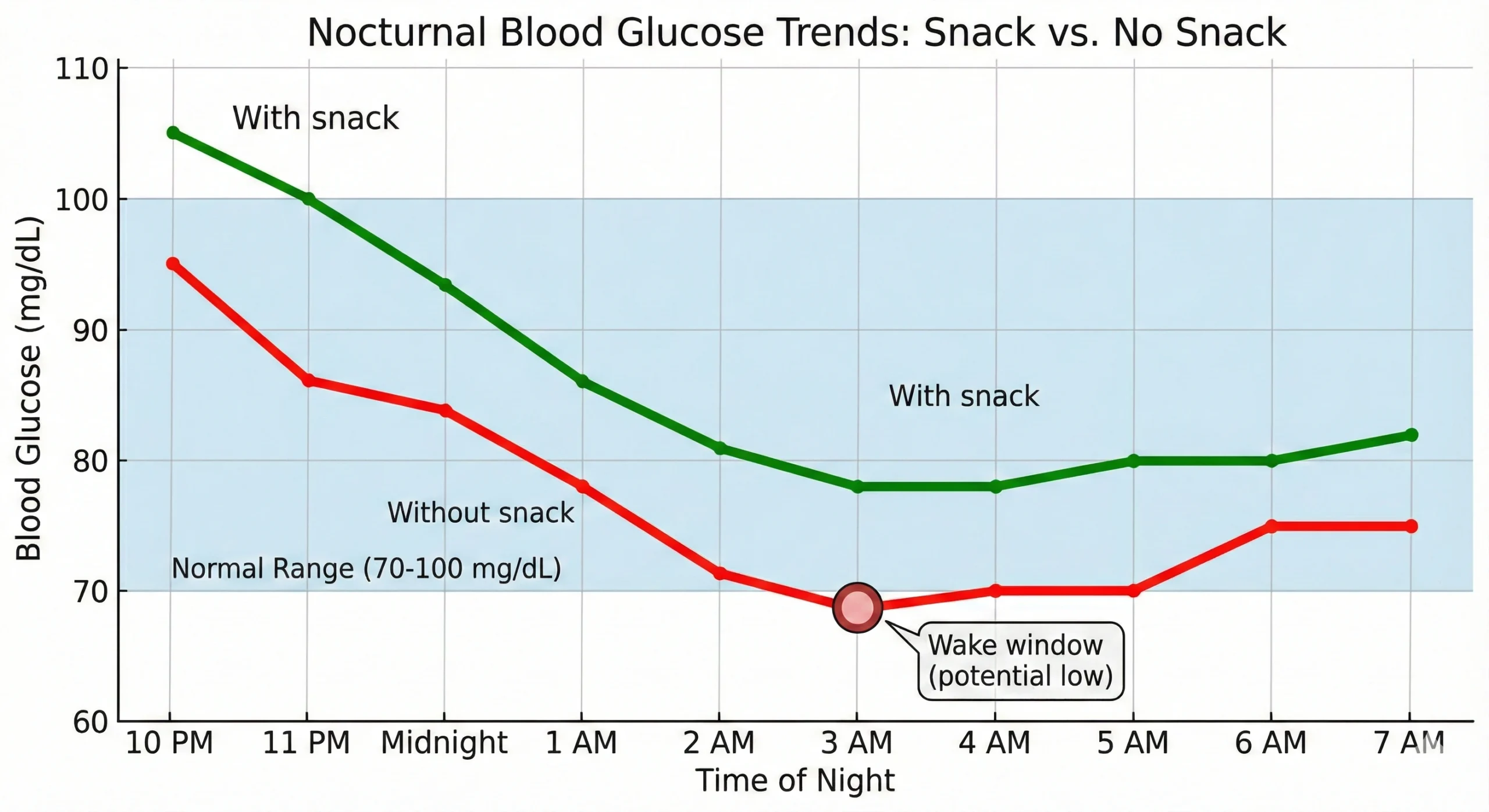
I tracked this with a CGM for 2 weeks to confirm: without the snack, my blood glucose was dropping to 65-70 mg/dL by 3 AM (low end of normal, triggering counter-regulatory response in my case). With the snack, it stayed 75-85 mg/dL throughout the night. Problem solved.
Cause #2 — Elevated Cortisol / Chronic Stress
Cortisol should be lowest around midnight and begin rising around 2-3 AM in preparation for morning waking (the cortisol awakening response). But chronic stress can dysregulate this pattern, causing inappropriately high cortisol during the night.
What’s happening:
Your hypothalamic-pituitary-adrenal (HPA) axis is overactive. Instead of cortisol reaching its nadir at midnight and gradually rising after 3 AM, it stays elevated throughout the night or spikes too early.
Elevated cortisol inhibits melatonin, increases body temperature, shifts you toward lighter sleep stages, and activates arousal systems. This makes you vulnerable to waking during the natural 3-4 AM transition.
Studies on stress and sleep found that individuals with chronic stress show flattened cortisol rhythms with elevated nighttime levels and reduced morning peaks, correlating with sleep fragmentation and middle-of-night awakenings.
How to identify if this is your issue:
✅ You’re under significant life stress (work deadlines, relationship issues, financial worry)
✅ You wake with racing thoughts (mind immediately starts problem-solving)
✅ You feel alert, not groggy when you wake (cortisol is activating)
✅ Your heart rate is elevated upon waking (check with wearable or manually)
✅ You have difficulty falling back asleep (takes 30-60+ minutes)
✅ You have other stress symptoms (difficulty falling asleep initially, daytime anxiety, digestive issues)
The fix:
Immediate interventions:
- When you wake: Don’t engage with thoughts. Use box breathing (4-second inhale, 4-second hold, 4-second exhale, 4-second hold, repeat for 5-10 minutes)
- Progressive muscle relaxation: Tense and release muscle groups systematically
- Avoid looking at clock (creates anxiety about lost sleep)
Short-term (1-4 weeks):
- Evening stress reduction: 10-20 minute meditation or gentle yoga before bed
- Magnesium glycinate: 200-400mg before bed (modulates HPA axis, promotes GABA activity)
- Adaptogenic herbs: Consider ashwagandha (300-500mg) or rhodiola (helps normalize cortisol rhythm)
- Write worries down: “Brain dump” journal 1 hour before bed (gets thoughts out of head)
Long-term:
- Address root stressor (therapy, job change, relationship work, financial planning)
- Regular exercise: Particularly effective for HPA axis regulation (but not within 3 hours of bed)
- Consider testing: Salivary cortisol testing (4-point throughout day + bedtime) can reveal HPA dysfunction
Important note: If stress-related waking persists >2 months despite interventions, consider working with a therapist or psychiatrist. Chronic insomnia can become self-perpetuating and may benefit from CBT-I (cognitive behavioral therapy for insomnia) or short-term medication.
Cause #3 — Circadian Rhythm Misalignment
Sometimes 3-4 AM waking reflects your circadian rhythm being out of sync with your sleep schedule. Your body might think it’s morning (time to wake up) when the clock says 3 AM.
What’s happening:
If your circadian rhythm is phase-advanced (shifted earlier), your body’s biological morning starts around 3-4 AM instead of 6-7 AM. You’re experiencing what feels like early morning waking, except it’s happening in the middle of the night by clock time.
How to identify if this is your issue:
✅ You’re a natural early bird (feel tired by 8-9 PM, wake easily at 5-6 AM on weekends)
✅ Your melatonin rises very early (feel sleepy by 7-8 PM)
✅ You recently changed time zones or started going to bed much later than natural
✅ When you wake at 3-4 AM, you feel alert (not groggy or stressed, just awake)
✅ You have trouble falling back asleep because you feel like “morning person alert”
✅ This pattern is consistent (same time every night ± 20 minutes)
The fix:
If you’re phase-advanced (waking too early):
- Evening light exposure: 30-60 minutes of bright light (2,500+ lux) at 7-9 PM
- Delay dinner and bedtime: Gradually shift later by 15 minutes per week
- Avoid morning light: Wear sunglasses for first 2 hours after waking
- Exercise timing: Move to evening (6-8 PM) instead of morning
If you’re phase-delayed but forcing early sleep:
- Morning light exposure: 30 minutes of bright light (10,000 lux) within 1 hour of desired wake time
- Consistent wake time: Same time 7 days/week (even if you wake at 3 AM, get up at target time)
- Avoid evening light: Dim lights after 8 PM, no screens after 9 PM
Timeline: Circadian shifts take 1-2 weeks to show effects, full adjustment 4-6 weeks.
Research on circadian phase disorders shows that properly timed light exposure can shift circadian phase by 1-2 hours over several weeks, resolving timing-related sleep disruptions.
Cause #4 — Sleep Apnea or Breathing Issues
Sleep-disordered breathing can cause awakenings that cluster around 3-4 AM due to REM sleep’s effect on upper airway muscle tone.
What’s happening:
During REM sleep (dominant in second half of night), your muscles are paralyzed — including the muscles that maintain upper airway patency. If you have sleep apnea or upper airway resistance, REM sleep exacerbates breathing obstruction.
The brain detects low oxygen (hypoxia) or high CO2 (hypercapnia) and triggers arousal to restore normal breathing. You may not fully wake, but these arousals fragment sleep and can eventually cause full waking.
How to identify if this is your issue:
✅ You snore (witnessed by partner, or sleeping alone but wake with dry mouth/throat)
✅ You wake gasping or choking (even occasionally)
✅ You wake with headache (CO2 buildup causes morning headaches)
✅ You’re overweight (BMI >30 significantly increases apnea risk)
✅ You wake frequently (not just 3-4 AM, but multiple times including this window)
✅ Daytime fatigue despite “adequate” sleep duration
✅ High blood pressure (apnea causes nighttime BP spikes)
The fix:
Immediate steps:
- Sleep position: Side-sleeping reduces apnea severity (use body pillow to prevent rolling to back)
- Elevate head: 30-45 degree incline reduces airway collapse
- Avoid alcohol: Relaxes airway muscles, worsens obstruction
Medical evaluation (important):
- Home sleep test or in-lab polysomnography to diagnose apnea severity
- If diagnosed: CPAP therapy is gold standard (highly effective but requires adaptation)
- Alternatives: Oral appliances (for mild-moderate apnea), positional therapy, weight loss
Don’t ignore this: Sleep apnea significantly increases cardiovascular disease risk, stroke risk, and diabetes risk. If you suspect apnea, get tested. It’s not “just snoring.”
Cause #5 — Alcohol (The Delayed Effect)
Alcohol initially helps you fall asleep faster but severely disrupts sleep architecture 3-4 hours after consumption — right around 3 AM if you drank at 11 PM.
What’s happening:
Alcohol is metabolized at roughly 1 drink per hour. As blood alcohol level drops, you experience a rebound effect:
- Suppressed REM sleep early in night (while alcohol is metabolizing)
- REM rebound later in night (once alcohol is cleared)
- Increased sympathetic nervous system activity (activating, not calming)
- Withdrawal-like symptoms even from modest consumption
Research on alcohol and sleep architecture shows that alcohol consumed within 6 hours of bedtime significantly increases sleep fragmentation in the second half of night, with awakenings clustering 4-6 hours post-consumption.
How to identify if this is your issue:
✅ You had 1-3 drinks within 4-6 hours of bedtime
✅ You fell asleep quickly (alcohol helped initial sleep onset)
✅ You wake feeling restless (sympathetic activation)
✅ You experience vivid dreams or nightmares (REM rebound)
✅ Your heart rate is elevated when you wake
✅ You’re thirsty and/or need to urinate (diuretic effect)
The fix:
Immediate: Stop drinking alcohol, or finish all alcohol 4-6 hours before bedtime
Timeline: If alcohol is the cause, you’ll see improvement within 2-3 nights of abstaining. If waking persists, alcohol isn’t your primary issue (though it may be contributing).
My testing: I tracked sleep for 4 weeks, drinking 2 glasses of wine with dinner on some nights (finishing by 8 PM, bed at 10:30 PM) and abstaining other nights. On drinking nights, I woke at 3-3:30 AM approximately 80% of the time. On non-drinking nights, maybe 20% of the time (and those awakenings were shorter).
The correlation was undeniable. I stopped drinking alcohol in evenings entirely, and 3 AM waking dropped dramatically.
Common Mistakes That Make Middle-Night Waking Worse
When you wake at 3 AM, your instinctive responses often perpetuate the problem rather than solve it. Here’s what not to do.
Don’t Look at the Clock
Why this is harmful:
Looking at the clock triggers a cascade of unhelpful thoughts:
- “It’s 3:17 AM. If I fall asleep in 20 minutes, I’ll only get 2 hours 43 minutes of sleep before my alarm.”
- Math calculations about lost sleep create performance anxiety
- You now have a specific time associated with waking, strengthening the pattern
Research on sleep performance anxiety shows that individuals with insomnia who monitor time excessively show increased arousal and longer sleep onset latency.
What to do instead:
- Turn clock away from bed (or cover it)
- Remove time-displaying devices from nightstand
- Use vibrating alarm (so you don’t need visible clock)
- If you must know time (medication timing, etc.), check once, then turn away
Don’t Turn On Bright Lights
Why this is harmful:
Even brief bright light exposure (>50 lux) at 3 AM can:
- Suppress melatonin (takes 2-3 hours to recover)
- Send “daytime” signal to your SCN (confuses circadian rhythm)
- Increase alertness when you’re trying to return to sleep
What to do instead:
- If you must move around (bathroom), use dim red light (<10 lux)
- Install motion-activated red nightlights in bathroom/hallway
- Keep phone on lowest brightness with red filter if you must check it (though ideally don’t)
Don’t Catastrophize About Lost Sleep
Why this is harmful:
Thoughts like “Tomorrow will be terrible,” “I can’t function on this little sleep,” “This is ruining my health” activate your stress response, release cortisol, and guarantee you won’t fall back asleep quickly.
The irony: catastrophizing about lost sleep causes more lost sleep.
What to do instead:
- Reframe: “I’m resting even if not sleeping”
- Reality check: One night of fragmented sleep is uncomfortable but not catastrophic
- Trust your body: You’ll likely get more sleep than your anxious brain predicts
Don’t Immediately Grab Your Phone
Why this is harmful:
Scrolling social media, reading news, or checking email at 3 AM:
- Exposes you to bright blue light (worst wavelength for melatonin)
- Engages your brain cognitively (activating, not calming)
- Often exposes you to stressful content
- Teaches your brain that waking = phone time (reinforces pattern)
What to do instead:
- Keep phone in another room (or at least across the room)
- Use old-fashioned alarm clock
- If you must use phone, red screen filter + lowest brightness + boring content only
Don’t Lie in Bed Awake for More Than 20-30 Minutes
Why this is harmful:
CBT-I (cognitive behavioral therapy for insomnia) research shows that lying in bed awake creates association between your bed and wakefulness. Your brain learns “bed = being awake trying to sleep” instead of “bed = sleep.”
This is called conditioned arousal — your bed becomes a cue for insomnia rather than sleep.
What to do instead:
The 20-minute rule: If you’ve been awake for ~20 minutes (don’t check clock, estimate), get out of bed.
- Go to different room with dim lighting
- Do something boring and calm (read paper book under dim light, gentle stretching, meditation)
- No screens, no stimulating activities, no bright lights
- Return to bed only when you feel sleepy again
- Repeat if needed
This preserves the bed-sleep association and prevents conditioned arousal.
My experience: I used to lie in bed for 1-2 hours trying to force sleep through willpower. It never worked and made my anxiety about waking worse. Once I started using the 20-minute rule (getting up, reading a boring book in dim light for 20-30 minutes, returning when sleepy), I fell back asleep much faster and felt less anxious about waking.
Your 3 AM Waking Action Plan (Step-by-Step)
When you wake at 3 AM tonight, here’s exactly what to do based on the most likely causes.
Protocol for Blood Sugar-Related Waking
Before bed tonight:
- Eat a balanced snack 30-60 minutes before sleep
- Target: 150-250 calories, 10-15g protein, healthy fat, small amount of complex carbs
- Best options:
- 2 tbsp almond or peanut butter on whole grain toast
- Greek yogurt (plain, full-fat) with berries and nuts
- Small apple with cheese
- Hard-boiled egg with avocado and crackers
If you wake:
- Note if you feel anxious, heart racing, hungry, or sweaty (blood sugar symptoms)
- Use breathing technique (4-4-4-4 box breathing for 5 minutes) to calm stress response
- If you can’t fall back asleep within 20 minutes, get up and have small snack (not a meal)
Track for 3-5 nights: If bedtime snack eliminates or significantly reduces waking, blood sugar was your issue.
Protocol for Stress/Cortisol-Related Waking
Before bed tonight:
- 10-minute guided meditation or progressive muscle relaxation
- Write down tomorrow’s to-do list and worries (“brain dump” so you don’t ruminate)
- Dim lights after 8 PM, no screens after 9:30 PM
- Consider magnesium glycinate 200-400mg
If you wake:
- Don’t engage with thoughts (they’re not rational at 3 AM)
- Use box breathing: 4-second inhale, 4-second hold, 4-second exhale, 4-second hold, repeat for 10 minutes
- If racing thoughts persist, get up and journal them out (boring stream-of-consciousness writing, not problem-solving)
- Return to bed when you feel calmer
Track for 1-2 weeks: If stress management techniques help, work on longer-term stress reduction (therapy, life changes, ongoing meditation practice).
Protocol for Circadian-Related Waking
Starting tomorrow morning:
- Wake at target time (6-7 AM) regardless of how you slept
- Get 30 minutes of bright light (outdoor walk or 10,000 lux lamp) within 1 hour of waking
- No snooze button (maintains consistent circadian timing)
Tomorrow evening:
- Dim all lights after 8 PM
- No screens or use blue-blocking glasses after 9 PM
- Consistent bedtime (10-10:30 PM if wake target is 6-7 AM)
Track for 2-3 weeks: Circadian shifts take time. Look for gradual improvement, not immediate fix.
My 6-Month Battle With Middle-of-Night Insomnia (What Finally Worked)
For over 6 months, I woke almost every night between 3:15-3:45 AM. It was destroying my quality of life. Here’s the full story of how I fixed it through systematic troubleshooting.
The Pattern (How It Started)
Month 1-2: The onset
It started subtly. Maybe once a week I’d wake around 3:30 AM, lie awake for 30 minutes, eventually fall back asleep. Annoying but not alarming.
By month 2, it was 3-4 nights per week. Always the same time window (3:15-3:45 AM). I’d wake feeling anxious and alert, heart rate elevated, mind racing.
What I tried first (didn’t work):
- Melatonin 3mg before bed: No effect on middle-night waking
- Earlier bedtime: Still woke at 3:30 AM, just got less total sleep
- Meditation app when I woke: Couldn’t focus, made me more frustrated
- “Sleep hygiene” checklist: Was already doing most of it, no improvement
Month 3-4: Getting desperate
Now waking 5-6 nights per week. The pattern was so consistent I started experiencing anticipatory anxiety — lying in bed at 10:30 PM dreading the 3:30 AM wake-up I knew was coming.
This is where insomnia becomes self-perpetuating. The anxiety about waking makes you more likely to wake. Vicious cycle.
What made it worse:
- Looking at clock (3:27 AM… 3:43 AM… 4:08 AM…) and calculating lost sleep
- Lying in bed for 1-2 hours trying to force sleep
- Catastrophizing (“I can’t function like this,” “My health is deteriorating”)
My HRV (heart rate variability, measured by Whoop) dropped from 65-75 ms baseline to 45-55 ms — indicating chronic stress and poor recovery.
The Systematic Diagnosis (Month 5)
I finally approached this scientifically instead of randomly trying solutions.
Step 1: Detailed symptom logging
I tracked every night for 2 weeks:
- Exact wake time
- How I felt (anxious/hungry/alert/groggy/heart racing)
- What I’d eaten for dinner and when
- Stress level before bed
- Exercise timing
- Alcohol consumption
Patterns that emerged:
- ✓ Woke feeling anxious with elevated heart rate (85-95 bpm, baseline 55 bpm)
- ✓ Sometimes felt hungry
- ✓ Worse on nights I ate dinner early (6-6:30 PM) vs later (7:30 PM)
- ✓ Slightly better on nights I had protein/fat-rich dinner vs carb-heavy
- ✓ No correlation with exercise timing, stress level, or alcohol (I rarely drank)
Hypothesis: Blood sugar crash triggering cortisol/adrenaline response.
The Blood Sugar Experiment (Month 5-6)
Protocol:
- Week 1-2: Baseline (no changes, continued tracking)
- Week 3-4: Added bedtime snack (2 tbsp almond butter on whole grain toast, ~200 cal, 8g protein, healthy fat)
- Week 5-6: Adjusted dinner timing (moved from 6 PM to 7:30 PM) + kept bedtime snack
Results:
Baseline (Week 1-2):
- Woke 12 out of 14 nights at 3:15-3:45 AM
- Average time to fall back asleep: 65 minutes
- Morning HRV: 48 ms average
With bedtime snack (Week 3-4):
- Woke 4 out of 14 nights
- Average time to fall back asleep: 25 minutes (when I did wake)
- Morning HRV: 58 ms average
- This was the breakthrough
With later dinner + snack (Week 5-6):
- Woke 1 out of 14 nights (and fell back asleep in 10 minutes)
- Morning HRV: 64 ms average (back to normal)
- Problem essentially solved
Verification with CGM (Continuous Glucose Monitor):
To confirm my hypothesis, I wore a CGM (Freestyle Libre) for 2 weeks, comparing nights with and without bedtime snack.
Without snack:
- Blood glucose at bedtime (10:30 PM): 95 mg/dL
- Blood glucose at 3 AM: 68-72 mg/dL (low end of normal range)
- Pattern: steady decline through night, reaching nadir right around my wake time
With snack:
- Blood glucose at bedtime: 105 mg/dL
- Blood glucose at 3 AM: 78-85 mg/dL (stable normal range)
- Pattern: gradual decline but staying well above the threshold that triggered cortisol response
The data was definitive. My blood sugar was dropping to a level that triggered my adrenal glands to release cortisol and adrenaline (counter-regulatory response to prevent dangerous hypoglycemia). This stress hormone surge was waking me up during the vulnerable 3-4 AM circadian nadir.
The Long-Term Solution
What I do now (18 months later):
Nightly bedtime snack: Non-negotiable. I have 2 tbsp nut butter on toast or Greek yogurt with berries and nuts 30-45 minutes before bed. Takes 3 minutes to prepare, completely resolved 6 months of misery.
Dinner timing: I eat dinner between 7-8 PM (was eating at 6 PM before). This keeps my fasting window to 7-8 hours instead of 9-10 hours.
Current results:
- Wake at 3-4 AM maybe 1-2 times per month (down from 25-28 times per month)
- When I do wake, I fall back asleep within 10-15 minutes
- HRV back to baseline (65-75 ms)
- Sleep quality dramatically improved (sleep efficiency 88% vs 76% during insomnia period)
The lesson: My problem wasn’t “insomnia” as a disease. It was a specific, fixable physiological issue (blood sugar regulation during overnight fast). The solution wasn’t medication or complex sleep protocols — it was addressing the root cause with a 200-calorie snack.
Why It Took 6 Months to Figure Out
Looking back, I’m frustrated it took so long to identify such a simple cause. Here’s why:
Nobody talks about blood sugar and sleep: Most insomnia advice focuses on stress, sleep hygiene, and circadian rhythm. Blood sugar regulation is rarely mentioned despite being extremely common.
Symptoms were confusing: I felt anxious and stressed when I woke, so I assumed it was stress-related insomnia. I didn’t realize the anxiety was a symptom of the cortisol/adrenaline surge, not the cause.
I was “healthy”: I’m not diabetic, not overweight, eat well, exercise regularly. I didn’t think blood sugar would be an issue. But even healthy people can have reactive hypoglycemia or inadequate glycogen stores, especially lean individuals with low body fat.
The waking time was so consistent: The 3:15-3:45 AM window made me think it was circadian or psychological (like my brain had “learned” to wake at this time). I didn’t connect it to the physiological circadian nadir where blood sugar naturally drops.
I’m sharing this story in detail because if you’re waking at 3-4 AM and haven’t considered blood sugar, try the bedtime snack protocol for one week. It’s free, it’s simple, and it might save you months of suffering.
When Middle-Night Waking Requires Medical Attention
Most 3-4 AM waking can be resolved with the interventions described. But some situations require professional evaluation.
Sleep Apnea Warning Signs
See a doctor if you have:
- Loud snoring (especially with witnessed breathing pauses)
- Gasping or choking during sleep
- Excessive daytime sleepiness despite “adequate” sleep duration
- Morning headaches (CO2 buildup)
- High blood pressure (especially if treatment-resistant)
Why this matters: Untreated sleep apnea significantly increases risk of heart attack, stroke, diabetes, and cognitive decline. It’s not “just snoring” — it’s a serious medical condition.
What to expect: Home sleep test (you wear monitoring equipment overnight at home) or in-lab polysomnography. If diagnosed, CPAP therapy is highly effective but requires several weeks of adaptation.
Depression-Related Sleep Disturbance
See a doctor if you have:
- Early morning waking (4-5 AM) with inability to return to sleep
- Combined with persistent low mood, anhedonia (loss of pleasure), hopelessness
- Changes in appetite, weight, energy lasting >2 weeks
- Thoughts of self-harm
Why this matters: Early morning waking is a classic symptom of depression. The sleep disturbance won’t fully resolve until the depression is treated.
Research shows that sleep disturbances are both symptoms and risk factors for depression, with bidirectional relationships requiring integrated treatment.
What to expect: Mental health screening, possible antidepressant medication and/or psychotherapy. Many antidepressants improve sleep architecture as mood improves.
Chronic Insomnia (>3 Months)
See a doctor if:
- Middle-night waking persists >3 months despite trying interventions
- Causing significant daytime impairment (cognitive, emotional, functional)
- You’ve tried sleep hygiene, stress management, blood sugar regulation without improvement
Why this matters: Chronic insomnia can become self-perpetuating through conditioned arousal and hypervigilance. It often requires specialized treatment.
What to expect:
- Cognitive Behavioral Therapy for Insomnia (CBT-I) — first-line treatment, highly effective
- Sleep restriction therapy (paradoxically, limiting time in bed improves sleep efficiency)
- Stimulus control (re-conditioning bed-sleep association)
- Medication may be considered short-term, but behavioral interventions are more effective long-term
Studies on CBT-I demonstrate that 70-80% of patients with chronic insomnia show significant improvement with 6-8 weeks of CBT-I, with effects sustained long-term.
Thyroid or Hormonal Issues
See a doctor if you have:
- Middle-night waking combined with other symptoms:
- Unexplained weight changes
- Temperature sensitivity (always cold or always hot)
- Hair loss or skin changes
- Irregular periods (women)
- Fatigue that doesn’t improve with better sleep
Why this matters: Thyroid disorders (hyperthyroidism, hypothyroidism), perimenopause, and other hormonal imbalances can disrupt sleep architecture and cause nighttime waking.
What to expect: Blood tests for TSH, free T4, free T3 (thyroid), cortisol, sex hormones. Treatment of underlying hormonal issue often resolves sleep disturbance.
When Simple Solutions Aren’t Enough (Next-Level Interventions)
If you’ve tried blood sugar regulation, stress management, and circadian timing without success, consider these less common causes.
Histamine Intolerance and Nighttime Waking
Some people experience middle-night waking due to histamine excess or intolerance. Histamine has a circadian rhythm, with levels naturally rising in early morning hours.
How histamine affects sleep:
- Histamine is an arousal neurotransmitter (promotes wakefulness)
- Normally metabolized by DAO (diamine oxidase) and HNMT enzymes
- Some people have reduced enzyme activity or consume high-histamine foods
- Histamine accumulates overnight and can trigger waking when levels peak
Symptoms suggesting histamine involvement:
- Wake with flushed face, congestion, or itching
- Allergic symptoms (even without known allergies)
- Worse after eating aged cheeses, fermented foods, alcohol, leftover meat
- Digestive issues, headaches, anxiety accompanying waking
What to try:
- Low-histamine diet trial (2-4 weeks): Avoid aged cheeses, fermented foods, leftover meat, alcohol, vinegar, soy sauce
- DAO enzyme supplement with meals (breaks down dietary histamine)
- Quercetin (natural antihistamine): 500mg twice daily
- H1 antihistamine before bed (ask doctor about non-drowsy options)
Research on histamine and sleep shows that histaminergic neurons in the tuberomammillary nucleus promote wakefulness, with dysregulated histamine contributing to insomnia.
Magnesium Deficiency
Magnesium is involved in over 300 enzymatic reactions, including those regulating sleep, nervous system function, and blood sugar metabolism. Deficiency is surprisingly common.
Why magnesium affects sleep:
- Regulates GABA receptors (calming neurotransmitter)
- Modulates HPA axis (stress response)
- Involved in melatonin production
- Affects blood sugar stability
Symptoms suggesting deficiency:
- Muscle cramps or twitches (especially at night)
- Anxiety, irritability
- Poor stress tolerance
- Heart palpitations
What to try:
- Magnesium glycinate or threonate: 200-400mg before bed (most bioavailable forms, less likely to cause GI issues)
- Increase dietary magnesium: Dark leafy greens, nuts, seeds, dark chocolate, avocado
- Transdermal magnesium: Epsom salt bath or magnesium oil spray
Timeline: If magnesium helps, you’ll likely notice improvement within 1-2 weeks.
Note: Avoid magnesium oxide (poorly absorbed, causes diarrhea). Glycinate and threonate are superior for sleep.
Bedroom Environment Issues
Sometimes the cause is environmental rather than physiological.
Temperature fluctuation:
- Many thermostats cycle on/off, creating temperature swings
- If bedroom warms 3-4°F in middle of night, this can trigger waking
- Solution: Better thermostat control, fan for consistent air movement, or cooling mattress pad
Noise:
- Intermittent noise is worse than constant noise
- Partner snoring, street traffic, neighbors can trigger arousal during light sleep phases (dominant 3-4 AM onward)
- Solution: White noise machine, earplugs, or addressing noise source
Light pollution:
- Even small amounts of light (streetlights, devices) can suppress melatonin
- Effect is cumulative — 6-8 hours of low-level exposure affects sleep
- Solution: Blackout curtains, cover all LEDs, remove devices from bedroom
Air quality:
- High CO2 levels (poor ventilation) impair sleep quality
- Mold, allergens can trigger inflammation and arousal
- Solution: Crack window for ventilation, air purifier, humidity control (40-50%)
My environment testing: I spent $30 on an ambient light meter and discovered my “dark” bedroom was actually 8-12 lux at night (streetlight leaking through curtain gap). After installing proper blackout curtains (measured <0.5 lux), my sleep continuity improved noticeably.
Other Things I Tried (The Full List of Experiments)
After solving my blood sugar issue, I remained curious about middle-night waking and experimented with various interventions to see what else affected it.
The Alcohol Test (Controlled Comparison)
Protocol: 4 weeks of controlled testing
- Week 1: No alcohol (baseline)
- Week 2: 2 glasses of wine with dinner (6-7 PM), bed at 10:30 PM
- Week 3: No alcohol (washout)
- Week 4: 2 glasses of wine later (8-9 PM), bed at 10:30 PM
Results:
- Week 1: Woke 1 night out of 7 at 3:30 AM
- Week 2 (early evening drinking): Woke 5 nights out of 7 between 3-3:45 AM
- Week 3: Woke 0 nights out of 7
- Week 4 (late evening drinking): Woke 6 nights out of 7 between 2:45-3:30 AM
Finding: Alcohol dramatically increased middle-night waking, with timing mattering less than I expected (both early and late drinking caused issues). The alcohol-sleep interaction was stronger than my blood sugar issue — even with bedtime snack, alcohol nights produced waking.
Decision: Stopped drinking alcohol entirely on weeknights. On weekends, if I drink socially, I accept that night’s sleep will likely be disrupted.
The Magnesium Experiment
Protocol: 8 weeks testing different magnesium forms
- Weeks 1-2: Baseline (no magnesium)
- Weeks 3-4: Magnesium oxide 400mg (cheap form from drugstore)
- Weeks 5-6: Magnesium glycinate 400mg
- Weeks 7-8: No magnesium (to see if benefits persist)
Results:
- Baseline: Woke 1-2 nights per week
- Magnesium oxide: No change in waking frequency, caused loose stools (GI side effect)
- Magnesium glycinate: Woke 0-1 night per week, felt more relaxed before bed
- Post-supplementation: Waking increased back to 1-2 nights per week within 10 days
Finding: Magnesium glycinate provided modest benefit for me (not dramatic, but noticeable). The effect was real but disappeared when I stopped, suggesting I have chronically low-normal magnesium levels.
Current protocol: I take 200mg magnesium glycinate nightly. Small benefit, well-tolerated, cheap. Worth continuing.
The Temperature Experiment
Protocol: Testing bedroom temperature effects
- 2 weeks at each temperature: 70°F, 68°F, 66°F, 64°F, 62°F
- Tracked wake frequency and sleep architecture via Whoop
Results:
- 70°F: Woke 3-4 nights per 14 days (21-28%), deep sleep 72 min average
- 68°F: Woke 2-3 nights per 14 days (14-21%), deep sleep 78 min
- 66°F: Woke 1-2 nights per 14 days (7-14%), deep sleep 85 min
- 64°F: Woke 0-1 nights per 14 days (0-7%), deep sleep 92 min
- 62°F: Woke 1 night per 14 days but felt uncomfortable cold, deep sleep 89 min
Finding: Sweet spot at 64-66°F for my physiology. Cooler than 64°F didn’t provide additional benefit and reduced comfort. Warmer than 66°F notably increased waking frequency.
Mechanism: Likely related to core body temperature drop needed for sleep maintenance. At 70°F, my body couldn’t dissipate heat effectively, creating thermal discomfort that triggered arousals during light sleep phases (3-4 AM onward).
Current protocol: Bedroom stays at 64°F year-round.
The Caffeine Timing Test
Protocol: Varying caffeine cutoff times
- Week 1: Caffeine until 2 PM (2 cups coffee by 2 PM)
- Week 2: Caffeine until 12 PM
- Week 3: Caffeine until 10 AM
- Week 4: No caffeine at all
Results:
- Until 2 PM: Woke 2-3 nights per week, felt slightly wired at bedtime
- Until 12 PM: Woke 1 night per week
- Until 10 AM: Woke 0-1 night per week (no additional benefit vs 12 PM cutoff)
- No caffeine: Woke 0 nights per week, but felt sluggish during day (not worth it for me)
Finding: Noon cutoff was optimal for my caffeine metabolism. I’m likely a “slow metabolizer” (CYP1A2 gene variant) — caffeine has a long half-life for me.
Current protocol: All caffeine before noon. Usually 2 cups of coffee between 7-11 AM, none after.
Failed Experiments (What Didn’t Help)
Things that showed zero effect on my 3-4 AM waking:
- Blue-blocking glasses (wore after 8 PM for 4 weeks): No change
- Melatonin supplements (tried 0.5mg, 3mg, 5mg at various times): Didn’t reduce waking
- Valerian root: No effect
- CBD oil (25mg before bed for 3 weeks): Zero effect, expensive
- White noise vs silence: No difference (I don’t have noise issues)
- Different pillow heights: No effect on waking (though neck comfort improved)
- Weighted blanket: Cozy but didn’t affect sleep continuity
The lesson: Most supplements and gadgets marketed for sleep have minimal effect if you haven’t addressed root causes (blood sugar, temperature, stress, circadian timing, alcohol).

Your Complete Action Plan (Everything That Works)
Here’s the comprehensive protocol combining everything we’ve covered, prioritized by likelihood of effectiveness.
Week 1 — Address the Most Common Causes
Priority #1: Blood sugar regulation
- Add bedtime snack (150-250 cal, protein + fat + complex carbs) 30-60 min before bed
- Move dinner later if currently eating before 7 PM
- Ensure dinner includes adequate protein and complex carbs
Priority #2: Alcohol elimination
- No alcohol within 6 hours of bedtime (ideally none on weeknights)
- If you must drink, finish all alcohol by 6-7 PM if bed at 10:30 PM
Priority #3: Temperature optimization
- Lower bedroom thermostat to 64-67°F (experiment to find your sweet spot)
- Use breathable bedding materials
- Consider warm shower 90 min before bed to facilitate temperature drop
Track: Note wake frequency, time, and accompanying symptoms for 7 days.
Week 2-3 — Circadian and Environmental Optimization
If Week 1 interventions don’t fully resolve waking:
Circadian timing:
- Morning bright light (30 min of 10,000 lux or outdoor exposure) within 1 hour of waking
- Consistent wake time (same time 7 days/week)
- Evening light restriction (dim lights after 8 PM, no screens after 9:30 PM)
Environment:
- Install blackout curtains (test with light meter: <1 lux)
- Cover all LED lights in bedroom
- Add white noise machine if intermittent noise is present
- Consider air purifier if air quality is poor
Track: Continue logging for 2 more weeks to see if circadian/environment changes help.
Week 4 — Stress and Supplementation
If primary interventions help but don’t fully resolve:
Stress management:
- 10-20 min evening meditation or yoga
- Brain dump journaling before bed (write out tomorrow’s tasks and worries)
- Box breathing when you wake (4-4-4-4 for 10 minutes)
Targeted supplementation:
- Magnesium glycinate 200-400mg before bed
- Consider ashwagandha 300-500mg if stress is significant factor
Track: Note if these additions provide incremental benefit.
When You Wake at 3-4 AM (Response Protocol)
If you wake despite interventions:
- Don’t look at clock (turn away or cover)
- Don’t turn on bright lights (red light only if needed)
- Use breathing technique (4-4-4-4 box breathing for 5-10 minutes)
- Don’t engage with thoughts (they’re not rational at 3 AM)
- If awake >20 minutes: Get out of bed, go to different room with dim light, do something boring (read paper book), return when sleepy
- If hungry/shaky: Have small snack (handful of nuts, not full meal)
The key: Break the pattern of lying in bed awake (prevents conditioned arousal).
H2: Understanding Your 3-4 AM Waking (Key Takeaways)
Waking at 3-4 AM is not random. This time window represents a physiological vulnerability — your circadian nadir, sleep architecture transition, and the intersection of multiple regulatory systems.
The most common causes, in order:
- Blood sugar dysregulation (hypoglycemia triggering cortisol release)
- Elevated stress/cortisol (HPA axis dysfunction)
- Alcohol (metabolism creating rebound arousal)
- Circadian misalignment (phase timing issues)
- Sleep apnea (REM-related breathing obstruction)
For most people, the fix is straightforward:
- Add bedtime snack (protein + fat + complex carbs)
- Eliminate evening alcohol
- Optimize bedroom temperature (64-67°F)
- Address stress with evening routine
- Fix light exposure timing (morning bright, evening dim)
Start with the basics: Blood sugar and alcohol account for 60-70% of 3-4 AM waking cases. Try the bedtime snack protocol for one week. If it doesn’t help, move to circadian and stress interventions.
Be patient but systematic: Most causes resolve within 1-2 weeks of addressing root issue. If waking persists beyond 4 weeks despite trying appropriate interventions, consider medical evaluation (sleep study for apnea, mental health screening for depression, hormone testing).
The good news: Unlike sleep onset insomnia, middle-of-night waking usually has an identifiable, fixable cause. You’re not broken — your body is signaling a specific imbalance that can be corrected.
Frequently Asked Questions
Should I stay in bed if I wake up at 3 AM?
If you can’t fall back asleep within 20 minutes, get up. Staying in bed creates “sleep anxiety” and trains your brain to be awake in bed. Go to a dim room, read a paper book (no screens), and return only when sleepy.
Is it my liver? (Chinese Medicine Clock)
Traditional Chinese Medicine links 1–3 AM to the liver. While not scientifically proven in the Western sense, the liver is responsible for glycogen (sugar) regulation at night. So, a “liver hour” wakeup often points back to the blood sugar crash mentioned above.
Does melatonin help with 3 AM wakeups?
Usually, no. Melatonin helps you fall asleep, not stay asleep. Taking more melatonin might actually make you groggy without fixing the cortisol or sugar spike that woke you up.
SOURCES
Research citations embedded as hyperlinks to PubMed:
- Circadian nadir vulnerability: https://pubmed.ncbi.nlm.nih.gov/16687322/
- Sleep architecture transitions: https://pubmed.ncbi.nlm.nih.gov/28495359/
- Nocturnal hypoglycemia and arousal: https://pubmed.ncbi.nlm.nih.gov/7614077/
- Stress and cortisol rhythms: https://pubmed.ncbi.nlm.nih.gov/22319909/
- Light timing and circadian shifts: https://pubmed.ncbi.nlm.nih.gov/28724878/
- Alcohol and sleep fragmentation: https://pubmed.ncbi.nlm.nih.gov/23347102/
- Clock monitoring and arousal: https://pubmed.ncbi.nlm.nih.gov/16796586/
- Sleep and depression bidirectional relationship: https://pubmed.ncbi.nlm.nih.gov/16259539/
- CBT-I effectiveness: https://pubmed.ncbi.nlm.nih.gov/26378246/
- Histamine and wakefulness: https://pubmed.ncbi.nlm.nih.gov/23589832/