Valo Halo vs Aura: Which Red Light Bed Is Worth It?
 Fred Guerra
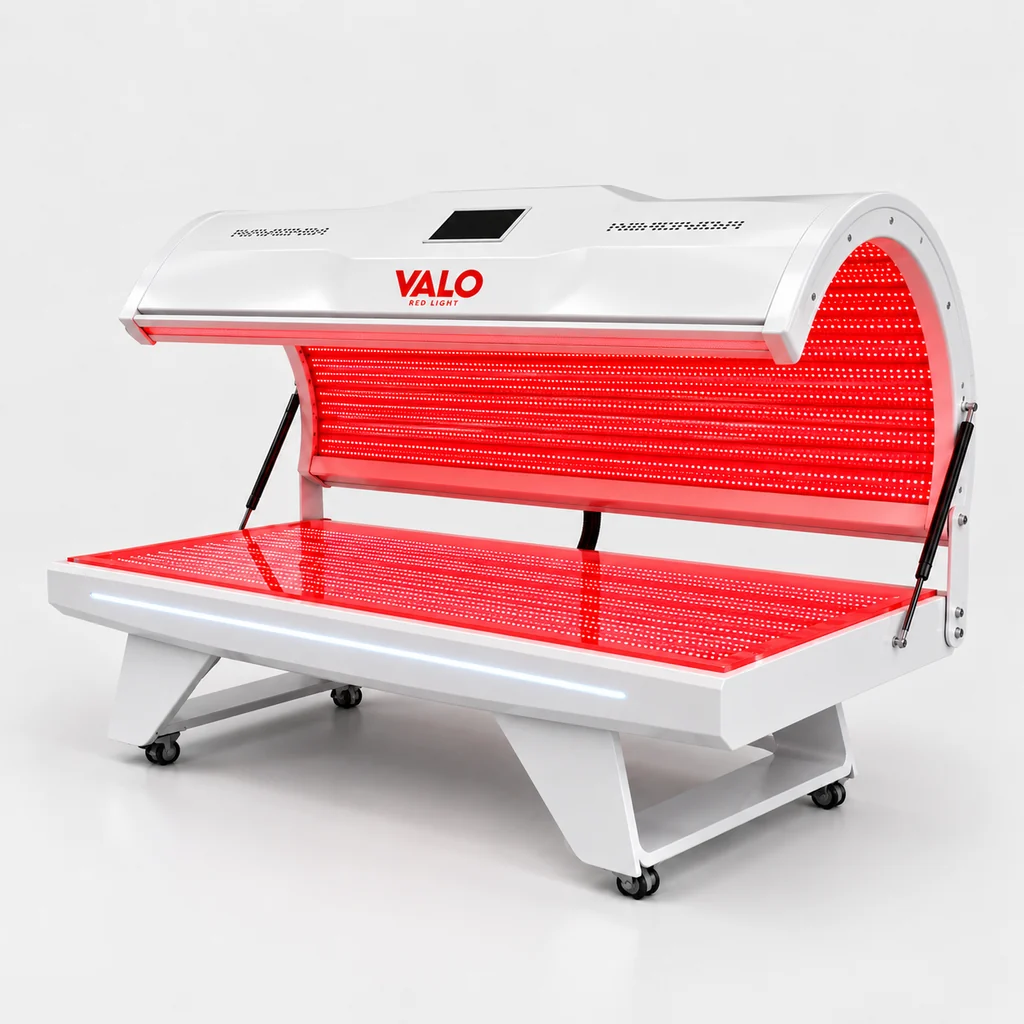
Valo Halo
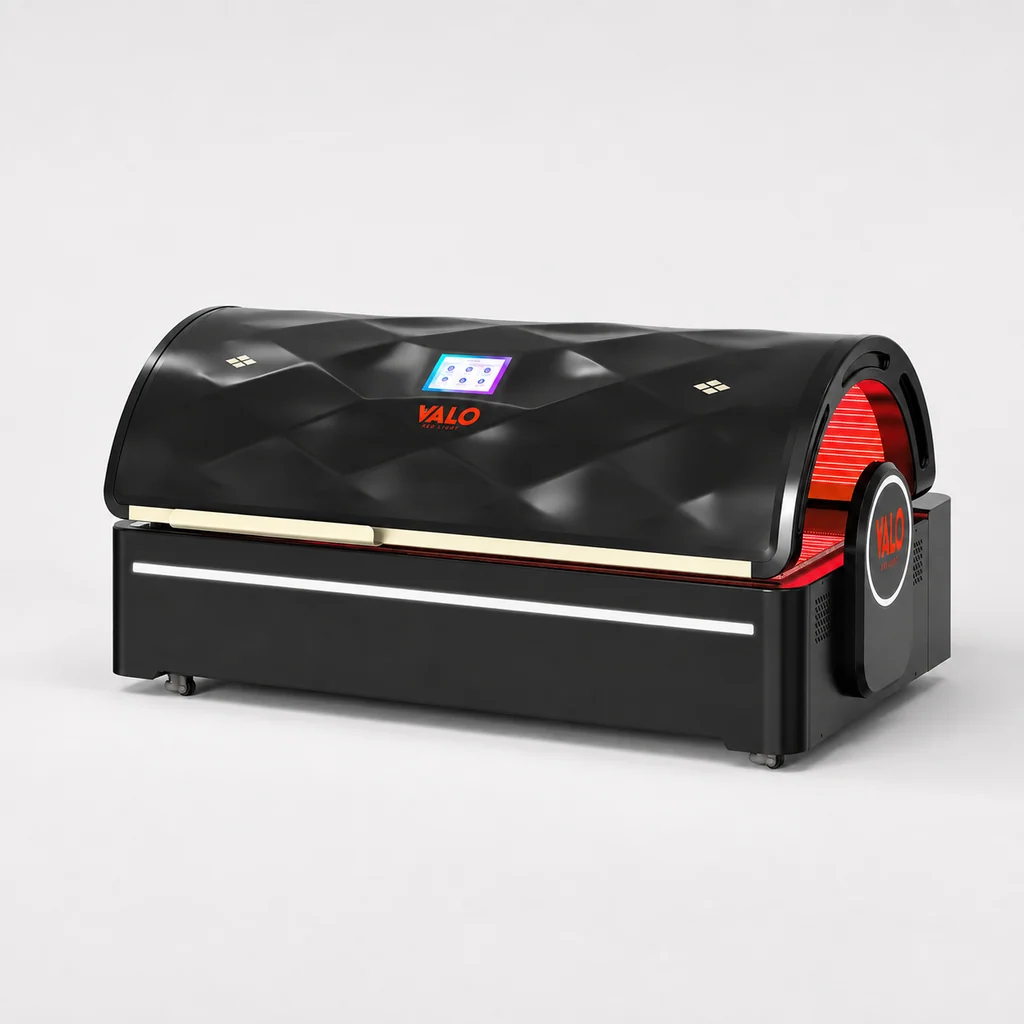
Twice the throughput, 2.5× the money
Same five wavelengths, same 360° format, same 1–10,000 Hz pulsation. The Aura adds 21,520 more LEDs, 485 more pounds and five more years of warranty for $25,600 more. That trade makes sense for a studio running four or more sessions a day and almost nowhere else. Valo publishes no irradiance figure for either bed, so nothing here says the Aura treats better — only that it seats more people.
The Short Version
- Price: $14,400 for the Halo, $40,000 for the Aura with our link
- Hardware: 21,680 vs 43,200 LEDs — same five wavelengths in both
- Warranty: 5 years vs 10 years
- Returns: Halo is final sale, Aura’s terms are unconfirmed
- Throughput: Aura runs two clients an hour, Halo runs one
- Irradiance: not published for either bed
- Verdict: Halo unless you’re turning bookings away
Halo vs Aura, Spec by Spec
Every published difference between the two Valo beds, plus the one number neither publishes.
| FEATURE | TOP PICK Valo Halo Home bed | Valo Aura Commercial bed | Valo Blaze Panel, for scale |
|---|---|---|---|
| Price with our link |
$14,400 |
$40,000 |
$1,199 |
| List price |
$17,999.99 |
$45,999.99 |
$1,499 |
| LED count |
21,680 |
43,200 |
200 |
| Wavelengths |
633, 660, 810, 850, 940nm |
633, 660, 810, 850, 940nm |
630, 660, 810, 850nm |
| Coverage |
360° lying |
360° lying |
Facing surfaces only |
| Session time |
15–20 min |
15–20 min |
30 min, two positions |
| Weight |
286.6 lbs |
772 lbs |
22 lbs |
| Warranty |
5 years |
10 years |
3 years |
| Returns |
Final sale |
Not stated |
60 days, 15% restock |
| Build time |
4–8 weeks |
4–8 weeks |
In stock |
| Irradiance |
Not published |
Not published |
Not published |
| Electrical |
220V dedicated line |
220V dedicated line |
Standard outlet |
| Built for |
Home or small practice |
Studio throughput |
Single-user daily use |
What $25,600 Actually Changes
Both beds carry the same five wavelengths, the same pulsation range and the same 360° format. Sitting inside either one is the same experience: lie down, fifteen to twenty minutes, no repositioning. The money does not buy a different treatment. It buys scale.
Double the LEDs means double the emitters in the same shell, which Valo uses to hold dose over a larger body surface rather than to shorten a session — the stated session time is identical for both beds. Without a published irradiance figure, there is no way to confirm what that actually does to the delivered dose. That is the honest limit of what anyone outside Valo can say.
What is measurable is throughput. One practitioner can run the Aura at two clients an hour and the Halo at one. At $80 a session over twenty operating days, the Aura generates roughly $3,200 more per month than the Halo at full booking. Closing a $25,600 gap at that rate takes about eight months of perfect utilization — and perfect utilization is not what studios get.
The Same $25,600, Priced by Bookings
- Sessions per day: 4
- Revenue per month: $6,400
- Operating cost $4,000
- Net per month: $2,400
- Payback: ≈7 months
- Sessions per day: 8
- Revenue per month: $12,800
- Operating cost: $6,500
- Net per month: $6,300
- Payback: ≈7 months
Both beds reach payback in about seven months — the Aura because it doubles revenue, the Halo because it costs a quarter as much. The difference is what happens if bookings fall short. Halve the Halo’s utilization and payback stretches to fourteen months. Halve the Aura’s and it takes nearly two years, because the operating cost of a commercial room doesn’t halve with it.
Payback at Three Utilization Levels
| Utilization | Halo payback | Aura payback |
|---|---|---|
| Full booking | ≈7 months | ≈7 months |
| Half booking | ≈14 months | ≈22 months |
| Opening year (25%) | ≈28 months | Never, at $6,500 overhead |
Our estimates, not Valo’s. Both assume $80 a session, twenty operating days and an owner-operated studio. Change those inputs in the payback calculator.
Is This For You?
Ideal if:
- Your studio turns bookings away or caps sessions per hour
- You have a room with its own 220V circuit and a floor that's been assessed
- You're buying an asset with a 10-year warranty, not a device
- You have staff who can run back-to-back sessions
- You want the cheapest way into a 360° bed with the same wavelengths
- You're buying for a home or a single practice
- You'd be financing against demand you haven't proven yet
Avoid if:
- You're buying your first red light device — start with a panel
- It's going in a home, especially upstairs. 772 lbs is not a bedroom object
- Your current utilization is under 25%
- You need published irradiance to justify the spend
- You're outfitting one room and one practitioner
The Honest Truth
Pros
- Halo: same five wavelengths for a third of the Aura's price
- Halo: 286.6 lbs — moves on wheels, fits a normal room
- Halo: 5-year warranty is still the second-longest Valo offers
- Aura: twice the throughput, two clients an hour
- Aura: 10-year warranty, the longest in the lineup
- Both: 360° coverage in one pass, no repositioning
- Both: fully passive — the client does nothing
Cons
- Both: no published irradiance, so no dose comparison is possible
- Both: Valo's own pages disagree on wattage, wavelength count and voltage
- Both: 4–8 weeks build time, then freight
- Halo: final sale, no returns
- Aura: return terms unconfirmed, and it's a $40,000 purchase
- Aura: 772 lbs needs a structural assessment before delivery
- Aura: no 20% discount applies to beds
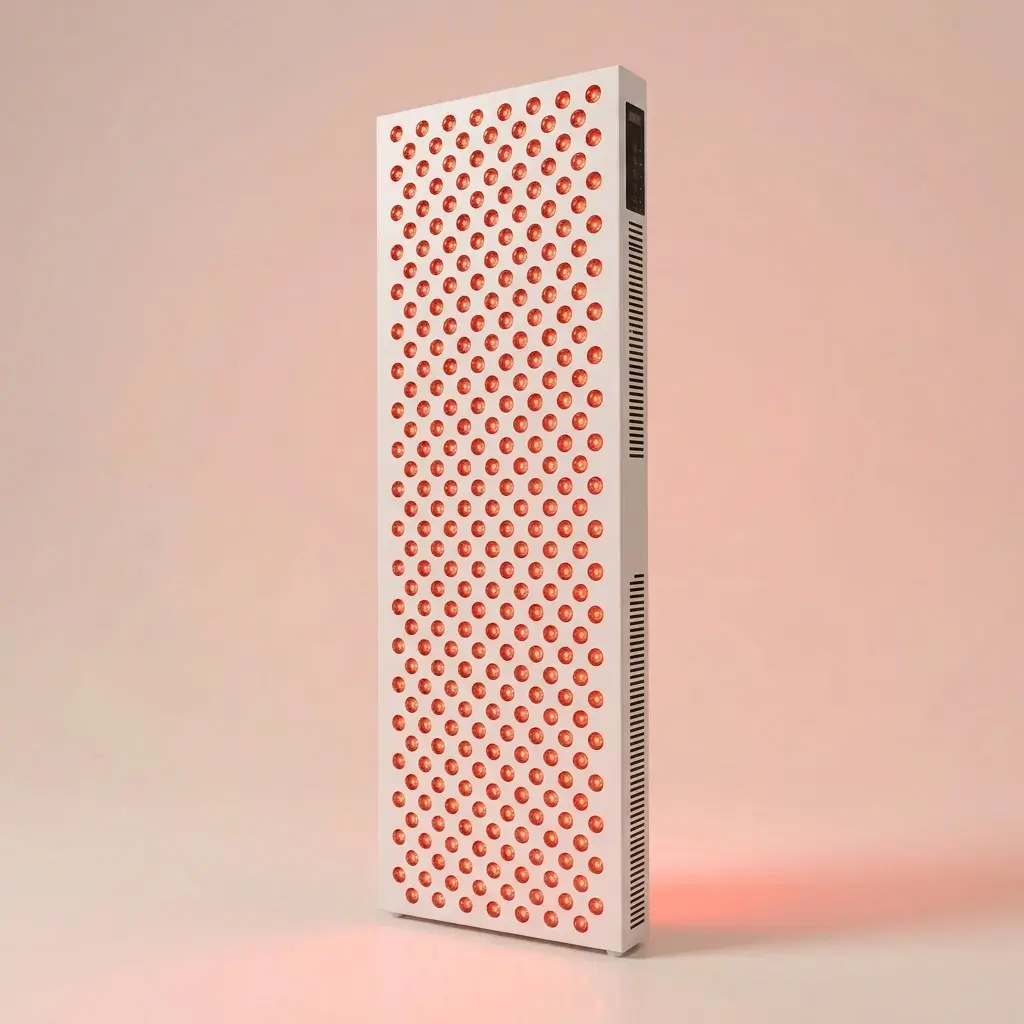
What Valo Won’t Confirm About Either Bed
Neither bed has a published irradiance figure at a stated distance. Without it, no one — us included — can compare the dose from a Halo or an Aura to the dose from a $1,199 panel. Every number in this comparison comes from Valo’s own product pages; we haven’t measured these devices ourselves. What we can speak to is the underlying mechanism, which is the same in both beds and in every panel on the market.
Red and near-infrared light at 630–850nm is absorbed by cytochrome c oxidase in the mitochondrial respiratory chain, which is the mechanism every red light device on this page relies on — bed or panel.
660nm acts mainly in the dermis while 810–850nm reaches deeper tissue, which is why devices combine both. Adding 940nm does not extend that depth — it penetrates less than 850nm.
Halo vs Aura: Common Questions
How We Evaluated These Beds
Brand-published specs, the vendor's own copy and the published literature. No lab, no measurements, and we say so.
Vendor specs, read closely
Every number here comes from Valo's product pages. Where Valo contradicts itself, we say so rather than picking the better-sounding figure.
Literature, not marketing
Claims about wavelengths and mechanism are checked against peer-reviewed photobiomodulation research, not against vendor copy.
What isn't published
Irradiance, protocol and return terms. We list the gaps as gaps instead of filling them with inferences from other models.
Updated when Valo answers
Open questions are logged and the page date changes when they're resolved. Nothing gets quietly rewritten.
Decide by bookings, not by spec sheet
The beds differ on throughput. Everything else about them is the same.